
Best Restaurant, Bar & Club Reservation Systems NZ (2026): The Ultimate Guide
Best Restaurant, Bar & Club Reservation Systems NZ (2026): The Ultimate Guide
As a New Zealand hospitality owner, you're navigating a complex market. You're caught between expensive American software that doesn't understand local needs like EFTPOS NZ integration, and dated local systems that haven't kept up with modern demands. You need a solution that fights rising costs, eliminates no-shows, and simplifies your operations-not complicates them.
The core frustration is clear: you need a single, affordable, commission-free system that handles everything from bookings and table management to payments and marketing, all with local support that understands the Kiwi business landscape. The good news is that this solution exists.
This guide cuts through the noise. We'll break down exactly what to look for in a 2026-ready booking system and how to choose a platform that acts as the central hub for your entire operation. Drawing on insights from industry bodies like the Restaurant Association of New Zealand, we'll provide actionable advice to boost your efficiency and profitability.
Why a Modern Booking System is No Longer Optional in NZ
In the current economic climate, efficiency is a survival strategy. With the hospitality industry facing significant pressure from rising operational costs and shifting consumer spending habits, every optimised seat and every prevented no-show directly impacts your bottom line. A modern, integrated booking system is the single most powerful tool for achieving this.
The hospitality sector is a cornerstone of our economy. As a vital part of the service industry, it's a key driver of household spending, as tracked by Stats NZ Tatauranga Aotearoa, and a massive employer. Research from the Ministry of Business, Innovation & Employment (MBIE) shows the industry employed around 145,000 people in early 2024. To thrive, businesses must move beyond paper diaries and clunky, disconnected tools.
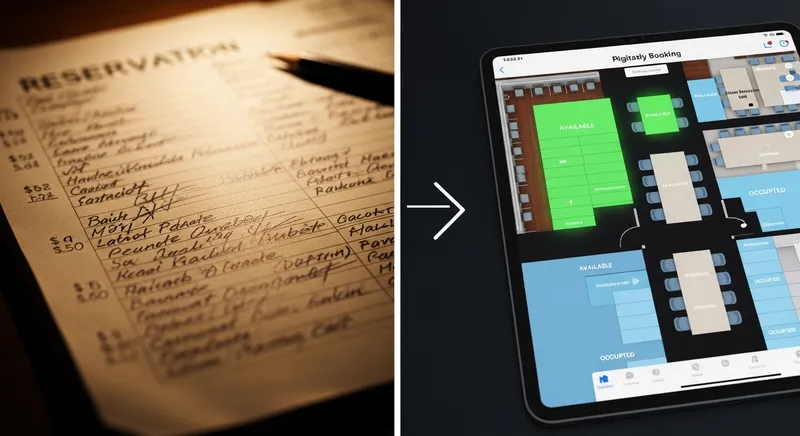
Transitioning to a digital system isn't just about taking bookings online. It's about:
- Maximising Revenue: Intelligently managing your floor plan to increase table turnover and seat more guests during peak hours.
- Reducing Lost Income: Using automated tools to drastically cut down on costly no-shows.
- Improving Efficiency: Freeing up staff from the phone to focus on providing excellent customer service.
- Making Data-Driven Decisions: Understanding your busiest periods, most loyal customers, and most popular services to inform your business strategy.
The Core Features of a Top-Tier Reservation System
A great system goes far beyond a simple booking form. When evaluating your options, look for a platform with these essential, integrated features:
- Online Booking Widget: A clean, simple, and mobile-friendly widget that can be embedded directly onto your website, allowing customers to book 24/7.
- Real-Time Table Management: A visual, customisable floor plan that lets you see table statuses (available, occupied, reserved) at a glance. The ability to manage sections and merge tables is critical for restaurants looking to increase table turnover without rushing guests.
- Automated Confirmations & Reminders: The number one weapon against no-shows. The system should automatically send email and SMS reminders to guests, confirming their booking and reminding them before their visit.
- Integrated Waitlist Management: When you're fully booked, a digital waitlist captures potential customers and notifies them automatically when a table becomes free, helping you recover revenue from last-minute cancellations.
- Guest Database (CRM): The system should build a profile for every guest, tracking their visit history, special requests, and contact information. This allows you to recognise your VIPs and provide personalised service.
- Full POS Integration: Your booking system must communicate seamlessly with your point of sale. This ensures that a guest's reservation is linked to their order, streamlining service and providing a complete picture of customer spending habits.
The Hidden Costs: Commission-Free vs. Per-Diner Models
This is one of the most significant factors when choosing a system. Many international platforms like OpenTable and ResDiary operate on a commission or per-diner fee model. While it may seem like a low-cost entry point, these fees quickly erode your profit margins.
Consider this simple math:
- Commission Model: A platform charges $2 per diner. If you seat 500 booked guests in a month, that's $1,000 per month or $12,000 per year straight from your revenue.
- Commission-Free Model: A platform like Lazygrid charges a flat monthly fee (e.g., the Premium plan at $149/month). Your cost is fixed at $1,788 per year, regardless of whether you seat 500 or 5,000 guests.
Choosing a commission-free system is a direct investment back into your business. It allows you to retain your hard-earned revenue and provides predictable monthly costs, which is essential for accurate financial planning and surviving the squeeze on NZ cafe profit margins.
The All-in-One Advantage: Beyond Just Bookings
The biggest frustration for NZ business owners is the fragmented tech landscape. You're often told you need separate systems for bookings, payments, online ordering, and loyalty. This creates data silos, increases costs, and wastes valuable time.
The solution is an all-in-one ecosystem built for the NZ market. A truly integrated platform combines all your core functions into a single, cohesive system:
- Bookings & POS: Your reservations, table plan, and orders are all in one place.
- Payments: Full integration with EFTPOS NZ certified terminals for fast, reliable, and reconciled transactions.
- Online Ordering: A commission-free online ordering system that syncs with your POS inventory in real-time.
- Loyalty & Vouchers: Built-in tools to reward your regulars and drive repeat business.
- Multi-Location Management: For growing businesses, the ability to manage multiple sites from a single dashboard is crucial. The best multi-location POS systems in NZ are designed for this from the ground up.
How to Get Bookings Directly from Google in NZ
One of the most powerful and underutilised features for local businesses is 'Reserve with Google'. This allows customers to find your business on Google Search or Maps and make a booking directly from the results page-a frictionless experience that captures customers at their moment of decision.
However, there's a catch. According to Google's official documentation, this feature is only available to businesses that use a supported scheduling partner. You cannot enable it manually.
To get this feature, you must choose a provider that has this official integration. For example, Lazygrid offers 'Reserve with Google' on its Premium plan ($149/month). Once enabled, a 'Reserve' button appears on your Google Business Profile, instantly increasing your visibility and booking potential.
Proven Strategies to Reduce Restaurant No-Shows
No-shows are a multi-million dollar problem for the hospitality industry. A vacant table is lost revenue that can never be recovered. While you can't eliminate them entirely, you can drastically reduce them with the right software and strategies.
- Automate Everything: Use your system's automated SMS and email reminders. This single feature can cut no-shows by over 50% by simply keeping the reservation top-of-mind for the guest.
- Take Deposits or Card Holds: For large parties or during peak times, use your booking system to require a credit card hold or a small deposit. This creates commitment and significantly reduces the likelihood of a no-show.
- Implement Clear, Fair Policies: Research published in the International Journal of Consumer Studies shows that combining a fair cancellation policy with awareness campaigns can positively influence booking behaviour. Use your booking confirmation emails to clearly state your policy (e.g., "Please let us know 24 hours in advance if you need to cancel").
- Use Your Waitlist: When you get a last-minute cancellation, your integrated waitlist can automatically send an SMS to the first person on the list, allowing you to fill the table in minutes.
What to Look For in a System for Your Specific NZ Business
Not all businesses are the same. A top-tier system should be flexible enough to meet the unique needs of different sectors.
- Restaurants & Bars: Your focus should be on robust table management, waitlist functionality, and seamless POS and kitchen display system (KDS) integration.
- Cafes: Fast-paced cafes need a system that can handle a brunch rush with a smart waitlist and integrate a strong loyalty program for regulars.
- Beauty, Salons & Massage Shops: For service-based businesses, the key is appointment management. Look for features like recurring appointments, client history notes, staff-specific booking, and automated reminders.
Make the Smart Choice for Your Business
Choosing a reservation system in 2026 is about more than just taking bookings. It's about choosing a central business partner that saves you money, boosts your efficiency, and helps you build better customer relationships.
By choosing an integrated, commission-free platform built for the New Zealand market, you are not just buying software. You are investing in a more profitable and sustainable future. You get the powerful features you need, the local support you deserve, and a pricing model that helps you grow.
Ready to see how an all-in-one system can transform your business? Explore Lazygrid to see how our integrated POS, booking, and marketing tools can work for you.
Frequently Asked Questions
How hard is it to switch booking systems?
Switching is easier than you think with a modern, cloud-based provider. The process typically involves exporting your customer data, setting up your new account and floor plan, and importing the data. A good provider will offer support during this migration to ensure a smooth transition with minimal downtime. Plan the switch for a quiet period and inform your staff in advance.
What's the difference between a booking system and a table management system?
A booking system's primary function is to let customers make reservations. A table management system is the operational tool your staff uses in-house, featuring a visual floor plan, table status tracking, and turnover analytics. The best solutions combine both into a single, integrated platform, so an online booking automatically reserves a table in the management system.
Can I manage bookings for multiple locations from one system?
Yes, but only if you choose a system designed for multi-location management. A modern platform like Lazygrid allows you to access a central dashboard where you can view and manage bookings, settings, and reports for all your locations from one login. This is a critical feature for any growing hospitality group.
What is the best alternative to OpenTable or ResDiary in NZ?
The best alternative is a commission-free, all-in-one platform built for the New Zealand market. While OpenTable and ResDiary are well-known, their per-diner fee models are costly. An alternative like Lazygrid offers the same core features plus a fully integrated POS and loyalty program for a flat monthly fee. Key advantages are significant cost savings and seamless integration with local services like EFTPOS NZ. You can see a direct cost comparison in articles like this Lightspeed vs Lazygrid review.
How can I take bookings directly from Google Maps in NZ?
To get the blue 'Reserve' button on your Google Business Profile, you must use a booking system that is an official 'Reserve with Google' partner. This is not a setting you can turn on yourself. When choosing a system, confirm they have this specific integration. Lazygrid, for example, offers Reserve with Google on its Premium plan ($149/month), allowing customers to book directly from Google Search and Maps.