
Best Restaurant Booking Systems NZ 2026: A Complete Guide
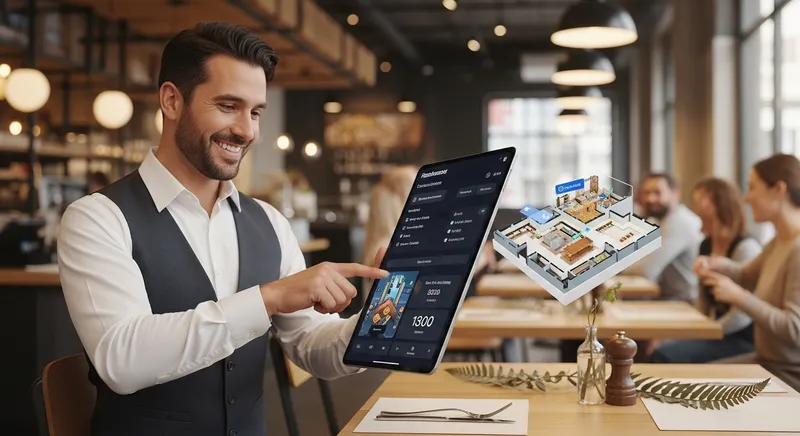
This guide is brought to you by the team at Lazygrid, an NZ-based provider of integrated POS and booking systems. We believe in empowering local businesses with the right tools and transparent information.
As a New Zealand business owner, you're likely tired of the endless search for a booking system that actually works for you. You need a solution that's affordably priced without hidden commission fees, integrates seamlessly with your essential NZ tools like Xero and EFTPOS, and genuinely helps you reduce no-shows and maximise your capacity. The problem is, many systems are either too generic, too expensive, or fail to connect with the tools you already use, leaving you with a disjointed and inefficient process.
With the NZ hospitality sector showing strong signs of growth- Stats NZ reports a significant increase in jobs and government figures from Beehive.govt.nz show international visitor arrivals climbing back to pre-pandemic levels- the pressure to operate efficiently has never been greater. This guide cuts through the noise. We'll provide a data-driven framework to help you choose the right software, whether you run a fine-dining restaurant, a bustling local cafe, a beauty salon, or a popular food truck.
Why Your NZ Business Needs More Than Just a Booking System in 2026
The current landscape for Kiwi hospitality and service businesses is complex. While recent data shows consumer spending in cafes and restaurants is on the rise, analysis from The Spinoff also highlights the intense pressure and rising liquidations in the sector. In this environment, survival and growth depend on more than just taking reservations; they depend on total operational efficiency.
This is where the idea of an integrated business ecosystem becomes crucial. A standalone booking app is a tool; an integrated system is a strategy. The goal is to have a central hub where your Point of Sale (POS), booking system, payment processing, and accounting software communicate flawlessly. This busts the myth of hospitality being a low-productivity industry. In fact, a 2024 Hospitality Report from the Restaurant Association of New Zealand shows the sector's productivity has grown significantly faster than the national average, largely thanks to technology adoption.
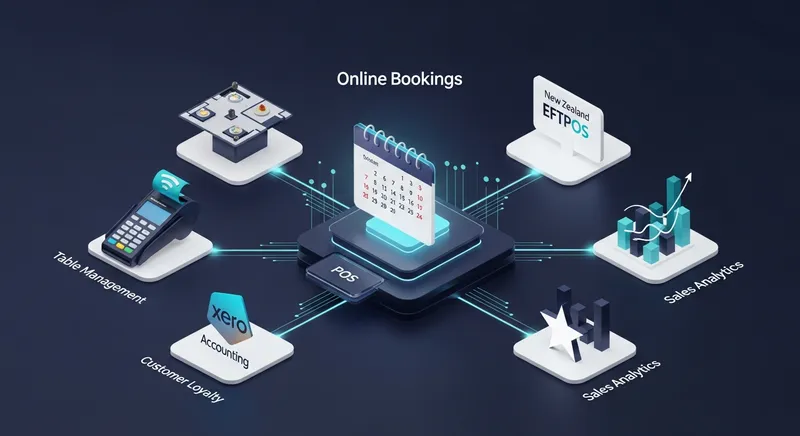
An integrated system allows you to:
- Automate data entry: A booking automatically creates a customer profile, and a sale automatically updates your inventory and accounting.
- Gain a 360-degree view: Understand not just who booked, but what they ordered, how much they spent, and how often they return.
- Improve efficiency: Free up staff from manual tasks so they can focus on delivering an exceptional customer experience.
How to Choose the Right Booking Software: An NZ-Specific Checklist
When evaluating software, don't just look at features. Focus on how the system solves your key problems and fits into the New Zealand business environment. Here's what to demand from a prospective system.
1. A Commission-Free Pricing Model
High per-booking or percentage-based commissions eat directly into your profits. This model, popularized by some large international platforms, is becoming outdated. Look for systems that offer a flat monthly subscription fee. This provides predictable costs and ensures you keep 100% of the revenue from the customers you bring in. For a deeper dive, explore the benefits of commission-free online ordering systems.
2. Essential NZ-Specific Integrations
The biggest weakness of many international systems is their failure to connect with the tools Kiwi businesses rely on daily. These integrations are not 'nice-to-haves'; they are dealbreakers.
- POS Integration: Your booking system and POS must be perfectly in sync. This is a core function of any modern all-in-one salon software or restaurant system.
- EFTPOS NZ Certified: Ensure the system integrates with certified EFTPOS NZ terminals for fast, reliable, and secure payments. This eliminates manual entry errors and speeds up the payment process.
- Xero Integration: According to the Xero App Store for hospitality, connecting your business apps to your accounting software is key for real-time financial insights. An integrated booking and POS system should automatically sync sales data, making reconciliation in Xero effortless and saving you or your bookkeeper hours of work. This is critical for managing your NZ cafe profit margins.
3. Core Features That Solve Real Problems
- Automated Reminders (SMS/Email): This is the single most effective tool for reducing costly no-shows. A simple, automated reminder can cut your no-show rate significantly.
- Table & Waitlist Management: A visual floor plan allows you to manage bookings, walk-ins, and waitlists efficiently, helping you increase table turnover and maximise your venue's capacity.
- Integrated Customer Database (CRM): The system should capture customer details from every booking, building a valuable database you own. This allows you to recognise regulars, track preferences, and run targeted marketing campaigns.
- Reserve with Google Integration: This is non-negotiable in 2026. It allows customers to book directly from Google Search and Maps. According to Tableo's 2025 Global Restaurant Booking Trends report, an incredible 73% of bookings made through Reserve with Google come from first-time users, making it a powerful acquisition tool. Note that this is often a premium feature, so check if it's included in your plan.
The All-in-One vs. Best-of-Breed Debate
A common question is whether to use an all-in-one POS with a built-in booking module or to piece together separate 'best-of-breed' systems.
All-in-One Systems: These offer a single point of contact for support, a unified interface, and seamless data flow between bookings, ordering, sales, and even the kitchen display system (KDS). This is often the most cost-effective and efficient choice for most cafes, service businesses, and small-to-medium restaurants. Examples include platforms like Lazygrid or Lightspeed.
Best-of-Breed Approach: This involves integrating a specialized booking platform (like ResDiary or Now Book It) with your separate POS. While this can offer deep, specific functionality, it can also lead to higher costs, potential integration headaches, and data silos.
To help you decide, here is a quick comparison:
| Feature | All-in-One System | Best-of-Breed System |
|---|---|---|
| Cost | Often lower total cost with a single subscription. | Higher total cost (multiple subscriptions). |
| Data Sync | Seamless. Bookings, sales, and customer data are unified. | Can be problematic. Relies on third-party integrations. |
| Support | Single point of contact for all issues. | Multiple support teams to contact. |
| Setup Time | Generally faster and simpler to set up. | More complex, involves linking different software. |
For many NZ businesses, a modern, all-in-one system provides the best balance of power, simplicity, and affordability. The technology has advanced so far that the features in integrated modules are now on par with many standalone services, especially when considering the power of unified data.
From Data to Dollars: Using Your Booking System to Increase Revenue
A booking system is more than an online diary; it's a data-gathering powerhouse. Here's how to use that data to boost your bottom line.
- Analyse Booking Patterns: Use historical data to identify your true peak and off-peak periods. This allows for smarter staff scheduling and management, helping you slash wage costs without cutting staff by avoiding overstaffing during quiet times.
- Leverage Your Customer Database: Your booking system's CRM is a goldmine. Identify your top 20% of customers and treat them like VIPs. See who hasn't returned in a while? Send them a personalized "we miss you" offer. This data is fundamental to building a successful loyalty program.
- Combine Booking and Sales Data: Analyse which days have the highest booking rates and cross-reference that with your POS sales data. You might discover that your Wednesday night bookings are high but average spend is low. This is an opportunity to create a special mid-week menu to increase spend per head.
Beyond Restaurants: Booking Systems for All Service Businesses
The principles of good booking management apply across many industries. Look for a system flexible enough to adapt to your specific needs.
- Cafes: Manage the weekend brunch rush with a digital waitlist and allow customers to book larger tables in advance. Integrate bookings with your loyalty program to reward regulars.
- Beauty & Salons: The core need is appointment management. A flexible system adapts its 'table' interface to manage staff calendars or book specific rooms. This allows you to manage multiple practitioners, block out time for services, and send automated reminders to eliminate costly client no-shows. An all-in-one salon software is perfect for this.
- Food Trucks: While you don't have tables, a booking system can be used for pre-orders for a specific location or to manage catering requests. Check out our guide on food truck compliance and costs.
Frequently Asked Questions
How much does a restaurant reservation system cost in NZ? Costs vary widely. Avoid systems that charge a per-booking commission. Look for flat-rate subscriptions, which in NZ typically range from $50 to $150 per month for a comprehensive system that includes POS, bookings, and online ordering.
What is the best alternative to OpenTable in NZ? The best alternatives are commission-free, integrated platforms that connect with your POS and local payment systems. Instead of paying a fee for every diner booked, you pay a predictable flat monthly subscription. This means you keep 100% of your revenue and own your customer data. Look for modern, integrated POS systems or dedicated booking platforms like Now Book It and ResDiary that prioritise a direct relationship with your customers.
How can a booking system reduce no-shows? A quality system attacks this costly problem from multiple angles. The most effective tool is automated reminders via SMS and email, which prompt customers to confirm or cancel. For peak times, you can also implement an optional feature to require credit card details to secure a booking. Finally, an integrated CRM helps you track customer history, allowing you to identify and manage repeat no-show offenders.
Which booking systems integrate best with Xero and EFTPOS NZ? This is a crucial question. Look for systems that explicitly state they are 'Xero Partners' and 'EFTPOS NZ Certified'. Locally-focused providers are far more likely to have deep, reliable integrations than large international players whose primary market is elsewhere. A seamless sync can save hours of admin work each month.
Do I need to buy special hardware for a booking system? Not necessarily. Many modern, cloud-based systems are designed to run on hardware you likely already own, such as an iPad or Android tablet. This significantly reduces upfront costs and allows for a more flexible setup compared to traditional, proprietary hardware.
Can a booking system handle both reservations and walk-in customers? Yes, a modern system excels at this. It provides a single source of truth for your front-of-house staff. The visual floor plan shows which tables are reserved, occupied, or free. When a walk-in arrives and no tables are available, staff can add them to a digital waitlist, provide an accurate wait time, and send an SMS notification when their table is ready.
Conclusion: Your Next Step Towards a Smarter Business
Choosing the best booking system for your New Zealand business in 2026 isn't about finding the app with the most features. It's about selecting a strategic partner that forms the heart of your business operations.
The right choice is a system that is transparently priced, deeply integrated with the NZ business ecosystem (Xero, EFTPOS), and provides powerful tools to solve your biggest challenges: reducing no-shows, maximising capacity, and understanding your customers. By prioritising an integrated approach, you're not just buying software; you're investing in a more efficient, profitable, and resilient future.
Ready to see how an all-in-one system can transform your operations? Book a free, no-obligation demo to see these features in action and get a personalized quote for your business.