
Beyond Square: NZ Food Truck & QSR Tech Stack Guide
Beyond Square: NZ Food Truck & QSR Tech Stack Guide
Picture this: You are at a bustling weekend market in Wellington or Auckland. The queue in front of your food truck is ten people deep. Suddenly, the local cell tower gets overwhelmed, your internet connection drops, and your point-of-sale system freezes. To make matters worse, you realize that for every transaction you did manage to process, you are paying exorbitant flat-rate credit card fees because your global POS provider does not integrate properly with local New Zealand EFTPOS networks.
This is the core pain point for mobile hospitality owners in New Zealand. You are battling unreliable internet at events while being overcharged on transaction fees by global POS giants that fail to understand the local market.
According to market analysis by Mordor Intelligence, independent operators account for a massive 67.93% of the New Zealand foodservice market share. Food trucks, boutique cafes, and local quick service restaurants (QSRs) are the backbone of our hospitality industry. Yet, many of these businesses are held back by restrictive, expensive technology.
In this comprehensive guide, we will explore the best POS for food trucks in NZ, expose the hidden costs of popular systems like Square, and show you how to build a profitable, resilient mobile business tech stack.
What You Will Learn:
- The hidden costs of the "NZ EFTPOS Tax"
- Why relying on POS offline modes is a financial risk
- Essential growth features like self-service kiosks and gift cards
- How to compare Square, Toast, and local NZ alternatives
What is a Food Truck POS System? (And Why Generic Solutions Fail)
A food truck POS (Point of Sale) system is the digital heartbeat of your mobile business. It handles order entry, payment processing, inventory tracking, and reporting. However, a food truck is not just a restaurant on wheels. It operates in tight spaces, relies on mobile internet, and requires lightning-fast transaction speeds to maximize peak hour revenue.
Many operators default to generic global solutions because they are heavily marketed. But generic systems often fail to address the specific needs of hybrid businesses. For example, if you run a brick-and-mortar cafe during the week and a mobile food trailer at weekend markets, you need a system that syncs inventory across both locations seamlessly.
If you want to learn more about setting up a unified system for multiple locations, check out our guide on Cloud POS for NZ Small Businesses: Cut Admin, Boost Sales - Lazygrid Blog.
Actionable Tip: Before choosing a POS, map out your busiest 60 minutes of the week. Calculate exactly how many screens, printers, and payment terminals you need to move the queue faster, then choose a system that supports that specific hardware configuration.
The "NZ EFTPOS Tax": Are Global POS Systems Eating Your Margins?
One of the biggest secrets in the New Zealand POS industry is what we call the "NZ EFTPOS Tax." Global POS systems like Square and Toast often force merchants to use their built-in payment processing. While this seems convenient, it comes with a massive hidden cost.
New Zealand features a highly efficient, low-cost domestic EFTPOS network. However, global systems often bypass this local network, routing transactions through international credit card schemes (like Visa or Mastercard) even when a customer uses a standard debit card. This results in you paying a high flat-rate percentage on every single transaction.
Data from GlobalData shows that debit card payments hold a significant 48.9% share of the total card payments market in New Zealand, with over 70,000 businesses connected to the local EFTPOS NZ network.
Furthermore, the Commerce Commission New Zealand has highlighted that bypassing local EFTPOS networks for international card schemes leads to increased costs for merchants. When you use an eftpos integrated pos nz like Lazygrid, you can connect directly to standard, certified NZ EFTPOS terminals, ensuring you pay the lowest possible rate for debit transactions.
Mini Case Study: Consider a Wellington food truck operator doing $10,000 a month in standard debit transactions. Switching from a global provider's 1.6% flat rate to direct NZ EFTPOS integration saves them an estimated $160 per month, adding nearly $2,000 a year straight back to their bottom line.
Actionable Tip: Pull your last merchant statement. Calculate how much you paid in processing fees. If you are paying a flat rate of 1.6% or more on standard debit transactions, you are losing thousands of dollars a year to the EFTPOS tax. Switch to a POS that integrates with local New Zealand payment rails.
The Offline Mode Myth: Managing Payments Without Reliable Internet
When searching for an offline pos system for food trucks, many owners are drawn to the "offline mode" heavily advertised by global POS providers. But there is a dangerous myth surrounding this feature that you need to understand.
When a cloud-based POS system goes offline, it cannot verify if a customer has sufficient funds in their account. Systems that allow you to swipe or tap credit cards offline are simply caching (storing) the encrypted card data on the device. When you get back to a Wi-Fi zone, the system attempts to process those stored transactions.
Here is the catch: If a card declines, or if the card was reported stolen, you are entirely responsible for the financial loss. The POS company does not guarantee those funds. For a market stall vendor operating on tight margins, a handful of declined offline transactions can wipe out an entire day of profit.
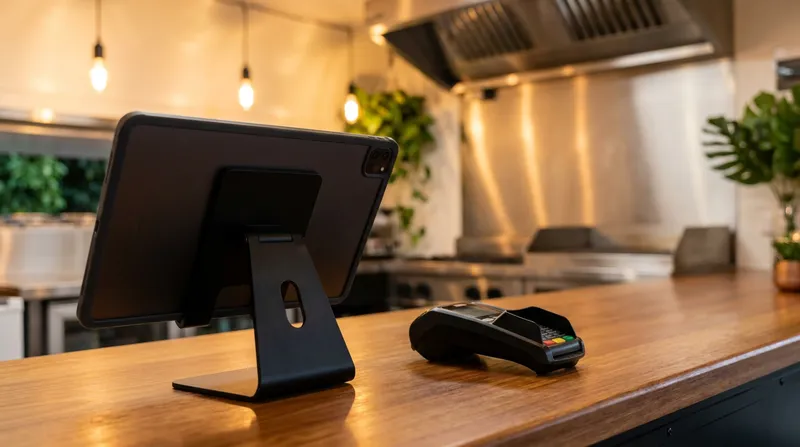
Instead of relying on a risky POS offline mode for payments, the smartest mobile business tech stack separates the order-taking from the payment processing. Your POS should allow you to continue taking orders and printing dockets offline, while you use an independent, cellular-connected EFTPOS terminal (with its own SIM card) to process guaranteed payments.
Actionable Tip: Never accept the financial risk of cached offline credit card payments. Invest in a dedicated EFTPOS terminal with a 4G SIM card as a backup for when your main internet connection fails.
Hardware Options for Tight Spaces: BYO Device vs. Proprietary Lock-in
Space is the most valuable commodity in a food truck or a small quick service restaurant. You do not have room for bulky legacy cash registers. This is why an ipad pos for cafes and food trucks has become the industry standard.
However, systems like Clover and Toast force you into "proprietary hardware lock-in." You must buy their specific screens, their specific handhelds, and their specific card readers. These devices often cost thousands of dollars, and if you decide to change software providers later, that hardware becomes an expensive paperweight.
Lazygrid champions the "Bring Your Own Device" (BYO) model. You can run your entire business on standard Apple iPads or iPhones. This approach dramatically lowers your upfront costs and ensures you are never locked into a single ecosystem.
For a deep dive into using Apple devices for your business, read our guide on the Best iPhone POS Systems NZ: The Ultimate Guide for Cafes & Retail - Lazygrid Blog.
Actionable Tip: Purchase refurbished iPads for your food truck. They cost a fraction of the price of new models, run POS software perfectly, and reduce your initial capital expenditure.
Best POS Features for Quick Service Restaurants and Food Trucks
To truly optimize your operations, your POS system needs to do more than just take payments. Here are the essential quick service restaurant pos features you need to scale your business.
1. Commission-Free Food Truck Online Ordering System
Relying on third-party delivery apps like UberEats means giving away 15% to 30% of your hard-earned revenue. A modern POS must include a built-in, commission-free online ordering system.
Recent statistics from the Hospitality Business / Restaurant Association of New Zealand validate this shift: 39% of respondents prefer to use a website or app owned by the establishment for takeaway orders, compared to just 14% for third-party apps. Customers want to support you directly.
With Lazygrid, you get a custom-branded ordering website that syncs instantly with your POS. Customers can pre-order their food before they even arrive at the market, reducing queue times and guaranteeing your revenue. Want to implement this in a physical location? Explore the 7 Best QR Ordering Systems for NZ Restaurants Guide - Lazygrid Blog.
Actionable Tip: Print a massive QR code on the side of your food truck. When the queue gets too long, direct customers to scan the code, order, and pay from their phones while they wait.
2. Self-Service Kiosks for High-Volume QSRs
For QSR operators managing a lunch rush, self-service kiosks are a game-changer. Internal industry data frequently highlights that kiosk orders average 20% to 30% higher ticket values because the system automatically and consistently prompts upsells (like adding extra cheese or a drink) without staff intervention. Implementing a kiosk frees up your staff to focus purely on food preparation and fulfillment.
3. Integrated Kitchen Display Systems (KDS)
Paper tickets are a nightmare in a windy outdoor market or a fast-paced QSR kitchen. They get lost, covered in grease, or misread. A digital Kitchen Display System (KDS) routes orders directly from the iPad POS to a screen in the prep area.
This color-coded system tracks preparation times and ensures no order is ever missed. To understand how to implement this effectively, check out our KDS Setup Guide NZ: Your 7-Step Plan for a Smarter Kitchen - Lazygrid Blog and our comparison piece, Square KDS vs Integrated Kitchen Systems: NZ Guide - Lazygrid Blog.
Actionable Tip: Set up your KDS to flash red when an order has been waiting longer than 10 minutes. This visual cue helps your kitchen staff prioritize delayed orders immediately.
4. Vouchers, Gift Cards, and Loyalty Programs
Building a base of regular customers is the secret to surviving the slow winter months. Digital gift cards are a vital cash-flow tool for food trucks. Selling digital vouchers injects immediate cash into your business while securing future visits.
Paired with a digital loyalty program integrated into your POS, customers can earn digital stamps or points linked to their phone number or Apple Wallet. You capture valuable customer data and can send automated push notifications offering a free coffee or discount on their birthday.
5. Booking and Pre-Orders
If your food truck handles catering events or large weekend market pre-orders, your tech stack needs a reliable reservation and booking system. This allows you to forecast ingredient needs accurately and guarantees event revenue predictability.
Square vs Toast for Food Trucks: Evaluating the Alternatives
When researching systems, many owners look at Square vs Toast for food trucks. While both are massive global players, they have significant drawbacks for New Zealand operators.
| Feature | Square | Toast | Lazygrid |
|---|---|---|---|
| Hardware Flexibility | Proprietary | Proprietary | BYO (iPad/iPhone) |
| NZ EFTPOS Integration | No (High Flat Rate) | No | Yes (Direct) |
| Offline Payments | Risky (Cached Data) | Risky (Cached Data) | Safe (4G EFTPOS) |
| Online Ordering | High Fees | High Fees | Commission-Free |
| Local Support | Global | Global | Wellington-Based |
Square offers a free basic software plan, which is tempting for startups. However, their high flat-rate transaction fees quickly eat into your profits as you grow, and their generic global support can leave you stranded during a busy weekend service.
Toast POS is a powerhouse in the United States, offering incredibly robust restaurant features. However, it requires expensive proprietary hardware bundles, long-term contracts, and lacks true localization for the NZ market. If you are considering Toast, you must read our breakdown: Looking for Toast POS in NZ? Comparison & Best Alternatives - Lazygrid Blog.
Pricing Callout: Finding the right square pos alternatives nz is crucial. Local providers like Lazygrid offer the modern, cloud-based features of the global giants starting at just $24/month, with local Wellington-based support and direct integration with cost-saving NZ EFTPOS networks.
Managing Your Business Admin: Taxes and Pricing
Running a mobile business is not just about serving great food; it is about managing your margins and staying compliant with the IRD. Your POS system should make end-of-day reconciliation and tax preparation effortless.
Lazygrid's reporting dashboard allows you to track Cost of Goods Sold (COGS), monitor staff performance, and export clean data for your accountant. For a deeper dive into compliance, review the NZ Hospitality Tax Guide: GST, Payroll (PAYE) & Key Deductions - Lazygrid Blog.
Actionable Tip: Schedule an automated weekly sales report to be emailed to you every Monday morning. Reviewing your top-selling and worst-selling items weekly allows you to adjust your purchasing and reduce food waste.
Conclusion
Building the ultimate tech stack for your New Zealand food truck or quick service restaurant requires looking beyond the heavy marketing of global POS giants. By understanding the hidden costs of the "NZ EFTPOS Tax," recognizing the risks of cached offline payment modes, and avoiding proprietary hardware lock-in, you can build a system that protects your profit margins.
Choose an iPad POS system that offers commission-free online ordering, self-service kiosks, and seamless integration with local payment networks. Technology should empower your business to serve more customers, faster, without eating into your hard-earned revenue.
Ready to bypass the EFTPOS tax and speed up your queues? Start your free trial today and see how Lazygrid pays for itself in saved EFTPOS fees within the first month. Alternatively, book a demo with our Wellington-based team.
Frequently Asked Questions
What is the best POS system for a food truck with bad internet?
The best POS for food trucks with bad internet separates order-taking from payment processing. Use a cloud-based iPad POS like Lazygrid that allows you to continue taking orders and printing dockets offline, paired with a dedicated 4G cellular EFTPOS terminal to process guaranteed payments without relying on risky offline credit card caching.
Does Square POS integrate with standard NZ EFTPOS terminals?
No, Square POS generally requires you to use their proprietary payment processing hardware and services. This means bypassing the low-cost local New Zealand EFTPOS network, which often results in merchants paying higher flat-rate transaction fees on standard debit card purchases (what we call the "NZ EFTPOS Tax").
Can I use an iPad as a POS system for my food truck?
Absolutely. An iPad POS for cafes and food trucks is the industry standard because it saves valuable counter space, is highly portable, and avoids the high upfront costs of proprietary hardware. Systems like Lazygrid allow you to run your entire operation on a standard Apple iPad.
How do I accept contactless payments at a market stall in NZ?
To accept contactless payments reliably at a market stall, you need a portable EFTPOS terminal with its own 4G SIM card. Connect this terminal to a mobile POS system that is certified by EFTPOS NZ. This ensures you can accept tap-and-go payments even when the local market Wi-Fi drops out.
What are the hidden fees in popular food truck POS systems?
The biggest hidden fees include high flat-rate processing fees for debit cards, mandatory long-term contracts, expensive proprietary hardware replacements, and high commission rates (15% to 30%) for built-in online ordering modules. Look for transparent, local Square POS alternatives in NZ that offer commission-free ordering and direct EFTPOS integration.