
Ditch the Fees: A Guide to Commission-Free Online Ordering for NZ Hospitality
Introduction: Are Third-Party Commission Fees Eating Your Profits?
As a hospitality owner in New Zealand, you've seen the numbers. You get a notification for a $100 order from a platform like Uber Eats, but when the money lands in your account, a huge chunk is missing. That feeling of watching 30-35% of your hard-earned revenue vanish into commission fees is more than frustrating—it's unsustainable. While these apps promise visibility, they deliver it at a staggering cost, with academic research from Knowledge at Wharton noting that these high-commission models can intensify competition and squeeze already thin profit margins.
If you're tired of renting your own customers and want to take back control of your business's financial future, you're in the right place. This guide provides a step-by-step plan for NZ hospitality owners to transition away from high-fee apps to a profitable, commission-free online ordering model. We'll show you how to increase your profit on every single order, build direct customer relationships, and secure your business's independence.
The True Cost of Convenience: Why Aggregator Apps Hurt NZ Restaurants
The initial appeal of third-party apps is understandable: instant access to a large audience. However, this convenience comes with hidden costs that go far beyond the commission fee. When you sign up, you're not just a partner; you're a supplier on their platform, and the long-term price is steep.
First, let's break down the financials. On a simple $50 takeaway order, a 30% commission means you instantly lose $15. This isn't a fee on your profit; it's a tax on your total revenue. For many restaurants and cafes in New Zealand, that $15 is their entire profit margin, and then some.
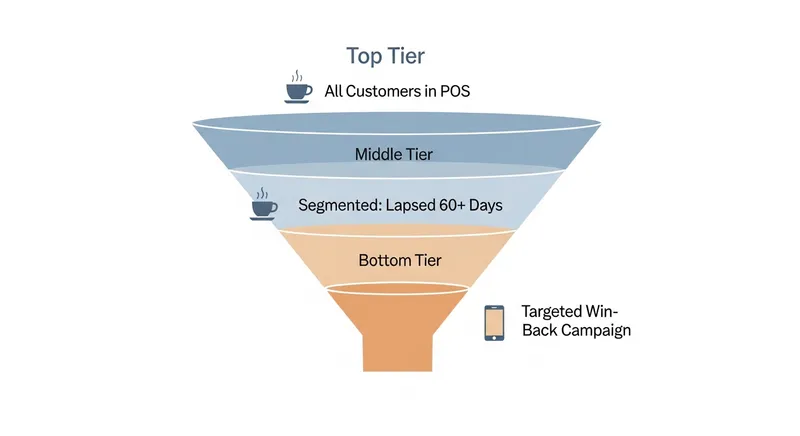
Even more damaging is the loss of your most valuable asset: your customer data. When a customer orders through an aggregator, they are the platform's customer, not yours. You get an order number, but no name, no email, and no ability to market to them again. You can't invite them back for a special event, send them a birthday voucher, or build a loyalty programme. You are effectively 'renting' your own customers, and the platform holds all the power. As industry research shows, while third-party platforms are great for discovery, real growth requires owning the guest experience and capturing the full margin.
The Solution: A Direct Online Ordering System You Control
There is a powerful and increasingly popular alternative: a direct online ordering system. This is simply a branded webpage where your customers can browse your menu and place orders directly with you. Instead of being one of dozens of options in a crowded marketplace, you offer a direct path to your food and services.
The primary benefit is financial. With a direct system, you keep 100% of the order revenue. The only fee is a small, predictable payment processing charge (typically 2-3%), not a punishing 15-35% commission. That entire margin goes straight back into your business, where it belongs.
Crucially, this model puts you back in control of your customer relationships. Every customer who orders directly provides their contact information, building a valuable database you can use for marketing. And the best part? This is what your customers want. Research shows that 70% of consumers prefer to order directly from a restaurant, valuing that their money supports the business itself rather than a third-party intermediary.
Step 1: Choose the Right Online Ordering System for Your Business
Transitioning from the 'why' to the 'how' is easier than you think. The key is choosing the right technology partner. Instead of looking for a standalone website builder, the most efficient and powerful solution is an online ordering system that is part of an integrated Point of Sale (POS) platform. Here are the non-negotiable features NZ business owners should look for.
Must-Have #1: Seamless POS Integration
Your online ordering system must talk directly to your in-store POS. Without this, you're creating a new problem: your staff will have to manually re-enter every online order into the till, leading to errors, wasted time, and chaos during busy service. A fully integrated system like Lazygrid ensures that when an online order is placed, it appears instantly on your POS screen and is sent directly to your kitchen printer or Kitchen Display System (KDS). This single, unified workflow is essential for operational efficiency. To understand what a modern POS should offer, review this comprehensive POS features checklist for restaurants & cafes.
Must-Have #2: Built-in QR Code Ordering
A modern system should include QR code functionality at no extra cost. This simple tool is incredibly versatile for driving customers to your new direct ordering site.
- For dine-in: Place QR codes on tables to allow customers to order and pay without leaving their seats. This frees up staff and, as studies on kiosk psychology show, can increase average order value as customers browse the menu at their own pace.
- For marketing: Put QR codes on flyers, posters, business cards, and takeaway packaging. This gives customers a frictionless way to scan and order from you next time, bypassing third-party apps entirely.
Must-Have #3: Integrated Loyalty Programme
Look for systems that include a built-in loyalty programme. When customers order directly, they should automatically earn points or rewards. This creates a powerful, self-reinforcing incentive loop that encourages them to skip third-party apps and order from you every time. It turns a one-time order into a long-term relationship.
Must-Have #4: Transparent, NZ-Friendly Pricing
Avoid any system that charges a commission, no matter how small. The goal is to escape variable fees. Look for a simple, flat monthly subscription fee (a SaaS model), which gives you predictable costs and allows you to scale your online orders without being penalised for your success. For example, Lazygrid's integrated plans start from just $24/month.
Ensure the system integrates with trusted NZ payment processors like EFTPOS NZ (with certified terminals used by 50,000+ NZ merchants) and Stripe for secure online payments. For a deeper dive into what you should expect to pay, see our guide to POS system costs in NZ.
Multi-Location Tip: If you operate more than one location, ensure your online ordering system provides centralized management. A good POS platform allows you to update menus, manage pricing, and view reports for all sites from a single dashboard, ensuring brand consistency and operational efficiency.
Step 2: Set Up Your Digital Storefront for Success
Your online menu is your digital salesperson. It needs to be just as appealing as your in-store experience. A system like Lazygrid automatically syncs your POS menu to your online store, but you can enhance it further.
- Use high-quality photos: A picture is worth a thousand words, especially with food. Invest in good photography for your best-selling items.
- Write compelling descriptions: Don't just list ingredients. Describe the textures, flavours, and origin of your dishes.
- Engineer your menu for profit: Use proven psychological tactics to guide customers toward your most profitable items. Our Menu Engineering Masterclass shows you how to increase average order value by up to 30%.
- Offer smart upsells: Prompt customers with relevant add-ons. A system like Lazygrid makes this easy with automated prompts like 'Add a drink and fries?' or 'Make it a large?' that significantly boost revenue.
- Stay on trend: The non-alcoholic beverage market in NZ is seeing significant growth. Ensure your online menu reflects current trends to capture more sales.
Step 3: Launch & Market Your Direct Ordering System
You've built it; now it's time to get your customers to use it. The goal is to migrate your loyal customers from third-party apps to your direct channel.
Here is a simple, actionable launch plan:
- In-Store Promotion: Place signs, posters, and table talkers with your QR code and website address everywhere. Train your staff to mention it to every customer.
- Website Banner: Add a prominent 'Order Online' button and banner to your existing business website.
- Social Media Blitz: Announce your new direct ordering system on all your social media channels. Pin the post to the top of your Facebook page and run a small, targeted ad campaign.
- Email Marketing: If you have an existing customer list, send out an announcement with an exclusive 'welcome' offer. Your POS system should allow you to easily export customer data for these targeted campaigns.
- The 'Bag Stuffer' Technique: This is your most powerful tool. In every single outgoing order—including those from Uber Eats—place a small flyer. The flyer should say something like: "Love our food? Order direct next time and save! Get 10% off your first order on our website. Scan the QR code to order now." This simple incentive is often all it takes to convert a customer for life. Your POS's customer management features can even help you track which customers have converted, so you can measure your success.
By focusing on a hyper-local strategy, you build a resilient business that isn't dependent on outside platforms. For example, a Wellington café using this strategy migrated 40% of their online orders to their direct channel in just three months, saving over $2,000 per month in commissions. Remember that research shows factors like food quality and e-service quality are huge drivers of customer loyalty, so continue to deliver the great experience your regulars love.
Conclusion: Take Back Your Profits and Your Customers
Ditching high-commission apps is no longer a question of 'if', but 'how'. For NZ hospitality businesses, taking control of online ordering is the single most effective step you can take to protect your profit margins and build a sustainable, independent future. A direct ordering system saves you thousands in fees, provides you with the customer data you need to grow, and strengthens your brand.
The transition is straightforward when you have the right tools. An integrated platform that combines your POS, a commission-free ordering website, and QR code functionality provides everything you need to make the switch seamlessly and profitably. It's time to stop renting your customers and start owning your success.
Ready to see what a commission-free future looks like for your business? Contact Lazygrid for more information.
Frequently Asked Questions
Will I lose all my customers if I leave Uber Eats?
Not at all. This isn't about flipping a switch overnight. The smartest strategy is a gradual migration. You can continue using third-party apps for their discovery benefits while actively converting your loyal, repeat customers to your new direct channel. Use in-store signage and flyers in every takeaway bag to offer a small discount for their first direct order. Over time, your best customers will naturally shift to the channel that supports you most, and you'll rely less and less on high-commission apps.
Is it expensive to set up my own online ordering website?
This is a common misconception rooted in the idea that you need a custom-built website costing thousands of dollars. The modern, affordable solution is an all-in-one POS system that includes a branded online ordering website as part of a low-cost monthly subscription. For a simple flat fee, platforms like Lazygrid provide the POS, the online store, and the payment integration, making it incredibly accessible for any small business owner in New Zealand.
How do I handle deliveries without a third-party app?
You have several commission-free options. Many businesses start with a 'Click and Collect' (takeaway) model, which costs nothing extra to manage. When you're ready for delivery, you can either hire a driver in-house for full control or partner with one of New Zealand's local point-to-point courier services. Modern POS systems like Lazygrid can integrate with these services, allowing you to manage deliveries seamlessly while keeping 100% of your order revenue and customer data.
What's the difference between 'commission-free' and a monthly subscription fee?
This is a crucial distinction. A commission is a percentage of your revenue (e.g., 30% of every sale), which punishes you for being successful—the more you sell, the more you pay. A monthly subscription fee (SaaS model) is a predictable, flat cost for using the software. Your fee stays the same whether you have 10 orders or 1,000. This model is far more cost-effective and allows you to budget accurately and keep the profits from your growth.
How can I compete with the marketing power of large delivery apps?
You compete by leveraging your unique advantages: authenticity and direct data. While apps have a big marketing budget, you have a direct relationship with your community. By owning your customer data, you can run targeted email and SMS campaigns, create a genuine loyalty programme, and send personalized offers—things big apps can't do. You're not trying to outspend them; you're building a stronger, more personal connection. Remember, 70% of customers want to support you directly; your job is simply to give them an easy and rewarding way to do so.