
NZ Cafe Startup Costs: 2027 Budget Guide & Template
Introduction: What's the Real Cost of Your Cafe Dream?
You have the perfect concept, a killer coffee blend, and a dream location scouted. But one question looms over everything, stopping you in your tracks: Can I actually afford this?
For most aspiring cafe owners in New Zealand, this fear of the unknown is the single biggest hurdle. The sheer number of potential costs is overwhelming, and the terror of missing a critical expense could derail your budget before you even serve your first flat white.
This guide is here to replace that fear with facts. We're providing a comprehensive, NZ-specific financial breakdown for 2027. We'll cover everything from fit-out and equipment to the hidden costs of staffing, licensing, and working capital. The New Zealand hospitality sector is a vital part of the economy, directly employing nearly 200,000 people according to Hospitality New Zealand, and there's room for your unique vision.
By the end of this post, you'll have a clear, actionable blueprint to turn your dream into a data-driven plan. Let's get started.
The Big Picture: How Much to Start a Cafe in NZ?
There's no single magic number, as costs vary dramatically based on size, location, and concept. However, we can establish some reliable ballpark figures for different types of cafe startups in New Zealand.
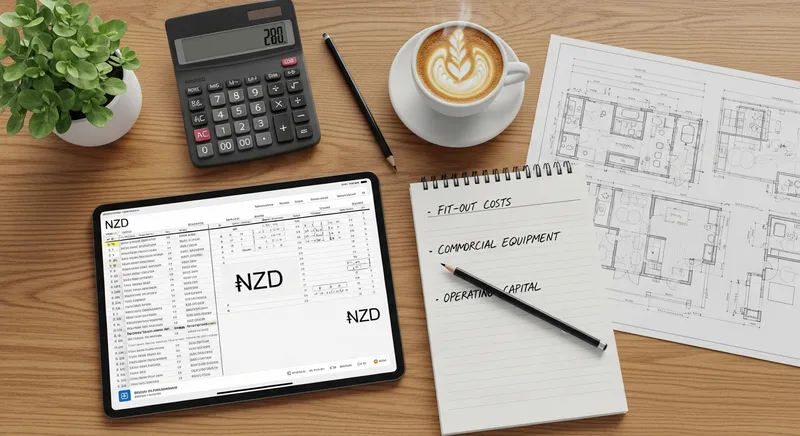
Here's a high-level summary:
| Cafe Type | Estimated Startup Cost Range (NZD) |
|---|---|
| Mobile Coffee Van/Cart | $40,000 - $90,000 |
| Small Basic Cafe (Takeaway-focused) | $120,000 - $250,000 |
| Medium-Sized Cafe (Dine-in) | $250,000 - $800,000+ |
These costs cover six main categories:
- Premises & Fit-Out
- Staffing Costs
- Equipment & Technology
- Licensing & Professional Fees
- Initial Stock & Marketing
- Working Capital
Actionable Tip: Use these ranges as a starting point. As you read through the detailed breakdown below, you can begin to build a more precise budget tailored to your specific vision.
Your Biggest Expense: Cafe Fit-Out Costs NZ
For any brick-and-mortar cafe, the fit-out will be your largest single investment. This is the process of turning an empty commercial shell into a functional, beautiful, and compliant cafe space. It includes everything from plumbing and electrical work to flooring, lighting, counters, and painting.
According to commercial real estate leader JLL's fit-out cost guide, a moderate-quality fit-out in Auckland averages around NZ$3,216 per square meter. Industry specialists at Total Fitouts provide a more granular view for hospitality:
- Basic Fit-Out: $1,200 - $1,800 per m² (Ideal for a simple, takeaway-focused spot)
- Mid-Range Fit-Out: $1,800 - $3,000 per m² (The most common range for a quality dine-in cafe)
- High-End Fit-Out: $3,000 - $5,000+ per m² (For premium locations with bespoke design)
Actionable Tip: Measure your potential space carefully. A modest 70m² cafe with a mid-range fit-out at $2,200/m² will require a fit-out budget of approximately $154,000. Always add a 10-15% contingency for unexpected issues.
Don't forget to budget for your lease deposit (typically 2-3 months' rent) and legal fees to have a lawyer review the commercial lease. Market conditions can affect rent; for example, reports from CBRE New Zealand have shown weaker demand can lead to rental declines in cities like Wellington, which could present a negotiation opportunity.
The People Power: Budgeting for Staffing Costs
Your team is the soul of your cafe, but labour is also one of your biggest ongoing expenses. In New Zealand, you must budget carefully for wages, PAYE tax, ACC levies, and KiwiSaver contributions. As of 2027, with ongoing adjustments to the minimum wage and the influence of Fair Pay Agreements, this cost requires close attention.
- Wages: Factor in the current minimum wage, but also consider paying a living wage to attract and retain quality staff. Your team will include baristas, kitchen staff, and front-of-house, each with different pay scales.
- PAYE & Employer Obligations: As an employer, you must register with the Inland Revenue Department (IRD) and manage PAYE deductions from your employees' wages.
- Labour Cost Percentage: Aim to keep your total labour costs, including your own salary if you're working in the business, between 30-35% of your total revenue.
Actionable Tip: Use modern scheduling software, often integrated into your POS system, to build efficient rosters. This helps prevent overstaffing during quiet periods and ensures you have enough hands on deck for peak rushes, directly controlling your biggest variable cost.
The Heart of Your Cafe: Equipment & Technology Costs
After the fit-out, your next major expense is equipping your cafe. This can be broken down into two key areas: the traditional kitchen and coffee gear, and the modern technology that runs your operations.
Coffee & Kitchen Equipment
This is the engine room of your cafe. Prices can vary widely based on whether you buy new, used, or choose to lease.
- Commercial Coffee Machine (2-group): $8,000 - $15,000+
- Coffee Grinders (2-3 units): $2,500 - $6,000
- Refrigeration (Under-counter, display, walk-in): $5,000 - $25,000+
- Commercial Dishwasher/Glasswasher: $3,000 - $7,000
- Cooking Equipment (Oven, grill, etc.): $4,000 - $20,000
- Ice Machine, Blenders, Microwaves: $2,000 - $8,000
- Counters, Shelving, and Stainless Steel Benches: $5,000 - $15,000
Actionable Tip: For high-cost items like your coffee machine and dishwasher, explore leasing options. This can convert a large upfront capital expense into a more manageable monthly operating cost, freeing up cash for other crucial areas.
Technology: Your POS System & More
In 2027, your Point of Sale (POS) system is the brain of your business. It does much more than process transactions; it manages orders, tracks inventory, and provides critical sales data.
Traditionally, this meant buying bulky, expensive hardware and software licenses, often costing over $5,000 upfront. This model is outdated and puts unnecessary strain on startup capital. Modern cloud-based systems have changed the game.
For example, traditional POS systems can require a $5,000-$8,000 investment before you even open. In contrast, modern systems like Lazygrid start at just $24 per month, with affordable hardware packages from $999. This approach significantly reduces your initial capital outlay, freeing up thousands of dollars for critical areas like marketing or working capital.
Cost-Saving Technology Tips A smart POS does more than take payments; it saves you money.
- Commission-Free Online Ordering: Avoid the 15-30% fees charged by third-party delivery apps by using an integrated system.
- Digital Loyalty Programs: Retaining a customer is 5x cheaper than acquiring a new one. A built-in loyalty system encourages repeat business.
- Automated Inventory: Reduce food waste, a major cost, by getting alerts for low stock and tracking ingredient usage precisely.
Your technology budget should also include:
- EFTPOS Terminal: Usually rented monthly from your bank or a provider.
- Security System: $1,000 - $4,000
- Sound System: $500 - $2,000
Actionable Tip: When budgeting for a POS, think about the total cost of ownership, not just the upfront price. A flexible monthly plan frees up thousands in startup capital that can be used for marketing or working capital. For more options, check out our guide on The 6 Best Restaurant Management Systems in NZ for 2026 (Beyond Just POS).
Navigating the Red Tape: Licensing & Professional Fees
These are the non-negotiable costs of doing business legally in New Zealand. Do not underestimate them.
- Food Control Plan (FCP): This is mandatory. According to the Ministry for Primary Industries (MPI), you must pay fees for registering your plan, getting it verified, and renewing it. Councils collect these fees on behalf of MPI.
- Council Registration: Each council sets its own fees. For example, Auckland Council charges around $396 for a new Template FCP registration.
- Liquor License: If you plan to serve alcohol, this is a separate, more costly, and time-consuming process. Budget several thousand dollars and a few months for this.
- Professional Fees: Budget for an accountant to help with company registration and tax setup ($500 - $1,500) and a lawyer to review your commercial lease ($1,000 - $2,500).
Actionable Tip: Contact your local council as soon as you have a potential location. Their website and business advisors are the definitive source for the specific food and business registration fees, processes, and timelines in your area. A solid plan is crucial, so consider using a template to create your own NZ Restaurant Business Plan: A Step-by-Step Guide for 2027.
The Hidden Killer: Budgeting for Working Capital
This is the single most underestimated cost and a primary reason why new hospitality businesses fail. Working capital is the money you need in the bank to pay all your bills before your cafe becomes profitable.
A safe rule of thumb is to have 3 to 6 months of operating expenses set aside. This is in addition to all the fit-out and equipment costs listed above.
Here's a simplified example of a monthly operating budget (or "burn rate") for a small cafe:
| Expense Category | Example Monthly Cost (NZD) | Percentage of Total |
|---|---|---|
| Rent | $5,000 | 20% |
| Staff Wages | $9,000 | 36% |
| Cost of Goods (Stock) | $7,500 | 30% |
| Utilities (Power, Gas, Water) | $1,250 | 5% |
| Marketing & Promotion | $750 | 3% |
| Technology (POS, Internet) | $250 | 1% |
| Insurance, Accounting, etc. | $1,250 | 5% |
| Total Monthly Expenses | $25,000 | 100% |
Based on this, your working capital should be $75,000 (3 months) to $150,000 (6 months), held in a separate bank account. This fund covers rent, wages, stock, utilities, software subscriptions, and any unexpected repairs while you build your customer base.
Actionable Tip: Understanding your ongoing finances is key. Learn more with The Ultimate NZ Guide to Your Restaurant's Profit & Loss Statement.
The Million-Dollar Question: Is Owning a Cafe Profitable in NZ?
Yes, it absolutely can be-but it requires excellent management. Profitability doesn't just happen; it's engineered.
The first number to know is your Gross Profit Margin. Based on official data from Stats NZ visualized by Figure.NZ, the median gross profit for cafes and restaurants in New Zealand is 63%. This is the profit left after subtracting the cost of goods sold (your coffee beans, milk, food ingredients).
Your Net Profit Margin is what's left after paying all other expenses: rent, wages, utilities, marketing, etc. This is typically much lower, often in the 3-9% range for a well-run cafe.
To make this tangible, consider a well-run 70m² cafe generating $25,000 in monthly revenue. With a 63% gross margin ($15,750) and tightly controlled operating costs, it could achieve a net profit of $2,000-$2,250 per month, which is an 8-9% net margin. Your POS system is crucial here; Lazygrid's real-time reporting helps you track these margins daily and make immediate adjustments to pricing or supplier costs to protect your profit.
Key drivers of profitability include:
- Controlling Prime Costs: Food and labour costs should ideally be below 60-65% of revenue.
- Building Repeat Business: Regulars are the lifeblood of any successful cafe.
- Efficient Systems: Smart scheduling, waste reduction, and inventory management are crucial.
Actionable Tip: Use your POS system's reporting to track your Gross Profit Margin in real-time. If you see it dipping below the 60% industry benchmark, you know you need to investigate your food costs or pricing immediately. Good systems can also help you Stop Employee Theft: 10 Ways to Protect Your NZ Restaurant.
Conclusion: Your Financial Blueprint for Success
Starting a cafe is a significant financial undertaking, but it doesn't have to be a mystery. By breaking down the costs into the core pillars of Fit-Out, Staffing, Equipment, Licensing, and Working Capital, you can move from a state of overwhelm to a position of control.
A detailed budget is not a barrier to your dream; it's the first essential tool for building a resilient and successful business. Use this guide to create a realistic financial plan, and you'll be well on your way to opening your doors with confidence.
Ready to take the next step?
- Download our free NZ Cafe Startup Cost Calculator to input your own numbers and build a detailed budget.
- Book a free 15-minute consultation to discuss your cafe concept and get personalized advice on using technology to lower your startup costs.
Frequently Asked Questions
How much does a commercial coffee machine cost in NZ?
A new, quality 2-group commercial coffee machine, which is suitable for most cafes, typically costs between $8,000 and $15,000. A larger 3-group machine for very high-volume locations can range from $15,000 to over $25,000. To manage this significant upfront expense, many new owners explore leasing options, which turns the cost into a smaller, predictable monthly payment.
What are the main cafe license requirements in NZ?
The two fundamental requirements for any cafe in New Zealand are: 1) having a Food Control Plan (FCP), which outlines your food safety procedures, and 2) registering your business with your local council, who will verify your plan and issue a Certificate of Registration. This is mandatory under the Food Act 2014. If you intend to serve alcohol, you will need a separate, more complex, and costly liquor license.
What is a good profit margin for a cafe in New Zealand?
It's important to distinguish between gross and net profit. A good Gross Profit Margin (revenue minus the direct cost of food and beverages) is around 60-65%, with the median for NZ cafes being 63% according to official data. However, a good Net Profit Margin (the final profit after all expenses like rent, wages, and utilities are paid) is much lower, typically landing in the 3% to 9% range for a well-run establishment.
Is it cheaper to start a mobile coffee van than a cafe?
Yes, it is significantly cheaper. A mobile coffee van startup can typically range from $40,000 to $90,000. This is substantially less than a brick-and-mortar cafe (which starts at $120,000+) because you eliminate the two largest expenses: a major commercial fit-out and a long-term commercial lease with a large bond.
How much working capital do I need to start a cafe?
The industry-standard rule is to have enough cash in the bank to cover 3 to 6 months of all your operating expenses. Calculate your total monthly costs (rent, wages, utilities, insurance, stock, etc.) and multiply that figure by at least three. This fund is crucial for survival as it covers your bills before your cafe starts generating a consistent profit.