
Cloud POS ROI for NZ Cafes, Salons & Restaurants
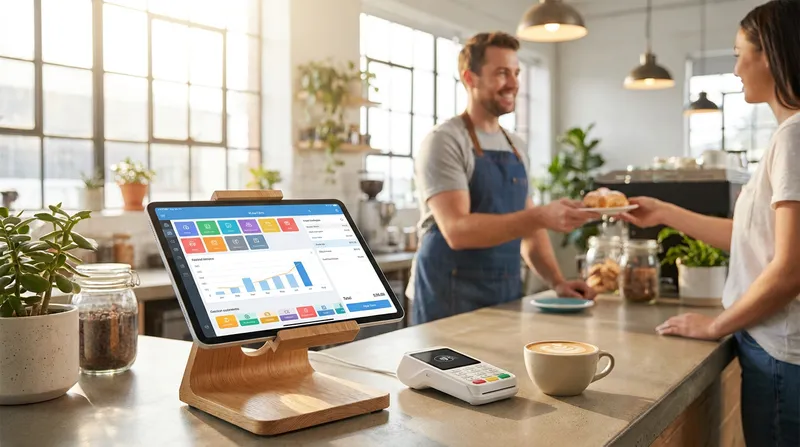
Cloud POS ROI for NZ Cafes, Salons & Restaurants
Many hospitality owners in New Zealand are caught in a common financial trap: the sunk cost fallacy. Years ago, you might have spent upwards of $10,000 on a clunky, traditional point-of-sale system. Today, because that hardware is technically "paid off", you might refuse to upgrade. You might be completely unaware that this paid-off system is actively bleeding money from your business every single day through hidden maintenance fees, hours of manual reconciliation, and lost table turnover.
Whether you run a busy Auckland cafe, a Wellington restaurant, or a mobile food truck, this guide breaks down the numbers for your specific situation. In the modern hospitality industry, your POS system should not be viewed as a sunk cost or a necessary evil. It should be a primary revenue driver. Upgrading to a cloud-based system is one of the most financially sound decisions you can make for your venue.
This guide breaks down the true financial return on investment (ROI) of migrating to a cloud POS system. We will explore how eliminating server maintenance, automating your inventory, and increasing table turnover can transform your daily operations and your bottom line.
Why Your 'Paid Off' Legacy POS is Costing You Thousands
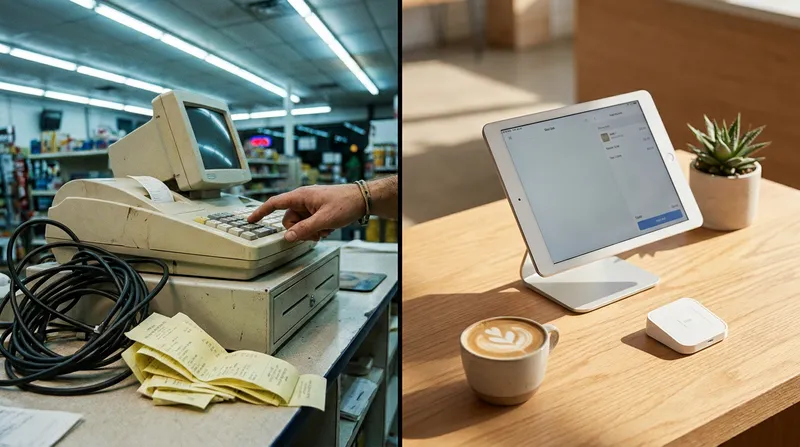
It is easy to look at a traditional POS terminal sitting on your counter and think it is no longer costing you money. However, legacy systems carry a massive burden of hidden operational costs.
First, you must understand the difference between CapEx (capital expenditure) and OpEx (operational expenditure). Traditional systems require a huge CapEx upfront to purchase proprietary hardware and back-office servers. Cloud software shifts costs from large upfront capital expenditures to predictable operational expenditures, significantly lowering the barrier to entry for small and midsize businesses, according to financial insights from Epicor.
When you hold onto a legacy system, you are paying for it in other ways:
- Proprietary hardware repairs: When a specialized terminal breaks, you cannot just buy a replacement at a local electronics store. You have to order expensive, proprietary parts.
- Mandatory server updates: Legacy systems often require physical servers on-premises. When these need updating, you are forced to pay hefty licensing fees.
- IT callout fees: Every time your system crashes or needs a network adjustment, you have to pay an IT specialist hundreds of dollars just to walk through your door.
By clinging to a system simply because you already paid for it, you are actively choosing to endure high maintenance costs and operational inefficiencies.
Breaking Down the True ROI of Cloud POS Systems
What does ROI actually mean for a busy cafe, salon, or restaurant? It is not just about the cost of the software. True ROI is measured by the tangible financial impact the system has on your daily operations.
The formula for measuring POS success is simple: Time Saved + Increased Revenue - Monthly Subscription Cost = True ROI.
Cloud technology positions your point of sale as a revenue driver. When you switch to a modern system, you are investing in a tool designed to cut waste, speed up service, and encourage customers to spend more money. Let us break down exactly where these financial returns come from.
Eliminating Expensive Hardware and Server Maintenance
Cloud POS systems completely remove the need for on-premises back-office servers. All of your data is stored securely in the cloud, meaning you never have to pay for server maintenance, physical backups, or emergency data recovery again.
Furthermore, cloud systems operate on consumer off-the-shelf hardware. Instead of buying a $3,000 proprietary terminal, you can run your entire business on a standard Apple iPad. If an iPad gets dropped and breaks during a busy Friday night service, you can simply walk into any retail store on Saturday morning, buy a new one, log into your cloud account, and be fully operational in five minutes.
This shift drastically reduces your hardware costs. For a complete breakdown on how to source affordable hardware setups locally, check out our iPad POS Setup Guide for NZ Businesses (2026). By removing the reliance on specialized equipment, you instantly improve your profit margins.
Reclaiming Wage Costs with Automated Inventory and Accounting
One of the most significant, yet often overlooked, expenses in hospitality is the wage cost of administrative work. Think about how many hours you or your managers spend every week manually counting inventory, cross-checking spreadsheets, and reconciling end-of-day sales.
If a manager spends just five hours a week on manual reconciliation at a rate of $25 per hour, that costs your business $6,500 every year in wasted labor. Modern POS systems improve a merchant's chances of success by providing tools to streamline business operations, improve inventory control, and track real-time data about sales performance, as noted by the US Small Business Administration.
Cloud POS systems integrate directly with accounting software like Xero. At the end of the night, your sales data, tax calculations, and payment summaries sync automatically. Additionally, real-time inventory tracking deducts ingredients as soon as a meal is ordered. This prevents costly stockouts and reduces food waste by highlighting exactly what is selling and what is expiring on your shelves. The wage savings alone often pay for the monthly POS subscription several times over.
Maximizing Table Turnover and Daily Revenue
In a dine-in restaurant or busy cafe, time is literally money. The faster you can seat a table, take their order, serve their food, and process their payment, the more revenue you can generate in a single shift.
Point of Sale systems and mobile ordering enable restaurants to combat labor crises and process transactions seamlessly, allowing businesses to operate efficiently even with reduced staff, according to research from the Boston University School of Hospitality Administration.
Consider the financial impact of tableside ordering and integrated EFTPOS payments. If your staff can take orders on a mobile device directly at the table, those orders are sent instantly to the kitchen display system (KDS). When orders fire directly to a kitchen display screen, ticket times drop and tables turn faster. This cuts out the time spent walking back and forth to a stationary terminal.
Let us look at the math. If this efficiency allows you to turn just two extra tables per shift, and your average table spend is $60, that is an extra $120 per day. Over a standard 300-day trading year, that equals $36,000 in additional annual revenue. Cloud POS systems make this level of efficiency standard.
Industry-Specific Financial Benefits in New Zealand
While the general benefits of cloud POS systems apply to all businesses, different niches experience unique financial returns. Here is how specific hospitality sectors in New Zealand can maximize their ROI.
Cafe POS Systems: Speeding Up the Morning Coffee Rush
For cafes, profitability relies entirely on volume. During the morning coffee rush, a long queue can cause potential customers to turn around and walk out. Every customer who leaves is lost revenue.
A cloud-based cafe POS focuses on transaction speed. With an intuitive iPad interface and integrated EFTPOS NZ terminals, your staff can process orders in seconds. Additionally, a self-service kiosk lets regular customers order and pay independently, freeing your barista to focus entirely on making drinks.
Furthermore, built-in digital loyalty programs increase customer lifetime value. Instead of paying for hundreds of paper stamp cards that get lost or destroyed, you can track customer purchases digitally. This encourages repeat visits and higher spending without any recurring printing costs.
Actionable Tip: Set up a digital loyalty reward that triggers during your slowest hours (for example, double points between 2 PM and 3 PM) to drive traffic when you need it most.
Salon & Wellness POS: Seamless Online Bookings and Upsells
Massage shops, beauty salons, and wellness centers face a different set of challenges. For these businesses, a single no-show appointment can cost hundreds of dollars in lost revenue and wasted staff time.
Modern salon POS software includes integrated online booking systems that send automated SMS and email reminders to clients. This simple feature can reduce no-shows by up to 50 percent. When comparing options for your venue, finding the best NZ booking system integrated directly into your POS is crucial for protecting your daily revenue.
Additionally, the POS interface can prompt staff to offer retail product upsells during the checkout process. Recommending a specific massage oil or hair care product based on the client's service history can easily boost your average transaction value by 15 to 20 percent. Digital gift cards and vouchers are also particularly powerful for wellness businesses, especially around Mother's Day and Christmas when treatment packages are a popular gift.
Actionable Tip: Configure your POS to require a small digital deposit for high-value bookings to completely eliminate the financial risk of no-shows.
Food Truck POS: Offline Reliability and Mobility
Food trucks operate in highly unpredictable environments. Whether you are parked at a busy summer festival in Auckland or a remote weekend market in Otago, you need a system that can handle the elements and the crowds.
The biggest financial risk for a food truck is losing the ability to take payments due to a poor internet connection. Cloud POS systems designed for mobile businesses utilize 4G/5G connectivity and feature robust offline modes. If the festival internet crashes, your POS will continue to record sales and queue credit card transactions to be processed the moment you are back online, completely mitigating the risk of lost revenue.
A 3-Year Cost Comparison: Legacy vs Lazygrid Cloud POS
To truly understand the ROI, we need to look at a concrete, hypothetical 3-year financial breakdown comparing a traditional legacy system with a modern cloud solution like Lazygrid.
Embracing mobile ordering and modern payment systems can enhance the customer experience, reduce manual labor, and increase table turnover to help businesses navigate rising operational costs, according to insights shared by The Shout NZ featuring the Restaurant Association of New Zealand.
Here is what the math looks like over 36 months for a standard medium-sized restaurant:
| Expense Category | Legacy POS System | Lazygrid Cloud POS (Standard) |
|---|---|---|
| Initial Hardware & Server Setup | $10,000 | $2,000 |
| Annual Software Licensing (3 Years) | $3,600 | $2,124 ($59/month) |
| IT Callouts & Server Maintenance | $2,400 | $0 (Automatic updates) |
| Proprietary Hardware Repairs | $1,500 | $500 |
| Total 3-Year Cost | $17,500 | $4,624 |
| Total Savings | $12,876 |
Note: This calculation is based on the Lazygrid Standard plan. The Lite plan starts at just $24/month for smaller operations like single food trucks or boutique cafes.
The direct cost savings amount to nearly $13,000 over three years. However, this calculation does not even include the secondary financial benefits. When you factor in the $6,500 saved annually on manual bookkeeping wages and the potential $36,000 gained annually from faster table turnover, the financial argument becomes undeniable.
For more insights on optimizing your technology budget, explore our POS Tips & Insights NZ archive.
Conclusion: Making the Financially Smart Switch Today
Viewing your point of sale system as a sunk cost is a dangerous mindset in today's competitive hospitality market. The true ROI of a cloud POS system like Lazygrid comes from multiple distinct channels: drastic wage savings through automated accounting, significantly lower upfront hardware costs, eliminated IT maintenance fees, and increased daily revenue through faster table turnover.
Stop letting your "paid off" legacy system drain your profits behind the scenes. It is time to evaluate exactly how much time and money your current setup is costing you each week.
Ready to see what a cloud POS could do for your venue? Explore Lazygrid's plans or request a personalized walkthrough today for an ROI calculation tailored specifically to your New Zealand business.
Frequently Asked Questions
How much does it cost to switch to a cloud POS system in NZ?
Cloud POS systems have a much lower barrier to entry compared to legacy systems. Instead of paying thousands of dollars upfront for proprietary servers and terminals, businesses only need affordable consumer hardware like iPads. You then pay a predictable, low monthly software subscription, which drastically reduces your initial capital expenditure.
Can a cloud POS system work if my internet goes down?
Yes. Modern cloud systems like Lazygrid feature robust offline modes. This allows cafes, restaurants, and food trucks to continue taking orders, printing kitchen dockets, and accepting cash payments even during internet outages. Once the connection is restored, all data automatically syncs to the cloud.
Does a cloud POS integrate with Xero and NZ EFTPOS providers?
Absolutely. Direct integrations with Xero and local EFTPOS NZ providers are standard features. This completely eliminates manual data entry errors, saves hours of bookkeeping time each week, and ensures your end-of-day reconciliation is perfectly accurate.
How long does it take to train staff on a new iPad POS?
Because the interface mimics the modern smartphones and tablets that your staff already use every day, training takes minutes rather than days. This intuitive design drastically reduces staff onboarding costs and minimizes order errors during their first few shifts.
Is a cloud-based POS secure for processing customer payments?
Cloud systems are highly secure. They use bank-level encryption and perform automatic remote backups continuously. This makes them significantly more secure against data loss, theft, or physical damage than a physical server sitting in a restaurant back office.