
KDS Analytics: Reduce Staff Stress & Boost Retention
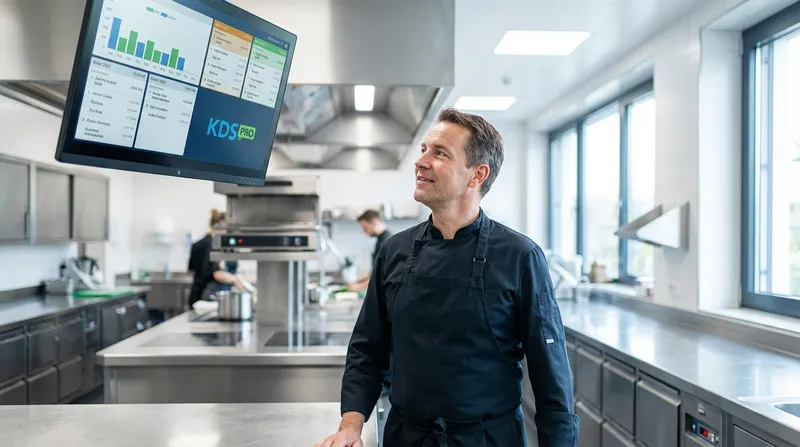
Introduction: The Real Reason Your Best Kitchen Staff Are Leaving
As a restaurant or cafe owner in New Zealand or Australia, you know the constant challenge of finding and keeping great kitchen staff. It's one of the biggest pain points in the industry, with the National Restaurant Association reporting that 77% of operators find retaining employees to be a significant challenge. For years, we've been told that a Kitchen Display System (KDS) is a tool for speed and accuracy—'faster ticket times,' 'no more lost tickets.' While that's true, it misses the bigger picture.
What if your KDS wasn't just a ticket manager, but a powerful tool for understanding and reducing the very stress that causes your best people to leave? This guide will show you a superior angle: how to analyse the data your KDS is already collecting to improve employee well-being, create a calmer kitchen, and boost retention.
Beyond Burnout: The True Cost of a Stressed-Out Kitchen
A revolving door of kitchen staff isn't just frustrating; it's incredibly expensive. The hospitality sector consistently has one of the highest quit rates of any industry, according to data from the U.S. Bureau of Labor Statistics—a challenge echoed across Australasia. This constant churn directly hits your bottom line through recruitment costs, endless training hours, lost productivity, and the inconsistent food quality that frustrates customers.

Much of this turnover is driven by the high-pressure, high-stress environment of the kitchen. Physical factors like extreme heat can lead to serious health issues like heat exhaustion, a hazard recognized by government bodies like the Occupational Safety and Health Administration (OSHA). When operational chaos is added to the mix, it's a recipe for burnout. Viewing employee retention as a critical financial metric—not just an HR problem—is the first step toward solving it.
Your KDS Is a Goldmine: Unlocking Human-Centric Kitchen Performance Metrics
Your modern Point of Sale system is capturing a wealth of information that goes far beyond daily sales. Every time an order is sent to the kitchen, your KDS logs operational patterns. Modern POS systems like Lazygrid capture this data automatically, presenting it in an easy-to-use analytics dashboard. It's time to look past standard metrics and uncover the human story in your data. While many business owners are looking at 2025 POS Trends to improve efficiency, the smartest operators are using them to support their teams.
Instead of just looking at average ticket time, start tracking:
- Ticket Time Per Station: Which station is consistently the slowest?
- Modification Frequency Per Item: Which dishes are constantly being changed, causing confusion?
- Prep Time Per Item: Which menu items take disproportionately long to prepare?
This shift in perspective moves you from reactively dealing with a chaotic service to proactively identifying and fixing the root causes of stress before they overwhelm your team.
3 Actionable Ways to Use KDS Data for a Happier, More Efficient Kitchen
Ready to turn data into a better work environment? Here are three practical strategies you can implement by digging into your KDS analytics. Each one focuses on using data to make targeted, impactful changes that your staff will notice and appreciate.
1. Engineer Your Menu to Reduce Complexity and Stress
Traditional menu engineering, as defined in academic research from institutions like the University of Nevada, Las Vegas, focuses on balancing an item's popularity with its profitability. We propose adding a third dimension: kitchen complexity.
A menu item that is profitable on paper can become a liability if it consistently causes stress and errors in the kitchen. Use your KDS reports to identify these 'stressor' items.
How to do it:
- Run a Modification Report: Pull data for the last month and find the top 3-5 items with the highest frequency of modifications. These are your problem children. They cause confusion for front-of-house staff taking the order and stress for back-of-house staff trying to get it right.
- Analyse Prep Times: Look at the 'prep time per item' report. Is there an item that takes twice as long to prepare as everything else? This single dish could be the source of major bottlenecks during a rush.
Actionable Tips:
- Simplify: If an item is constantly modified, the options may be too confusing. Simplify them or create a separate, clearer 'build your own' option.
- Clarify: Update the menu description so customers know exactly what they're getting, reducing the need for special requests.
- Re-engineer: For items with long prep times, can you pre-batch certain ingredients? Can the process be simplified without sacrificing quality? A well-designed menu is also crucial for boosting sales through your online ordering system.
2. Identify and Eliminate Kitchen Bottlenecks
A bottleneck is any point in your workflow that gets overwhelmed, holding up the entire process. Your KDS is the perfect tool for kitchen bottleneck analysis because it sees the entire flow of orders.
Imagine your grill station chef is constantly stressed and behind, while the fry cook is often waiting for orders. This is a classic workflow imbalance that KDS data can make visible. By analysing ticket times by station, you can see which parts of your line are under the most pressure and when.
How to do it:
- Analyse Ticket Times by Station: During your busiest hour in your Auckland cafe, which station consistently has the longest ticket times? This is your primary bottleneck.
- Look for Order Clustering: Does your KDS show a flood of orders for the same station all at once? This could be a menu issue (too many items using the same station) or a pacing issue from the front of house.
Actionable Tips:
- Reorganise Your Layout: Can you move stations closer together to reduce movement? Is equipment placed logically for a smooth workflow?
- Cross-train Staff: Train your team to be able to float between stations. If the fry cook can help plate during a grill rush, the whole kitchen moves faster.
- Pace the Orders: Use your POS to strategically pace orders sent to the kitchen during peak times. This prevents a single station from getting buried and can dramatically improve the table turnover rate without rushing guests.
3. Create Smarter Schedules and Balanced Workloads
Good management is a key factor in retention. Research from top hospitality schools like Cornell University shows that competent leadership and a supportive environment are crucial for keeping staff. Using data to build fair and effective schedules is a powerful way to demonstrate that competence.
Your KDS data offers a much more granular view than just 'we're busy from 6-8 PM.' It can tell you what you're busy with.
How to do it:
- Analyse Order Types by Hour: Does your data show a huge influx of complex cocktail orders from 5-6 PM? Or a rush on takeaway desserts at 9 PM? This tells you not just when you need staff, but who you need.
- Example: If your KDS shows a midday rush on highly customised espresso drinks, you know that's when you need your most experienced barista on shift, perhaps with an extra set of hands just for that hour. It's a targeted solution that solves a specific stress point.
This data-driven approach to scheduling shows your team that you understand their specific workload challenges. For businesses with multiple locations, a modern POS like Lazygrid allows you to analyse and manage this across all sites from a single dashboard, as explained in our guide to multi-location systems.
From a Calm Kitchen to a Healthy Bottom Line
Focusing on the well-being of your kitchen staff isn't just a 'nice-to-have'—it's a powerful business strategy. A less-stressed team is a more focused and efficient team.
The benefits translate directly to your bottom line:
- Fewer Errors: A calm, organised kitchen makes fewer mistakes, leading to better order accuracy and less food waste.
- Higher Retention: Happy staff stay longer. This drastically reduces your costs for recruitment, hiring, and training.
- Improved Profitability: Research shows that higher employee engagement is directly linked to higher operating margins. A positive work environment becomes a competitive advantage, helping you attract the best talent.
By using data to invest in your team's well-being, you are making one of the smartest financial investments for your business. It's a strategy that can be even more effective than many traditional low-cost marketing ideas.
Conclusion: Your KDS is Your Best Retention Tool
Your Kitchen Display System is so much more than a digital ticket rack. It's an insightful analytics tool that can help you transform your kitchen from a place of stress into an environment of supported, professional efficiency. By focusing on the human element hidden within the data, you can build a stronger, happier, and more loyal team.
Start today by focusing on the three key areas:
- High-stress menu items
- Kitchen bottlenecks
- Unbalanced workloads
By making small, data-informed changes in these areas, you create a ripple effect that improves morale, reduces turnover, and ultimately strengthens your entire business. A modern, hyper-local POS system like Lazygrid gives you the tools you need to not only run your business, but to build a better workplace.
Frequently Asked Questions
What is KDS reporting?
KDS reporting provides detailed data captured by your Kitchen Display System. In a system like Lazygrid, this is presented in an easy-to-read dashboard that tracks crucial metrics like individual item prep times, ticket duration per station, and modification counts. This gives you deep, actionable insights into your kitchen's real-world operations.
How can technology really reduce employee stress?
Technology reduces stress by providing objective data to identify the root causes of that stress. Instead of just telling staff to 'work faster,' you can use KDS data to pinpoint specific bottlenecks, confusing menu items, or unfair workloads. This allows you to make targeted improvements to the system and environment, which is far more effective than simply demanding more from your team.
What are the most important kitchen metrics for staff well-being?
The most revealing metrics are those that highlight friction points in your kitchen. You should focus on Prep Time Per Item, Modification Frequency, Ticket Time by Kitchen Station, and Order Clustering during peak hours. Each of these metrics can point you toward a specific source of stress for your team.
My restaurant is small. Is this level of data analysis still useful?
Absolutely. Even in a small kitchen with a two or three-person team, identifying the one menu item that causes confusion or the one station that gets slammed can make a huge difference. The principles of reducing friction are universal, and modern systems are scalable for businesses of any size.
How do I start menu engineering to reduce kitchen stress?
Start with a simple, high-impact action. Use your POS system's 'Modification Report' for the last 30 days and identify your top 3 most-modified items. Ask why they are being modified—is the menu description unclear, or are there too many options? Make one small change, like clarifying a description, and then measure the impact.