
NZ Food Safety Compliance: The Complete 2027 Guide for Hospitality

Navigating the world of food safety compliance in New Zealand can feel like a daunting task. Between dense government websites, council-specific forms, and legal jargon, it's easy for new restaurant, cafe, and food truck owners to feel overwhelmed. You're trying to build a business, not become a legal expert. The information is fragmented, leaving you to piece together a puzzle without knowing what the final picture should look like.
This is the core challenge for passionate business owners: there's no single, clear roadmap that takes you from concept to a fully compliant, operational business. Until now.
This guide is designed to be your one-stop resource for mastering New Zealand food safety in 2027. We will break down the requirements into a simple, step-by-step process. We'll show you how to view compliance not as a burden, but as a powerful tool to build customer trust, improve efficiency, and protect your brand. Let's turn confusion into confidence.
The Food Act 2014: What You Actually Need to Know
At the heart of New Zealand's food regulations is the Food Act 2014. Its main goal is to ensure that food sold throughout the country is safe and suitable to eat. The good news is that it's designed to be flexible and practical.
The Act introduced a "sliding scale" approach to food safety. This means that businesses with higher-risk food activities, like a restaurant preparing a wide range of meals, have more stringent requirements than a business with lower-risk activities, like a convenience store selling only pre-packaged snacks. The level of control you need is directly related to the level of risk you manage. This is a shift away from a one-size-fits-all model, making compliance more logical for your specific business type.
Getting this right is not just about avoiding fines; it's about protecting your customers. According to data from the New Zealand Government, thousands of Kiwis get sick from foodborne illnesses each year, with many cases linked to food prepared outside the home. A robust food safety plan is your best defence and a cornerstone of a reputable business.
Food Control Plan (FCP) vs. National Programme: Which One is for You?
Under the Food Act, your business will fall into one of two main categories. Understanding which one applies to you is the first critical step.
Food Control Plans (FCPs)
An FCP is a written plan for managing food safety on a day-to-day basis. It identifies food safety risks in your business and sets out the steps you will take to manage them. This is for higher-risk businesses.
Who needs an FCP?
- Restaurants and cafes
- Caterers
- Takeaway shops (QSRs)
- Food trucks serving hot meals
Essentially, if you are preparing and cooking food, you will almost certainly need a Food Control Plan.
National Programmes (NPs)
National Programmes are for medium to low-risk food businesses. Instead of writing your own plan, you must register with your local council, meet food safety standards, keep some records, and get checked.
There are three levels of National Programmes, based on risk:
- NP Level 3: For businesses like brewers, food additive manufacturers, or transporters of food.
- NP Level 2: For businesses like fruit and vegetable packhouses or bread bakeries.
- NP Level 1: For businesses like transporters of fruit and vegetables, or those who only serve hot drinks and pre-packaged snacks.
Special Case: What About Salons, Spas, and Shops?
This is a common point of confusion. If you only serve low-risk items like water, tea, coffee, or shelf-stable, pre-packaged biscuits, you fall into the lowest risk category. You will likely operate under National Programme 1. This is the simplest level of compliance, requiring you to ensure good hygiene and safe sourcing of your items, but without the extensive daily record-keeping of a full FCP.
Actionable Tip: Use the Ministry for Primary Industries (MPI) tool, My food rules, to get a definitive answer on which plan applies to your specific business activities.
Your 7-Step Food Safety Compliance Checklist
Here is your practical, start-to-finish roadmap to getting your business compliant.
Quick Summary: Your Compliance Roadmap
- Determine Your Plan: Use the 'My food rules' tool to see if you need an FCP or NP.
- Register: Register your company and then your food business with your local council.
- Train Staff: Ensure key staff have formal food safety training.
- Set Up FCP: Customise the MPI template plan for your business.
- Appoint Verifier: Choose and schedule a visit with an MPI-approved verifier.
- Implement Practices: Turn your plan into daily operational habits.
- Pass Verification: Successfully complete your audit to get your grade.
Step 1: Determine Your Plan (FCP or National Programme)
As discussed above, this is your first task. Use the 'My food rules' tool from MPI to confirm your requirements. For the rest of this guide, we will focus primarily on the Food Control Plan (FCP), as it applies to most restaurants, cafes, and food trucks.
Step 2: Register Your Business
Before you can legally sell food, you must be registered. This is a multi-part process that involves both national and local steps. Your total NZ Cafe Startup Costs will need to factor in registration and verification fees, which can range from $300 to over $700 depending on your council and business type.
- Register as a Company: First, ensure your business is registered as a legal entity in New Zealand.
- Register with Your Council: You must register your food business with your local council. The process is similar across the country, whether you're dealing with Auckland Council, Wellington City Council, or Christchurch City Council. This registration must be renewed annually.
Step 3: Get Your Staff Trained
Your plan is only as good as the people who execute it. While you don't need every staff member to have a formal certificate, your designated manager or key food handlers should have formal training. Reputable institutions like the New Zealand School of Food & Wine offer courses that cover the essential NZQA Unit Standard 20666, which is what councils look for. This training covers critical topics like personal hygiene, temperature control, and cross-contamination prevention.
Step 4: Set Up Your Food Control Plan
For most businesses, you won't need to write a complex plan from scratch. MPI provides template FCPs that cover most standard restaurant and cafe operations. The official steps to a template FCP guide you through downloading and customising the plan for your business. Your FCP will include sections for:
- Staff training records
- Supplier details
- Cleaning and maintenance schedules
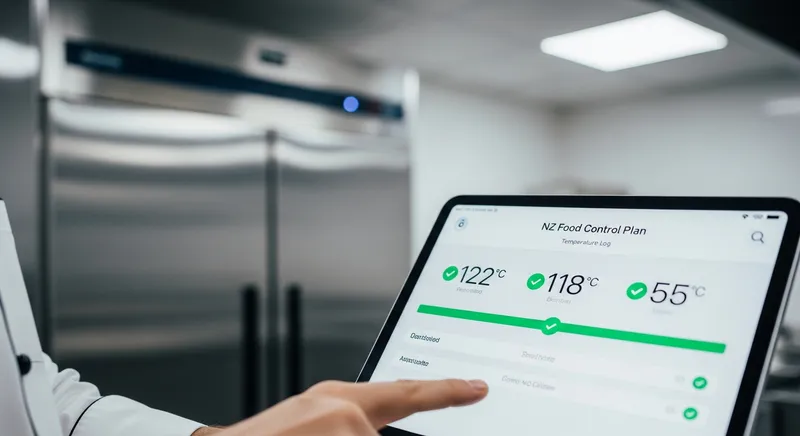
- Temperature logs
- Pest control
Pro Tip: Go Digital from Day One Instead of relying on messy paper binders that get lost or damaged, use a modern cloud POS system to manage your records. Integrated Inventory Management can track suppliers and expiry dates automatically. Digital forms and reporting features mean your temperature logs and cleaning schedules are always accurate, complete, and ready for your verifier-no more last-minute panic.
Step 5: Appoint a Verifier
A verifier is an independent person or company authorised by MPI to check if your business is following its Food Control Plan. You are responsible for choosing and paying your own verifier. MPI provides a public register to find one in your area. According to MPI, a new business must schedule its first verification visit within 6 weeks of becoming registered.
Step 6: Implement Your Daily Food Safety Practices
This is where the plan becomes action. Your daily operations must reflect the procedures outlined in your FCP. This includes diligent temperature logging, strict cleaning schedules, and robust allergen management. We will cover these in more detail below.
Step 7: Pass Your Verification Audit
During the verification visit, the auditor will review your records, observe your staff, inspect your premises, and ask questions to ensure you are following your plan. If you pass, you will receive a grade and your registration will be confirmed. If there are issues, you will be given a timeframe to correct them.
A Closer Look: Essential Daily Practices for Your Business
Passing your audit isn't a one-time event; it's the result of consistent daily habits. Here's how to master the most important ones.
Temperature Logging for Food Safety NZ: Correct temperature control is non-negotiable. You must log temperatures for refrigerators, freezers, and hot-holding units daily. A digital system is far superior to a paper log. It prevents missed entries, ensures accuracy, and makes your verification audit seamless. A modern POS with Reporting & Analytics can help you spot trends, trigger alerts, and ensure consistency.
Allergen Management NZ: With allergies on the rise, this is a critical area of risk and customer trust. Your FCP must detail how you will manage allergens, from receiving goods to serving the final dish. This includes training staff on the most common allergens and ensuring your menu is clear. Excellent menu design is key; for more on this, explore tips on Menu Psychology NZ.
Cleaning and Sanitising: Create a detailed cleaning schedule that covers all areas of your kitchen and front-of-house. This should specify what needs cleaning, how it should be cleaned, what chemicals to use, and who is responsible. Log its completion daily, ideally using a digital checklist.
Record Keeping as a Business Tool: Many see record-keeping as a chore, but it's a goldmine of business data. Tracking supplier details, delivery dates, and batch numbers in your POS Inventory Management system not only ensures traceability for food safety but also helps you manage stock levels, reduce waste, and calculate your true cost of goods. This data can even help you Stop Employee Theft by highlighting unexplained stock shrinkage.
Niche Guide: Food Truck Regulations & Compliance
Food trucks have unique compliance challenges. In addition to your FCP, you will need a mobile trading license from the council in every area you wish to operate. Using the Auckland Council food truck guide as a reference, you will also need to meet requirements for water supply, waste disposal, and electrical safety.
A reliable, mobile POS system is crucial for food trucks. It allows you to manage orders, take payments, and track inventory in a compact, internet-independent environment. For more on choosing the right system, see our guide on POS alternatives for NZ food trucks.
The Competitive Advantage of Compliance
Viewing food safety as just a set of rules is a missed opportunity. When you achieve and display a high compliance grade, you are sending a powerful signal to customers. In an age where diners are more health-conscious than ever, a visible 'A' grade is a mark of quality and trust that can directly influence their choice of where to eat. Excellent compliance becomes a marketing asset, differentiating you from the competition and building a loyal customer base that values your commitment to their safety.
Conclusion: From Compliant to Confident
Achieving food safety compliance in New Zealand is a journey of clear, manageable steps. By following the 7-step process outlined above-from understanding your obligations under the Food Act 2014 to implementing robust daily practices-you can build a safe and successful business.
Remember, your Food Control Plan is more than a legal document; it's the operational blueprint for excellence. When you leverage modern tools like a cloud-based POS system, you transform compliance tasks from a burden into a source of valuable business intelligence.
By embracing these practices, you're not just passing an audit. You're building a resilient brand that customers trust, protecting your community, and setting a solid foundation for growth.
Managing food safety is easier with the right tools. If you're looking to understand how an integrated system can help you stay compliant without the paperwork, explore these 5 key restaurant problems a cloud POS system solves for NZ owners.
Frequently Asked Questions
How often do I need to renew my food safety certificate in NZ?
Individual food handling certificates (like those based on NZQA unit standards) do not have a formal expiry date. However, the Food Act 2014 requires businesses to ensure their staff have up-to-date knowledge. For this reason, it is considered industry best practice to refresh food safety training every two to three years. Your business's registration with the council, on the other hand, must be renewed annually.
What's the difference between a Food Control Plan (FCP) and a National Programme (NP)?
The key difference is the level of food safety risk. A Food Control Plan (FCP) is a detailed, customized written plan for higher-risk businesses like restaurants, cafes, and takeaways that prepare and cook a variety of foods. A National Programme (NP) is a set of standard food safety rules for lower-risk businesses, such as those that only sell pre-packaged food or serve hot drinks. An FCP requires you to identify and manage your own risks, while an NP requires you to follow a prescribed set of rules.
How much does it cost to get a food license in NZ?
This cost varies widely depending on your local council and business type. You should budget for registration application fees, annual renewal fees, and verification costs. All in, expect to pay between $300 and $700+ for your first year. For example, fees in Auckland will differ from those in Wellington or Christchurch. Check your specific council's website for their current fee schedule.
Do I need a food safety plan to sell food from home?
Yes. If you are selling food to the public, the rules apply regardless of where you make it. A home-based food business must be registered and operate under the appropriate plan, either a Food Control Plan or a National Programme. You will also need to meet council requirements for your home kitchen to be used for commercial purposes, and you will need to be verified just like any other food business.
What are the rules for serving drinks in a non-food business like a salon or spa?
This is a common question for businesses where food is not the primary service. If you are only serving very low-risk items-such as water, tea, coffee, or commercially pre-packaged biscuits-you will typically fall under the lowest level of regulation, National Programme 1. This still requires you to register and follow basic food hygiene practices (e.g., clean equipment, safe water), but it is far less intensive than a full Food Control Plan. You must still use the MPI 'My food rules' tool to confirm this applies to you.