
Michelin Guide NZ 2026: Is Your Restaurant's Tech Ready for the Stars?
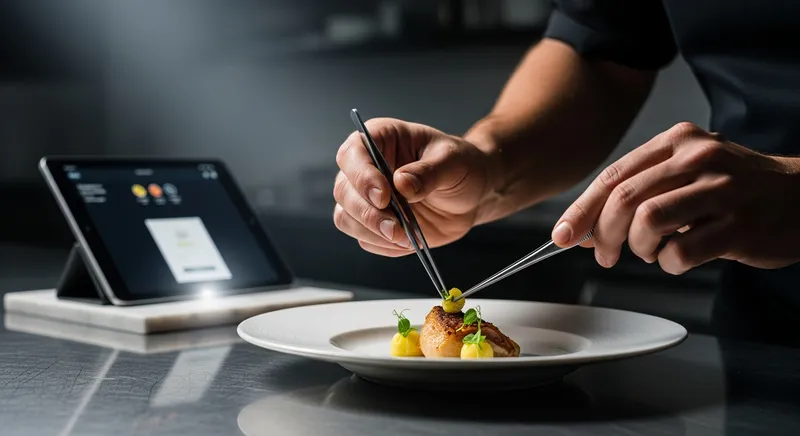
Get Ready for the Stars: Is Your Restaurant's Tech Prepared for the 2026 Michelin Guide NZ?
The whispers are growing louder in the New Zealand hospitality scene: the prestigious Michelin Guide may be heading to our shores by 2026. For ambitious restaurateurs, this is the moment you've been working towards - a chance to put your culinary vision on the world stage.
But this raises a critical question. You know earning a star is about artistry, passion, and relentless dedication to quality. So, where does technology fit in? Many owners see tech as a cost or an operational tool, struggling to draw a clear line between their POS system and the subjective criteria of a Michelin inspector.
This article bridges that gap. We will show you that a modern, integrated technology stack is not just for efficiency. It is the strategic asset that enables the artistry, quality, and flawless consistency required to earn one, two, or even three coveted stars. It's the invisible framework that empowers your team to perform at their peak, every single service.
What a Michelin Star Really Means for Your Restaurant
Before we dive into the 'how', let's establish the 'what'. A Michelin star is the highest honour in the culinary world. It's an undeniable signal of quality that attracts diners, talent, and media attention from across the globe. But it's not awarded for fancy decor or trendy concepts.
According to the official MICHELIN Guide, stars are awarded solely for the quality of the food on the plate, judged by five universal criteria:
- Quality of the ingredients used
- Mastery of flavour and cooking techniques
- The personality of the chef in the cuisine
- Harmony of flavours
- Consistency between visits
This framework is our roadmap. Let's explore how technology becomes the tool to master each point.
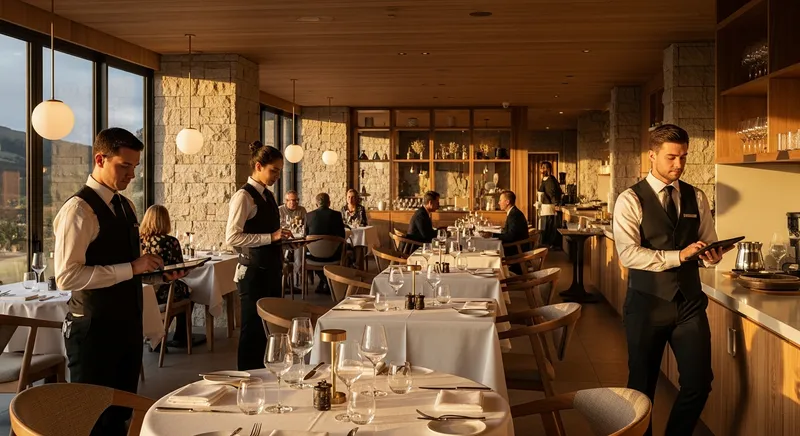
The Secret Ingredient: How Technology Drives Michelin-Level Consistency
The most challenging criterion on the Michelin list is the last one: consistency. Anonymous inspectors visit a restaurant multiple times over several months. The experience must be exceptional every single time, whether it's a quiet Tuesday lunch or a packed Saturday night.
This is where human-run systems often falter. A forgotten verbal order, a misread handwritten ticket, or an out-of-stock ingredient can derail an otherwise perfect service. Technology is the secret weapon against this unpredictability. It creates a system of record and communication that ensures every single detail-from a guest's allergy to a chef's plating instruction-is executed with unwavering quality, every time. It's the invisible '5th wall' of your restaurant, supporting your entire operation.
A Practical Blueprint: Mapping Tech to the 5 Michelin Criteria
Let's break down how a modern, all-in-one POS platform directly addresses each of the five Michelin criteria.
1. Quality of Ingredients
The Challenge: Sourcing the best produce is just the start. You must manage it perfectly to ensure peak freshness, control costs, and never disappoint a diner by running out of a signature dish.
The Tech Solution: Real-Time Inventory Management
A system with integrated Inventory Management gives you complete control. It's the digital pantry that supports your culinary standards.
- Actionable Tip: Use your inventory system to track stock levels in real time. Set low-stock alerts for critical ingredients to reorder proactively. Use the data to analyse supplier consistency and reduce waste. This protects your margins and ensures every plate features ingredients at their absolute best, justifying the investment in premium produce.
2. Mastery of Flavour & Cooking Techniques
The Challenge: Your kitchen team's mastery can be undermined by poor communication. A complex order with modifications, allergies, and specific timings can turn into a game of broken telephone.
The Tech Solution: Kitchen Display Systems (KDS) & Advanced Printing
A KDS replaces paper tickets with a clear, digital display. Orders appear instantly, colour-coded for urgency, with every modification and allergen note highlighted. This eliminates guesswork.
- Actionable Tip: Implement a KDS for your restaurant to create a direct, error-proof line of communication between your servers and chefs. This frees up your kitchen team to focus 100% on their craft. For complex kitchens, use
Advanced Printingto route specific items (like desserts or drinks) to different prep stations automatically.
3. The Personality of the Chef in the Cuisine
The Challenge: A chef's 'personality' is their unique culinary point of view. But how do you deliver a personalized experience that reflects that unique vision for every guest?
The Tech Solution: Customer Management (CRM) & Reporting
Think of a Customer Management system as the chef's extended memory. It tracks guest preferences, visit history, and feedback, allowing you to deliver a bespoke experience.
- Actionable Tip: Use your integrated CRM to note a VIP's favourite wine, a regular's dietary needs, or a special anniversary. This information empowers your front-of-house team to provide service that feels personal and thoughtful. Use
Reporting & Analyticsto see which signature dishes are performing best, allowing you to refine your menu with data-backed confidence.
4. Harmony of Flavours
The Challenge: The harmony of flavours on the plate must be matched by a harmony in the business model. The dish must deliver exceptional value and be financially sustainable for the restaurant to produce consistently.
The Tech Solution: POS Data & Recipe Costing
Modern POS systems with ingredient-level inventory allow you to calculate the exact cost of every dish. This data is crucial for pricing that reflects the quality of your ingredients while ensuring profitability.
- Actionable Tip: Use your POS and
Inventory Managementfeatures to perform detailed recipe costing. Know your exact gross profit on every menu item. This allows you to build a balanced menu where high-cost showstoppers are supported by profitable staples, creating a sustainable financial harmony.
5. Consistency Between Visits
The Challenge: This is the culmination of everything. To be consistent, every system-from booking to payment-must work in perfect sync. This requires reliability and repeatability in every process.
The Tech Solution: The All-in-One Integrated Platform
This is where a single, unified platform becomes essential. A system where your Booking System, POS, KDS, CRM, Table Management, and Payments all share the same data is the ultimate foundation for consistency.
- Actionable Tip: When a guest books online, their profile and preferences are already in the system. Your
Table Managementfeature allows you to plan the floor for optimal service. When they arrive, their order is sent flawlessly to the kitchen. This seamless flow of information eliminates gaps and ensures every guest receives the same high standard of service, every single time.
Beyond the Star: Excelling with Local Benchmarks
Long before Michelin rumours, New Zealand's own benchmark of excellence has been the Cuisine Good Food Awards. As explained by Cuisine Magazine, their 'hat' system evaluates restaurants on food, service, beverage, and ambience. The same technology that prepares you for Michelin is essential for excelling here.
- Service & Ambience: An efficient, tablet-based POS reduces staff stress and creates a calmer, more professional atmosphere. A CRM that remembers guest preferences elevates service from good to great.
Staff Managementfeatures allow you to track performance and ensure every team member adheres to your high standards. - Beverage:
Inventory Managementensures your wine list is always up to date, preventing the awkward moment when a chosen bottle is out of stock.
In a challenging market, where the Restaurant Association of New Zealand highlights rising costs, technology isn't a luxury; it's a strategic necessity for the efficiency that makes excellence possible.
Building Your Michelin-Ready Tech Stack with Lazygrid
Achieving this level of integration isn't about patching together different software. It's about a single, powerful platform. A Michelin-worthy operation requires features that work in harmony.
Lazygrid's Premium plan is designed for this purpose, unifying the key tools you need:
- Central Nervous System: A cloud-based POS with Table Management, Advanced Printing, and a Kitchen Display System (KDS).
- Guest Experience: An integrated Online Booking System connected directly to a powerful Restaurant CRM.
- Financial Control: Real-time Inventory with Recipe Costing and detailed Reporting & Analytics.
- Team Performance: Staff Management tools to ensure service dependability.
- Seamless Finish: Fast, secure, and reliable Integrated Payments.
This level of integration, available in a single plan, provides the operational backbone required for fine dining excellence.
Frequently Asked Questions
1. What are the 5 criteria for a Michelin Star? The five official criteria are: quality of ingredients, mastery of cooking techniques, the chef's personality in the food, harmony of flavours, and consistency between visits. The star is awarded for the food on the plate, and nothing else.
2. Can a restaurant apply for a Michelin Star? No. The entire process is anonymous. Inspectors book, dine, and pay for their meals like any other customer. The best strategy is to focus on excellence and consistency every single day.
3. How can technology help a small restaurant aim for a star? Technology acts as a great equaliser. It automates administrative tasks, provides data for smart decisions, and creates flawless communication channels (like a KDS). This gives a small, passionate team the operational support to execute at a level that can compete with larger establishments.
4. What is a Restaurant CRM and why is it crucial for fine dining? A Restaurant Customer Relationship Management (CRM) system tracks guest data like visit history, preferences, and allergies. For fine dining, it's crucial for enabling hyper-personalization. It allows your staff to greet a guest by name, remember their favourite wine, and acknowledge an anniversary, turning a great meal into an unforgettable, bespoke experience.
Your Journey to the Stars Starts Today
Whether the Michelin Guide arrives in 2026 or not, striving for that level of excellence will set your restaurant apart. It will help you earn Cuisine hats, delight your guests, and build a more resilient, profitable business.
Technology is not a substitute for passion and skill, but it is the essential framework that allows your team's talent to shine through, consistently and brilliantly. By investing in an integrated platform, you are not just buying software. You are building the foundation for greatness.
Ready to build your Michelin-worthy tech foundation? Book a free consultation with our restaurant technology specialists to see how Lazygrid's Premium plan supports fine dining excellence.