
Square POS NZ vs Local EFTPOS (2026): Real Cost Breakdown
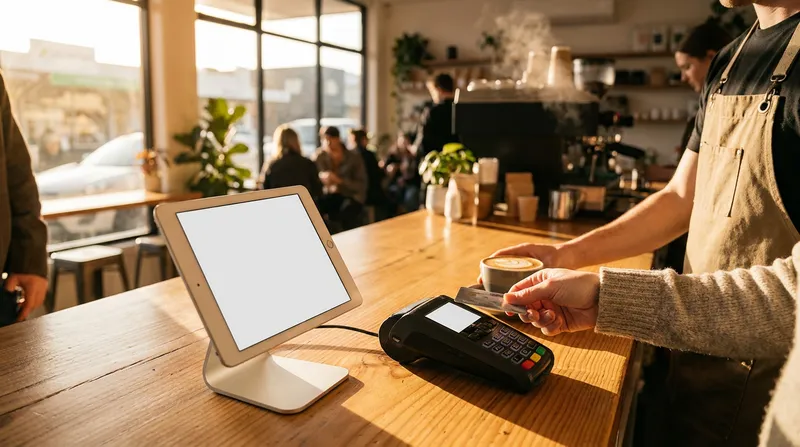
If you run a cafe, restaurant, food truck, massage clinic, or beauty salon in New Zealand, you have probably seen ads promising "$0/month POS software" and pocket card readers with no monthly fees. When wages, rent, and supplier bills already squeeze your margins, free software looks like an easy win.
In reality, chasing free overseas POS apps or flat-rate card readers is one of the costliest traps in Kiwi hospitality and personal services. Bypassing New Zealand's $0 domestic EFTPOS debit rail, paying foreign-currency add-ons, and stitching together separate booking or ordering tools quietly drains NZ$2,000 to NZ$8,000+ a year from your bottom line.
This 2026 guide lays out the real New Zealand maths: how Square fits into the local market, how the 2025-2026 Commerce Commission interchange caps reshaped domestic EFTPOS and payWave fees, and the true POS total cost of ownership NZ venues face over 12 months.
Square POS in New Zealand (2026): The reality check and local EFTPOS maths
Before comparing Square transaction fees NZ operators quote online, note one critical fact that overseas blog posts overlook: Square does not officially operate local card payment processing or native EFTPOS network integration in New Zealand.
Square's official card processing covers Australia, the US, Canada, the UK, Ireland, Japan, France, and Spain. There is no native New Zealand Square storefront, no Worldline or Verifone EFTPOS certification, and no settlement over domestic NZ debit rails. Articles quoting "1.6% Square fees" (Australia's in-person rate) or "2.6% + 15c" (a US rate) cite offshore pricing that cannot pair natively with a New Zealand bank merchant facility.
Even when global aggregators do operate in New Zealand, the "free software plus flat-rate processing" model carries the same flaw. Several overseas POS providers route every tap or insert through Visa and Mastercard schemes at 1.5% to 2.65%, skipping NZ's local EFTPOS network entirely. Our guide to the Best Epos Now Alternatives NZ (2026) examines those overseas lock-in trade-offs in more detail.
Overseas "free" plans also hide a steep upgrade ladder. Adding a Kitchen Display System (KDS), loyalty, marketing, restaurant tables, or multi-staff salon scheduling pushes your bill into USD or AUD, introducing foreign exchange risk every month.
What to do right now: Before trialling any POS advertised online, ask two questions: "Are monthly plans billed in NZD?" and "Do you integrate directly with certified NZ EFTPOS terminals on Verifone or Worldline?" If either answer is no, move on.
EFTPOS debit rails vs payWave fees under 2025-2026 interchange caps
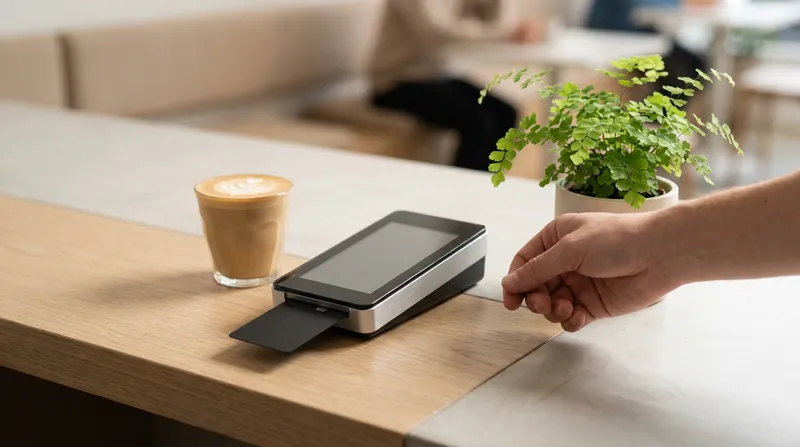
New Zealand holds a major payment advantage most overseas POS teams miss: inserted or swiped domestic EFTPOS (Cheque or Savings) carries a $0.00 Merchant Service Fee (MSF) and $0.00 interchange fee. Every time a customer inserts their card and chooses Cheque or Savings on a local terminal, you keep 100% of the sale.
Contactless debit (payWave, Tap & Go, Apple Pay, Google Pay) and credit cards route over Visa and Mastercard rails, incurring interchange and bank margins. Understanding how EFTPOS NZ debit rails compare with payWave fees is essential as everyday payment habits settle into a heavily digital baseline: according to the Reserve Bank of New Zealand's 2025 Cash Use Survey, more than half of New Zealanders still used cash for everyday purchases in 2025, while debit card / EFTPOS remained the most common way to pay.
Regulated local card fees have also fallen sharply. Interchange historically accounted for roughly 60% of the ~$1 billion NZ merchants pay in Merchant Service Fees yearly. Under the Commerce Commission New Zealand interchange caps:
- 1 December 2025: Domestic in-person personal credit interchange fell from 0.80% to 0.30%. Contactless domestic debit stays capped at 0.20%, and inserted domestic debit stays at 0.00%.
- 1 May 2026: Foreign-issued cards were capped at 0.60% for in-person debit and 0.70% for in-person credit (1.40% and 1.50% online).
- 22 October 2026 decision: With commercial credit cards costing NZ merchants about $125 million a year in interchange (a Commerce Commission estimate), and making up 19% of interchange fees on only 8% of transaction value according to Retail NZ, the Commission capped domestic commercial credit cards at 0.70% in-person and 1.10% online (effective 22 April 2027).
Together with the earlier caps on personal cards in the Commerce Commission merchant service fees work, the Commission expects total business savings of up to about $290 million a year. Pairing an integrated EFTPOS POS NZ setup with a competitive local bank facility should now keep your blended contactless and personal credit MSF around 0.80% to 0.95%, plus $0.00 on inserted EFTPOS.
NZ vs Australia surcharge rules in 2026
Do not confuse Australian headlines with New Zealand law. Australia's RBA surcharge ban took effect on 1 October 2026, whereas New Zealand's Retail Payment System (Ban on Merchant Surcharges) Amendment Bill stalled in March 2026. Surcharging up to your actual MSF remains legal in NZ with clear upfront signage.
Even so, Payments NZ's Consumer Research 2026 found 40% of Kiwis changed how they pay to avoid surcharges, making surcharges the top reason customers avoid tapping. Meanwhile, the Restaurant Association of New Zealand's 2025 Hospitality Report put average labour costs at 40% of revenue (NZ$27.84/hour average wage). Absorbing around 0.85% on a local bank facility is manageable; absorbing 1.6% to 2.6% on a flat-rate reader destroys net profit.
What to do right now: Divide last month's total Merchant Service Fees by your contactless and credit turnover. If your blended rate sits above 1.15%, call your bank's merchant desk and demand a post-interchange-cap rate review.
How much an integrated EFTPOS POS costs in New Zealand
Local EFTPOS pricing becomes straightforward once you separate its three components:
- Payment terminal supply: Countertop or 4G/Wi-Fi terminals are supplied directly by local providers such as EFTPOS NZ (Verifone), Windcave, or Smartpay (now Shift4). Ask the provider directly for a quote and confirm compatibility with your POS.
- Network connection fee: Published NZ switch fees sit at $15.00 + GST/month (Verifone) or $18.90 + GST/month (Worldline/Paymark).
- Bank Merchant Service Fee (MSF): $0.00 on inserted/swiped domestic EFTPOS debit, plus your negotiated percentage on contactless debit, credit, and international cards.
Comparing EFTPOS NZ, Windcave, Smartpay, and Stripe WisePad 3
Four payment paths dominate Kiwi venue comparisons:
- EFTPOS NZ (Verifone) and Windcave: Both offer certified two-way POS integration. Your iPad POS pushes the exact sale total straight to the terminal, eliminating staff re-keying errors during busy rushes and automatically closing the ticket upon approval. Windcave EFTPOS POS integration is widely favoured by restaurants and multi-site venues wanting direct bank acquiring alongside contactless and QR wallets. Ask EFTPOS NZ or Windcave directly for terminal quotes.
- Smartpay (Shift4): Since Square lacks native NZ EFTPOS support, Smartpay is a common local alternative when venues compare Smartpay vs Square NZ. Smartpay bundles terminal supply and acquiring with auto-surcharging (zero-cost EFTPOS) or low-rate options while keeping inserted EFTPOS at $0. Always request a written Smartpay quote and weigh customer reaction before enabling auto-surcharges.
- Stripe WisePad 3 NZ: For pop-ups, markets, or low-volume startups avoiding switch contracts, the Stripe WisePad 3 reader offers quick setup. Stripe NZ's published domestic in-person rate starts at 2.6% + NZ$0.05 (2.70% + NZ$0.05 international from 1 May 2026; 2.65% + NZ$0.30 online domestic). Check current purchase or short-term weekly rental pricing on Lazygrid's portable card reader page.
What to do right now: Request a single written quote from your EFTPOS supplier listing monthly terminal rental, Verifone/Worldline switch fee, any integration fee, and exact contracted MSF tiers.
Real-world 12-month cost scenarios for NZ venues
Headline software pricing hides what actually leaves your account over a full year. To measure the true POS total cost of ownership NZ operators face, let us model card fees, ticket sizes, network fees, and NZD software across three everyday Kiwi business types.
Each scenario compares:
- Offshore flat-rate (1.6%): Australia's Square in-person benchmark (or similar 1.5% to 1.7% non-EFTPOS aggregators) with $0 base software.
- Stripe WisePad 3 NZ (2.6% + NZ$0.05): Published domestic in-person Stripe NZ pricing.
- Integrated NZ EFTPOS + Lazygrid POS: Assuming a realistic 35% inserted EFTPOS ($0 MSF) and 65% contactless/credit at 0.95% blended MSF, plus the $15/month Verifone switch fee and Lazygrid's NZD software fee (excl. GST). Terminal rental is quoted separately by your payment provider, yet annual savings remain substantial even after factoring it in.
Scenario 1: Busy suburban cafe ($35,000/month card sales, $14 average ticket)
At $35,000/month on cards, a cafe processes 2,500 transactions monthly, where fixed per-tap cents hurt badly:
- Stripe WisePad 3 NZ:
- Percentage fee (2.6%): $910.00/month
- Per-transaction fee ($0.05 x 2,500): $125.00/month
- Total processing: $1,035.00/month ($12,420/year)
- 1.6% flat-rate aggregator:
- Total processing: $560.00/month ($6,720/year) before paid loyalty or KDS add-ons
- Integrated NZ EFTPOS + Lazygrid Standard:
- Inserted domestic EFTPOS (35%): $0.00/month
- Contactless and credit MSF (65% at 0.95%): $216.13/month
- Verifone network fee: $15.00/month
- Lazygrid Standard software (excl. GST): $59.00/month
- Total: $290.13/month ($3,482/year) plus provider terminal quote
Even after renting a countertop terminal, the integrated cafe saves $2,500 to $3,000+ yearly over a 1.6% flat-rate processor, and over $8,000 yearly versus Stripe Terminal.
Scenario 2: Massage clinic or beauty salon ($25,000/month card sales, $110 average ticket)
A salon or beauty shop POS setup runs roughly 227 high-ticket visits monthly and needs bookings, automated reminders (cutting ~20% average no-shows roughly in half), and digital vouchers:
- Stripe WisePad 3 NZ:
- Card processing (2.6% + $0.05): $661.35/month ($7,936/year) plus standalone booking software
- 1.6% flat-rate + separate salon booking app:
- Card processing (1.6%): $400.00/month
- Standalone salon booking software: ~$90.00/month
- Total: $490.00/month ($5,880/year)
- Integrated NZ EFTPOS + Lazygrid Standard:
- Inserted domestic EFTPOS (35%): $0.00/month
- Contactless and credit MSF (65% at 0.95%): $154.38/month
- Verifone network fee: $15.00/month
- Lazygrid Standard software (excl. GST): $59.00/month (includes loyalty, client profiles, Apple Wallet/Google Pay vouchers, and integrated bookings at a flat NZ$0.50 or NZ$1.00 per booking depending on business type)
- Total: ~$228.38/month ($2,741/year) before per-booking fees and provider terminal quote
If you are comparing standalone salon schedulers, see our MyMG Booking Review for NZ Salons and Venues and our guide to Selling Corporate Gift Vouchers in NZ.
Scenario 3: Food truck ($15,000/month card sales, $18 average ticket)
A food truck POS system balances seasonal swings and outdoor connectivity. At $5,000/month (weekend markets), Stripe WisePad 3 costs ~$144/month with no switch lock-in. Above $8,000 to $10,000/month, integrated local EFTPOS wins clearly:
- Stripe WisePad 3 NZ (833 orders/month):
- Card processing (2.6% + $0.05): $431.65/month ($5,180/year)
- Integrated 4G/Wi-Fi EFTPOS + Lazygrid Lite:
- Inserted domestic EFTPOS (35%): $0.00/month
- Contactless and credit MSF (65% at 0.95%): $92.63/month
- Verifone network fee: $15.00/month
- Lazygrid Lite software (excl. GST): $24.00/month
- Total: $131.63/month ($1,580/year) plus provider terminal quote, saving over $2,500/year after terminal rental
Connectivity reality for mobile trucks: Offline-queued card readers shift 100% of declined-card fraud risk onto your truck if a card fails later. Cloud POS systems like Lazygrid require active internet to take orders and payments (cached data stays viewable during outages, but no offline transactions can be processed). Match your connection to your trading sites:
- Regular urban spots with mobile signal: Dedicated 4G/5G wireless broadband router (cheapest everyday setup).
- Poor-signal events and remote festivals: Starlink Business (from NZ$92/month for 50GB, ample for POS with top-ups if needed, plus NZ$449 one-off hardware, occasionally discounted).
- Phone hotspot: Temporary emergency backup only, never everyday trading.
Monthly turnover break-even comparison (NZD)
| Monthly Card Turnover | Est. Avg Ticket | Flat-Rate 1.6% (Offshore) | Stripe WisePad 3 NZ (2.6% + $0.05) | Integrated NZ EFTPOS MSF + Verifone Fee (Note) |
|---|---|---|---|---|
| NZ$5,000 | $18 (278 txns) | $80 / mo | $144 / mo | $46 / mo |
| NZ$15,000 | $18 (833 txns) | $240 / mo | $432 / mo | $108 / mo |
| NZ$25,000 | $110 (227 txns) | $400 / mo | $661 / mo | $169 / mo |
| NZ$35,000 | $14 (2,500 txns) | $560 / mo | $1,035 / mo | $231 / mo |
Note: Illustrative figures assuming 35% $0 inserted EFTPOS + 65% contactless/credit at 0.95% blended MSF + $15 Verifone fee, excl. GST, POS software, and provider-quoted terminal rental.
What to do right now: Match your monthly card turnover to the table above and multiply the monthly gap by 12 to see how much cash an integrated setup frees up.
The hidden add-on tax: Comparing POS software and NZD pricing
Software sprawl is the second hidden profit drain, turning a cheap headline till into a $200 to $350+/month stack of disconnected apps.
- posBoss Bustle vs Square: Bustle (formerly posBoss) works cleanly in New Zealand cafes, unlike Square. Still, expanding beyond counter coffee means bolting on extras such as Bustle Paperless KDS, external ordering tools (like Regulr), or separate booking software, multiplying monthly bills and staff logins.
- Global enterprise stacks: Lightspeed bills many NZ sites in foreign currency and pushes proprietary payments, while standalone reservation networks add high monthly fees or per-cover charges. See our ResDiary NZ Review & Top Alternatives for a breakdown of standalone booking costs.
Transparent all-in-one hospitality POS NZD pricing
Look for clear hospitality POS NZD pricing that brings ordering, loyalty, vouchers, and bookings together in one all-in-one POS and booking system NZ venues can run from a single dashboard. On Lazygrid POS pricing (NZD/month, excl. GST):
- Lite (NZ$24/month): iPad/iPhone POS, customer records, 1 printer, one owner account (extra staff NZ$5/month each), and built-in browser online ordering.
- Standard (NZ$59/month): Adds 2 staff accounts, digital loyalty, Customer Accounts for local office tabs (see Cafe Office Tabs & Bar House Accounts in NZ), digital vouchers/gift cards, inventory with barcode scan-to-cart, kitchen print routing, and the booking system.
- Premium (NZ$149/month): Adds unlimited staff accounts, QR table ordering, Reserve with Google, and a custom branded website built and maintained for your venue.
Two key fee points deserve clarity:
- Direct online ordering vs delivery apps: Many venues search for zero-commission online ordering in NZ to escape 15% to 30% delivery-app commissions. Lazygrid includes browser-based online ordering on every plan (Lite included, for pickup or DoorDash Delivery), letting you keep your customer data and pay just a small platform fee you can pass on to customers - a fraction of what delivery apps take.
- Predictable booking fees: Rather than per-cover or percentage fees, Lazygrid's booking system (including Reserve with Google) charges a flat NZ$0.50 or NZ$1.00 per booking depending on your business type.
You can run Lazygrid on a compatible iPad or iPhone you already own, or get a hardware quote for bundles (we don't offer hardware financing or lease-to-own). Multi-location management, recipe management, a promotions engine, and daily email reports are also available on request - talk to the Lazygrid team.
What to do right now: Tally every recurring POS, booking, ordering, loyalty, and website charge on last month's bank statement to calculate your true monthly tech spend in NZD.
Accounting, GST compliance, and local NZ support
Smooth end-of-day reconciliation matters just as much as counter speed, which is why Xero POS integration in NZ and clean GST reporting sit high on every owner's shortlist.
Under Inland Revenue (Te Tari Taake) rules, New Zealand businesses must keep complete cash and electronic sales records for 7 tax years, follow taxable supply information rules, and ensure offshore cloud records meet IRD requirements. Guidance from business.govt.nz (covering the $60,000 GST registration threshold and two-monthly or six-monthly filing) highlights overseas software GST coding and bank fee reconciliation as frequent return mistakes. Because many NZ customers still pay with cash, your POS must cleanly separate cash, $0 EFTPOS, payWave, online orders, and vouchers.
Always verify which accounting tools are live today versus upcoming. To be completely transparent, Lazygrid's Xero integration is built, in final testing, and on the way (not live yet). Every plan includes free remote setup and your first menu build from a Wellington-based team, with optional on-site assessment from NZ$59 + GST (credited if you sign up within 30 days) and on-site setup from NZ$99 + GST.
What to do right now: Ask your bookkeeper how many hours each GST cycle they spend fixing unsplit card batches or USD/AUD software bills.
Next steps: Audit your POS costs before renewal
Take 20 minutes this week to run three practical checks:
- Audit your blended MSF: Divide last month's Merchant Service Fees by contactless and credit turnover, and call your bank if your rate has not dropped after the 2025-2026 Commerce Commission caps.
- Add up your software stack: Combine all POS, booking, loyalty, voucher, and online ordering bills in NZD.
- Test an integrated NZD workflow: Trial a local setup built for New Zealand EFTPOS rails before signing another contract.
Start a 7-day free Lazygrid trial (no credit card required, Lite plan features) or compare plans on our NZD pricing page.
Frequently asked questions
Can I use Square's free iPad app in New Zealand just as a cash register alongside a standalone EFTPOS terminal?
Yes, some Kiwi startups log Square sales as "Other Tender" and type totals manually into a separate NZ EFTPOS terminal. However, manual re-keying creates frequent rush-hour errors (typing $4.25 instead of $42.50), slows down split bills, and causes daily till variances against EFTPOS settlement batches. A locally integrated NZD POS eliminates double entry and pays for itself quickly in saved reconciliation time.
How can my cafe, restaurant, or salon apply payWave surcharges in 2026 without alienating regulars?
Follow three practical steps to stay within Commerce Commission guidelines and protect goodwill. First, display clear percentage signage beside the terminal and on menus before checkout. Second, never surcharge above your actual Merchant Service Fee, and never surcharge $0 inserted Cheque/Savings EFTPOS. Third, remind customers politely that inserting a debit card avoids fees - or absorb a modest 0.7% to 0.9% into menu pricing once your bank passes through the 2025-2026 interchange cuts.
How do I switch from my current POS to an integrated NZ EFTPOS setup without losing trading hours?
Schedule your cutover for a quiet Monday or Tuesday. Confirm EFTPOS terminal compatibility with both your POS vendor and payment provider so you can run a live 10-cent integration test the afternoon beforehand. Have your menu, modifiers, and upcoming bookings pre-loaded (Lazygrid includes free remote setup and your first menu build), and archive historical reports from your old system to maintain 7-year IRD record compliance.
Is a self-service kiosk worth adding for a busy NZ cafe or takeaway shop?
If peak-hour queues regularly turn walk-ins away, an iPad self-service kiosk relieves counter congestion without adding front-of-house wages. Kiosk orders typically average 20% to 30% higher ticket values as customers browse add-ons without feeling rushed, while staff focus on coffee and food quality. Lazygrid offers self-service kiosks on an indicative NZ$200-300/month excl. GST equipment rental on a long-term agreement; see Lazygrid Kiosk for details.
Do I need a New Zealand business bank account and merchant facility before ordering an EFTPOS terminal?
Yes. To accept card payments through a Verifone or Worldline terminal, you need an NZ business bank account and an active merchant number - either directly from a local bank (such as ANZ, ASB, BNZ, Westpac, or Kiwibank) or through a bundled acquirer like Smartpay or Windcave. Because merchant facility approval typically takes 3 to 10 working days, start your bank paperwork at least two weeks before opening or switching POS systems.