
The 60-Day Rule: Automate Your POS CRM to Win Back Customers
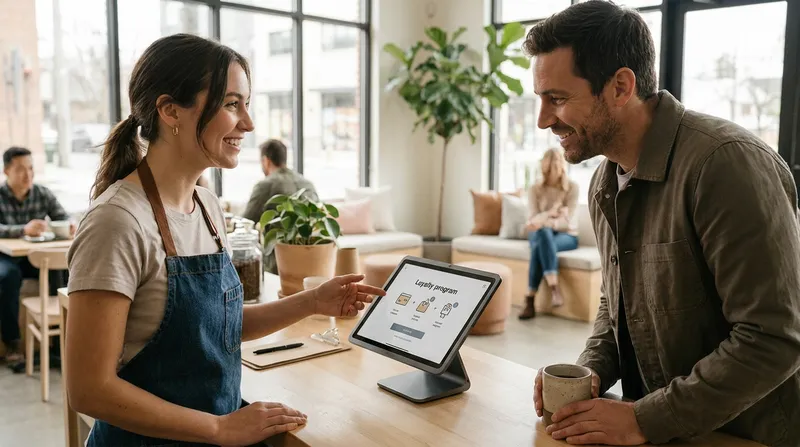
As a local business owner in New Zealand, you are likely bogged down in the daily operations of running your venue. Whether you manage a bustling Wellington cafe, an Auckland food truck, or a Christchurch beauty salon, your days are filled with managing staff, ordering inventory, and serving the customers right in front of you. Because you are so focused on the day-to-day rush, a silent profit killer is likely slipping right under your radar: you are losing loyal customers simply because you lack a "set and forget" automated safety net.
You know your regulars by name. But when a familiar face stops coming in, you might not notice until months have passed. By then, their routine has changed, and they have started visiting a competitor. This is where the "60-Day Rule" comes into play.
In this comprehensive guide, we will explore exactly how to use your Point of Sale (POS) CRM (Customer Relationship Management system) to identify lost customers, set up automated win-back campaigns, and reduce customer churn without adding more manual work to your plate.
What is a Customer Win-Back Strategy?
A customer win-back strategy is a targeted marketing effort designed to re-engage people who have previously purchased from your business but have stopped visiting for a specific period. For local hospitality and service businesses, this strategy is the most cost-effective way to boost your bottom line.
Many business owners mistakenly pour all their marketing budget into acquiring new customers through social media ads or expensive promotions. However, research from Harvard Business School shows that increasing customer retention rates by just five percent can boost profitability by 25 to 95 percent.
Your lapsed customers already know your brand, trust your quality, and have a proven willingness to spend money with you. A win-back strategy simply gives them a compelling reason to return to their old habits.
Actionable Tip: Before spending money on a new advertising campaign, calculate your current customer acquisition cost. Compare that to the cost of sending a single automated SMS to a past customer. The financial advantage of retention will become immediately clear.
Why Customers Leave Your Business (And the 60-Day Critical Window)
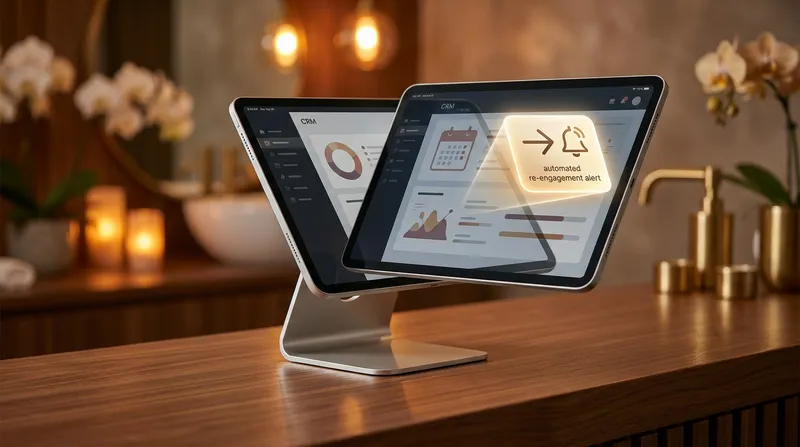
Business owners often take it personally when a regular customer stops visiting. You might assume they had a terrible meal, received a bad massage, or found a cheaper alternative. While service failures do happen, the reality is usually much less dramatic.
According to research published in the Journal of the Academy of Marketing Science, lapsed customers have a strong general willingness to return to a former relationship, especially when the initial reason for leaving was circumstantial rather than a permanent service failure.
People change jobs, go on holiday, or simply fall out of their normal routines. Once their habit of visiting your business is broken, they just need a gentle nudge to come back.
This is where the 60-Day Rule is vital. For most local businesses (like cafes, restaurants, and beauty shops), 60 days of inactivity is the psychological tipping point. At 30 days, they might just be busy. At 90 days, they have formed a completely new habit with a competitor. Day 60 is the perfect sweet spot to intervene: they still remember you fondly, but they need an incentive to walk back through your doors.
Actionable Tip: Review your customer data today. Pick a random sample of 20 loyal customers from six months ago and check when they last made a purchase. You will likely find several who quietly dropped off right around the two-month mark.
How to Use POS Data to Identify Lost Customers
To execute a lapsed customer re-engagement campaign, you need accurate data. Modern point-of-sale systems are no longer just glorified cash registers. A modern Takeaway POS System NZ acts as a comprehensive CRM, tracking every transaction, preference, and visit frequency.
Your POS data is fueled by your loyalty programme. For example, the Lazygrid Loyalty Programme automatically captures visit frequency through digital stamps, Apple Wallet integration, and purchase history. This makes it the perfect data engine to identify lapsed customers.
Using your POS data analytics, you can perform a simplified RFM analysis (Recency, Frequency, Monetary value):
- Recency: How many days has it been since their last transaction?
- Frequency: How often did they visit before they stopped?
- Monetary: How much did they typically spend?
You do not want to send win-back offers to someone who only bought a single $4 coffee two years ago. You want to target the customer who used to spend $50 every week but has not been seen in exactly 60 days.
Actionable Tip: In your POS CRM dashboard (Lazygrid users can find this under the Customer Management tab), create a "Slipping Away" customer segment. Filter for customers who have visited more than five times in total but have zero visits in the last 60 days. This is your prime target list.
The "Set and Forget" Methodology: Creating Automated Win-Back Campaigns
The biggest barrier to local business customer retention is time. You cannot manually check your customer list every evening to see who crossed the 60-day threshold. You need a "set and forget" system.
By integrating your CRM with automated marketing tools, your POS does the heavy lifting. Once a customer hits day 60 without a purchase, the system automatically triggers a message.
When it comes to local businesses in New Zealand, SMS marketing outperforms email significantly. Emails often get buried in spam folders or promotional tabs. A text message, however, is almost always read within minutes.
When setting up these automated SMS campaigns, it is crucial to stay compliant with local laws, including securing customer opt-ins under the NZ Unsolicited Electronic Messages Act 2007. For a deep dive into compliance, read our guide on how to navigate NZ Restaurant CRM: Market Legally & Avoid Spam Fines.
Actionable Tip: Set up a two-step automated workflow in your POS CRM. Step 1: On Day 60 of inactivity, send a casual "We miss you" SMS with a small incentive. Step 2: If they do not redeem the offer within 14 days, send a final, higher-value offer on Day 74.
Cross-Industry Automation Templates (Cafe, Food Truck, Salon)
One of the most powerful aspects of modern POS integration marketing is its flexibility. The 60-Day Rule applies across the hospitality and wellness sectors, but the messaging must be tailored to your specific industry.
Here are "set and forget" SMS templates you can plug directly into your automated win-back campaigns:
1. Restaurant and Cafe Loyalty Programmes NZ
For a cafe or restaurant, food is a daily or weekly habit. If a regular misses 60 days, they need a tasty incentive to return.
The Day 60 SMS: "Hi [Name], we haven't seen you at [Cafe Name] in a while! Come in this week and your favorite coffee is on us. Show this text to claim. Valid for 7 days."
Why it works: It is personal, low-cost for you, and highly motivating for a coffee lover.
2. Salon CRM NZ and Massage Shops
Beauty and wellness businesses operate on a different frequency. A massage client might normally come every 4 weeks. At 60 days, they are officially overdue.
The Day 60 SMS: "Hi [Name], it's been a while since your last visit to [Salon Name]. You deserve some relaxation! Book any 60-minute treatment this month and receive a complimentary 15-minute scalp massage upgrade. Book here: [Link]"
Why it works: It focuses on self-care and offers a value-add rather than a cheap discount, protecting your brand prestige.
3. Food Truck Marketing Automation
Food trucks rely heavily on location awareness. If a customer has not visited, they might simply not know where you are parked.
The Day 60 SMS: "Hey [Name], [Food Truck Name] misses you! We are serving up our famous tacos at [Location] all weekend. Use code MISSYOU for 15% off your order. Order ahead here: [Link]"
Why it works: It provides immediate logistical value (your location) alongside an incentive. You can easily link this to your Online Ordering System NZ so they can buy before they even arrive. Set up this discount code in the Lazygrid Promotions Engine (available on the Premium plan) to track redemptions automatically.
Actionable Tip: Copy the template that fits your business, customize the bracketed information, and paste it into your POS automation settings today.
The Importance of Customer Lifetime Value (CLV)
To truly understand the power of automated win-back campaigns, you must look at Customer Lifetime Value POS data. CLV is the total amount of money a customer is expected to spend in your business during their entire relationship with you.
If a customer spends $20 a week at your food truck, their annual value is over $1,000. If they drop off after three months, you have lost $750 of potential revenue for that year alone.
When you view customers through the lens of CLV, offering a free $5 side dish or a 15% discount to win them back is no longer an expense. It is a highly profitable investment. By using an iPad POS for NZ Seasonal Businesses, you can track exactly how much lifetime revenue each returning customer generates after redeeming a win-back offer.
Actionable Tip: Calculate your average CLV. Multiply your average order value by the average number of visits per year. Keep this number visible in your office to remind yourself and your staff why every single customer relationship matters.
Omnichannel POS Marketing: Tying It All Together
A successful win-back strategy must be part of a broader omnichannel POS marketing approach. This means your loyalty programmes, SMS marketing, online ordering, and in-store experience must all communicate seamlessly.
For example, if you send a lapsed customer a discount code, they should be able to redeem it seamlessly whether they walk up to your counter, scan it at your Self-Service Ordering Kiosk, or order from their phone on the couch.
Many NZ takeaways are realizing the power of owning their customer data across all channels. This is exactly Why NZ Takeaways Are Ditching Uber Eats for Direct Ordering. When a customer orders through a third-party app, the app owns the data. You cannot see if that customer lapses, and you certainly cannot send them an automated SMS to win them back. By keeping your ordering in-house, you retain total control over your retention strategy.
Actionable Tip: Test your own customer journey. Send a test SMS to your phone with a discount code, and try to redeem it through your online ordering link and at your physical register. Ensure the process is frictionless.
Ensuring High ROI with POS Data Analytics in NZ
The New Zealand hospitality sector is highly competitive, and independent cafes, takeaways and salons are fighting for the same local customers as far larger chains.
To survive and thrive among these independent operators, you must rely on hard data rather than gut feelings. Once your 60-day automated win-back campaign is running, you need to track its Return on Investment (ROI). Lazygrid's Standard ($59/month) and Premium ($149/month) plans include the CRM and automation tools needed to track this ROI effortlessly. Your POS data analytics will show you exactly how many SMS messages were sent, how many discount codes were redeemed, and the total revenue generated from those returning customers.
If your redemption rate is below 5%, your offer might not be enticing enough. If your redemption rate is high but the customers do not return for a subsequent visit, you may need to evaluate your in-store experience or product quality.
Actionable Tip: Schedule a monthly calendar reminder to review your win-back campaign report. Look at the total revenue recovered and tweak your SMS copy or offer if the numbers start to dip.
Conclusion: Stop Leaving Money on the Table
Losing customers is a natural part of running a business, but letting them slip away without a fight is a choice. By implementing the 60-Day Rule and utilizing automated win-back campaigns, you can significantly reduce customer churn in your hospitality or wellness business.
Your POS system holds a goldmine of data. By shifting from a manual mindset to a "set and forget" methodology, you can focus on serving the customers in front of you while your technology works in the background to bring the lost ones back.
Are you ready to stop losing regulars and start maximizing your Customer Lifetime Value? Read our guide on how to Switch Your NZ POS System Without Losing Revenue and discover how Lazygrid POS can put your customer retention on autopilot.
Ready to put your customer retention on autopilot? Contact the Lazygrid team today for a free demo of our Premium CRM and Loyalty features, or start your free trial.
Frequently Asked Questions
What exactly is a lapsed customer in the hospitality industry?
A lapsed customer is someone who previously visited your business regularly but has not made a purchase within a specific timeframe (usually 60 to 90 days for cafes, restaurants, and salons). They have not necessarily sworn off your business; in most cases, they have simply broken their routine and need a gentle reminder to return.
How do I calculate the ROI of an automated win-back campaign?
You calculate the Return on Investment by comparing the cost of the marketing message (like an SMS fee) and the discounted item against the total revenue generated by the returning customer. With modern POS data analytics, this process is automated, showing you exactly how much lifetime value was recovered from a single text message.
Is SMS marketing or email marketing better for local NZ businesses?
For local businesses like food trucks, cafes, and massage shops, SMS marketing is significantly more effective. Research from SimpleTexting reports that text messages boast an open rate of over 90 percent, usually within minutes of sending, whereas emails often get lost in spam folders or ignored in crowded promotional tabs.
Can I use my existing EFTPOS terminal to track customer visits?
A standard standalone EFTPOS terminal cannot track individual customer visit frequency. To identify when a customer stops visiting, you need an integrated POS CRM system that links transaction data directly to a specific customer profile or loyalty account.
What is the biggest mistake businesses make with win-back strategies?
The biggest mistake is waiting too long to reach out. If you wait six months to contact a lost customer, they have likely already formed a strong habit with a competitor. Intervening exactly at the 60-day mark catches them before that new habit solidifies, making them much more likely to return.