
7 Hidden POS Fees NZ Restaurant Owners Must Avoid
7 Hidden POS Fees NZ Restaurant Owners Must Avoid
Running a hospitality business in New Zealand means managing incredibly tight profit margins. According to the Restaurant Association of New Zealand, average hospitality profit margins often hover around 4 to 5 percent. Whether you own a bustling Wellington cafe, an Auckland restaurant, or a local food truck, every single dollar counts.
Many New Zealand hospitality owners feel trapped and financially drained by legacy point of sale providers. You might sign what appears to be a cheap software contract, only to be hit by unexpected proprietary hardware replacement costs, forced high-rate payment processing fees, and expensive monthly add-ons for basic features. This lack of transparency bleeds your already tight profit margins dry and leaves you feeling stuck in a system that does not serve your business.
The initial software subscription is often just the tip of the iceberg when it comes to your total pos system cost nz. To protect your business, you need to understand the true cost of ownership before you sign on the dotted line.
Actionable Tip: Before reading further, grab your latest POS invoice. Audit your current monthly bill to identify any miscellaneous charges, hardware rental fees, or unexpected software modules you are currently paying for.
Fee 1: Proprietary Hardware Lock-In and Replacement Costs
One of the biggest traps in the hospitality industry is proprietary hardware. Legacy providers often force businesses to buy branded, closed-system hardware terminals. These bulky machines are designed to only run one specific type of software.
When you are locked into a proprietary system, you are at the mercy of the vendor's pricing. If a screen breaks outside of your warranty period, you cannot simply go to an electronics store to buy a replacement. You are forced to pay thousands of dollars for a specialized replacement terminal, causing massive financial strain and business downtime.
Fortunately, the industry is shifting. Research from Restaurant Business Online notes that the restaurant POS is evolving from a central hardware box into a cloud-based omnichannel commerce platform focused on mobility and guest experience.
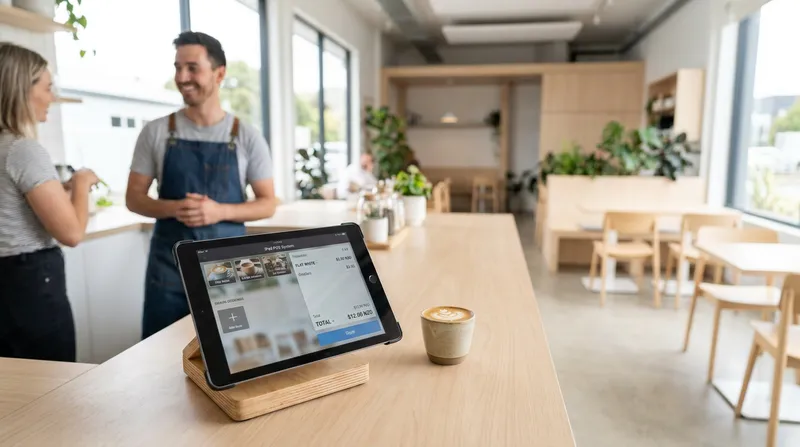
A cloud based restaurant pos that operates on standard consumer hardware is the safest financial choice. By using off-the-shelf Apple iPads, you retain complete ownership and flexibility over your equipment.
Actionable Tip: Demand a Bring Your Own Device (BYOD) policy from your software provider. Opt for an ipad pos system nz so you can buy replacement hardware from any local retailer if an accident happens. You can explore flexible options by checking out POS Hardware NZ - iPad, Printers & Card Readers | Lazygrid.
Fee 2: Inflated Payment Processing and Paywave Markups
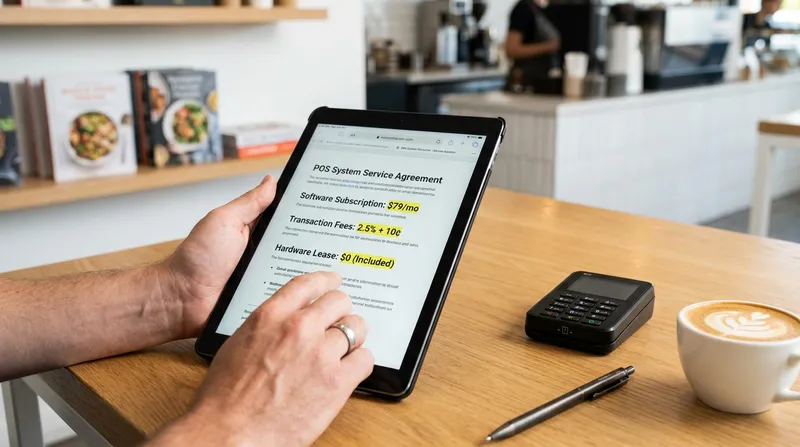
Payment processing fees are a major pain point for Kiwi business owners. Many global POS brands mandate the use of their built-in payment gateways. They lure you in with a "free" POS system but lock you into non-negotiable, inflated processing rates.
It is crucial to understand the difference between domestic EFTPOS transactions and expensive Visa, Mastercard, or Paywave routing. In New Zealand, standard inserted EFTPOS debit transactions should cost you very little. However, if your POS system forces all transactions through an expensive international payment gateway, you will pay a premium on every single coffee or meal you sell.
According to the Ministry of Business, Innovation and Employment (MBIE), the Retail Payment System Act 2022 caps interchange fees for in-store payments. Despite this legislation, some POS providers still mark up their rates to increase their own profit margins.
Actionable Tip: Require a software provider that allows you to choose your own merchant acquirer or offers true flat-rate processing. To understand exactly how to structure your payments, read our guide on EFTPOS vs Flat-Rate Processing in NZ: How to Stop Overpaying on Debit Transactions - Lazygrid Blog.
Fee 3: Third-Party Delivery Integration Penalties
Offering delivery is essential for many modern hospitality businesses. However, connecting your POS to third-party delivery apps like Uber Eats or DoorDash can introduce unexpected costs.
Some restaurant management software providers charge hidden monthly fees just to activate these integrations. These integration fees compound the already high commission rates (often 15% to 30%) taken by the delivery apps themselves. You end up paying the delivery platform a massive cut, and then paying your POS provider an extra fee just to receive the order.
This double-dipping severely impacts your takeaway profit margins. A truly supportive hospitality pos software should help you maximize your revenue, not take an extra cut of your hard-earned sales.
Actionable Tip: Look for POS software that includes built-in direct online ordering. This allows you to bypass third-party fees entirely and keep 100% of your profits. Learn more about this strategy in our post on Why NZ Takeaways Are Ditching Uber Eats for Direct Ordering - Lazygrid Blog.
Fee 4: Expensive Add-Ons for Basic Features
When evaluating a small restaurant pos system, the advertised base price can be highly deceptive. Legacy providers often advertise a low entry rate of $50 per month, but this basic tier rarely includes the tools a modern restaurant actually needs to function.
Essential modern features are frequently gated behind premium pricing tiers. If you want qr code table ordering, advanced inventory management, or staff time tracking, you are forced to upgrade. What started as a cheap subscription quickly inflates to $200 or $300 per month once you add the necessary modules.
This "nickel-and-diming" approach makes it impossible to budget accurately for your technology costs. Your POS should come equipped with the tools you need to grow, right out of the box.
Actionable Tip: Request a comprehensive feature list before signing a contract. Ensure operational tools are included in your base subscription. For example, you can see how integrated screens improve workflow in our article on Kitchen Display Systems: Why NZ Venues Ditch Paper Tickets - Lazygrid Blog.
Fee 5: Long-Term Contract Cancellation Penalties
Being locked into a multi-year agreement is one of the most dangerous financial risks for a small business. Many legacy NZ providers require 3-year or even 5-year lock-in contracts to secure their "best" pricing.
If the software is buggy, the customer support is poor, or the system simply does not meet your business needs, you are trapped. Breaking these contracts early often results in severe financial penalties, sometimes requiring you to pay out the entire remainder of the term.
The Commerce Commission New Zealand enforces strict rules against unfair contract terms in standard form business contracts. Your software agreements should be completely transparent and fair, not designed to trap you.
Actionable Tip: Never sign a multi-year lock-in contract for POS software. Only sign month-to-month SaaS (Software as a Service) agreements that allow you to cancel, upgrade, or scale your software as your business needs change.
Fee 6: Unjustified EFTPOS Terminal Rental Fees
Another hidden cost that quietly drains your bank account is the monthly rental fee for EFTPOS terminals. Many legacy providers charge ongoing rental fees for the physical card reader on top of your POS software subscription.
When you calculate the annual cost of renting a terminal at $30 to $50 per month, you often end up paying for the device three or four times over the course of a few years. This is an entirely avoidable expense for modern mobile pos for restaurants.
Industry experts at Hospitality New Zealand recommend finding integrated payment solutions with zero-rental fee hardware agreements to help reduce overheads in the high-pressure environment of Kiwi hospitality.
Actionable Tip: Source your own portable card readers outright or negotiate zero-rental fee hardware agreements. You can find excellent options by viewing a Portable Card Reader NZ for Markets & Events | Lazygrid.
Fee 7: Missing Customer Retention and Marketing Tools
Acquiring a new customer costs five times more than retaining an existing one. Yet, many basic restaurant point of sale systems offer zero built-in marketing or customer retention tools.
To run a successful loyalty programme or offer digital gift cards, business owners are forced to pay for a separate CRM (Customer Relationship Management) platform. Subscribing to third-party loyalty apps like Stamp Me or marketing tools like Mailchimp can easily add another $49 to $99 per month in hidden operational costs. Paying for a separate loyalty programme adds hidden fees and creates a disconnected technology stack. This leads to double data entry, wasted staff time, and a frustrating experience for your customers.
Your POS system should be the central hub for your customer data, allowing you to seamlessly reward your best regulars without paying for expensive third-party marketing software.
Actionable Tip: Choose a unified system that handles gift cards, loyalty points, and customer win-back campaigns natively. Discover how to leverage these tools in our post: Float NZ Hospitality Cash Flow with Digital Gift Cards - Lazygrid Blog.
How to Choose the Best Restaurant POS in NZ
Navigating the world of hospitality technology does not have to be overwhelming. The best restaurant pos nz will always offer transparent pricing, flexible hardware options, and month-to-month contracts.
Legacy POS Hidden Fees vs Lazygrid Transparent Pricing
| Feature | Legacy POS Providers | Lazygrid |
|---|---|---|
| Hardware | Proprietary and expensive | BYOD (Use any standard iPad) |
| Contracts | 3 to 5 year lock-ins | Flexible month-to-month |
| Pricing | Hidden add-on fees | Transparent starting at $24/m |
| EFTPOS | Monthly terminal rentals | Zero-rental fee options |
Actionable Tip: Create a checklist of questions to ask your next POS sales rep before signing anything. Ask specifically about hardware replacement costs, integration fees, and contract cancellation terms. If you run a multi-purpose venue, check out our guide on the Best POS System for NZ Bar-Restaurant Hybrids - Lazygrid Blog to see what features you should prioritize.
Conclusion: Stop Paying Hidden POS Fees
Protecting your hard-earned revenue means understanding exactly what you are paying for. By avoiding proprietary hardware, inflated payment processing rates, third-party delivery penalties, expensive add-ons, lock-in contracts, terminal rental fees, and separate CRM subscriptions, you can drastically reduce your operational overhead.
Lazygrid offers a refreshing alternative for Kiwi hospitality owners. With transparent, contract-free plans starting from just $24 per month for our Lite tier and $59 per month for Standard, you get all the essential features without the hidden traps.
Ready to see what a truly transparent POS looks like? Book a free Lazygrid demo today or explore our pricing plans to take control of your restaurant's profitability.
Frequently Asked Questions
How much does a restaurant POS system cost in NZ?
Costs vary widely across the industry. Cloud-based software typically ranges from $50 to $150 per month, but legacy systems can cost thousands of dollars upfront for proprietary hardware. Systems like Lazygrid offer highly transparent pricing starting at just $24 per month. Always calculate the total cost of ownership, including payment processing rates and add-on modules, before making a final decision.
Can I use my own iPad for a restaurant POS?
Yes. Modern cloud-based systems like Lazygrid allow you to use off-the-shelf Apple iPads. This BYOD (Bring Your Own Device) approach saves you significant money and completely prevents proprietary hardware lock-in.
What is the difference between integrated EFTPOS and standalone?
An EFTPOS integrated POS connects directly to your software, automatically pushing the exact sale amount to the terminal. This prevents manual entry errors, speeds up the checkout process, and makes end-of-day reconciliation much easier compared to a standalone terminal where staff must type in the amount manually.
Do I have to pay extra for Paywave in New Zealand?
Yes. Contactless payments (Paywave) incur merchant service fees, unlike standard inserted EFTPOS debit cards. The Retail Payment System Act 2022 caps some of these interchange fees, but you should always review your merchant statement to ensure your provider is not adding unnecessary markups.
Are cloud-based POS systems reliable if the internet goes down?
Most top-tier cloud POS systems feature a robust offline mode. This allows you to continue taking orders, printing kitchen tickets, and accepting cash payments during an internet outage. The system will automatically sync your sales data to the cloud once the connection is restored.