
Menu Engineering NZ: Calculate Food Cost & Boost Profits
Menu Engineering NZ: Calculate Food Cost & Boost Profits
Introduction
Picture a busy Friday afternoon in your New Zealand hospitality business. The tables are packed, the kitchen is firing on all cylinders, and your staff are moving at top speed. You are working exhausting 60-hour weeks to keep everything running smoothly. However, when you sit down to review your bank balance at the end of the month, the actual profit simply does not reflect the massive amount of effort you put in.
Rising local ingredient costs and recent minimum wage hikes are silently killing your profit margins. The core problem for many business owners is that they are guessing their prices instead of relying on hard data. They do not know which specific menu items or services are actually draining their cash and which ones are driving their success.
This is where menu engineering comes in. Menu engineering is a data-driven strategy that helps you categorize your offerings based on popularity and profitability. In this comprehensive guide, we will walk you through exactly how to calculate your food cost percentage, map your menu items to maximize revenue, and take back control of your business finances.
Why Guessing Menu Prices is Costing Your NZ Business
Pricing your menu items based on what the cafe next door charges is one of the most dangerous mistakes a business owner can make. The cafe next door might have negotiated a long-term lease five years ago, or they might have completely different supplier agreements. If you blindly copy their prices, you are inheriting their financial strategy without knowing their underlying costs.
In New Zealand, the hospitality industry faces unique challenges. Recent increases to the minimum wage and the rising costs of fresh produce mean that your margins are constantly being squeezed. According to industry data from IBISWorld, the New Zealand hospitality market faces continuous shifts in market size and local wage costs, which directly impact prime costs for local operators.
High sales volume does not equal high profit if your margins are fundamentally broken. Selling a hundred units of a popular dish that actually costs you money to produce will only accelerate your financial drain. To protect your bottom line, you must build your pricing strategy on accurate calculations rather than assumptions. This is also why avoiding unnecessary operational expenses is critical, which you can learn more about in our guide on 7 Hidden POS Fees NZ Restaurant Owners Must Avoid.
How to Calculate Food Cost Percentage (The Right Way)
Your food cost percentage is the baseline metric for restaurant profitability. It tells you exactly how much of your revenue is being spent on the raw ingredients needed to create your dishes.
To find your actual food cost percentage over a specific period (like a week or a month), use this exact formula:
(Beginning Inventory + Purchases - Ending Inventory) / Total Food Sales = Food Cost Percentage
Let us look at a practical example. Imagine you start the week with $2,000 worth of ingredients in your fridge and pantry. During the week, you purchase an additional $3,000 worth of stock from your suppliers. At the end of the week, you do a stocktake and find you have $1,500 worth of ingredients left. Your total food sales for that week were $10,000.
Your calculation would look like this:
- $2,000 (Beginning) + $3,000 (Purchases) = $5,000
- $5,000 - $1,500 (Ending) = $3,500 (This is your actual Cost of Goods Sold)
- $3,500 / $10,000 (Sales) = 0.35, or 35%
According to Restaurant365, a healthy food cost percentage target for most restaurants falls between 28% and 35%, while gross profit margins generally range from 65% to 72%.
Crucial New Zealand Tip: Always exclude GST when calculating your ingredient costs and menu prices. Including GST in your internal calculations will heavily distort your profit margins and give you an inaccurate picture of your financial health.
Factoring in Prime Costs for Total Cost Control
While knowing your food cost is essential, it is only half of the profitability equation. Food ingredients do not cook and serve themselves. You must factor in the cost of your staff to get a true picture of your operational efficiency.
Prime Cost is the grand total of your Cost of Goods Sold (COGS) plus your Total Labor Costs (including wages, KiwiSaver contributions, and ACC levies).
According to The Culinary Pro, prime costs should average approximately 60% to 65% of total revenue for a healthy foodservice operation. If your prime costs creep above 70%, your business is in the danger zone, and you will struggle to pay rent and utilities. Upgrading your technology can help streamline these expenses, as detailed in our article on how a Hospitality POS NZ: Cut Costs with an All-in-One Platform can optimize your labor scheduling.
The Menu Engineering Matrix Explained
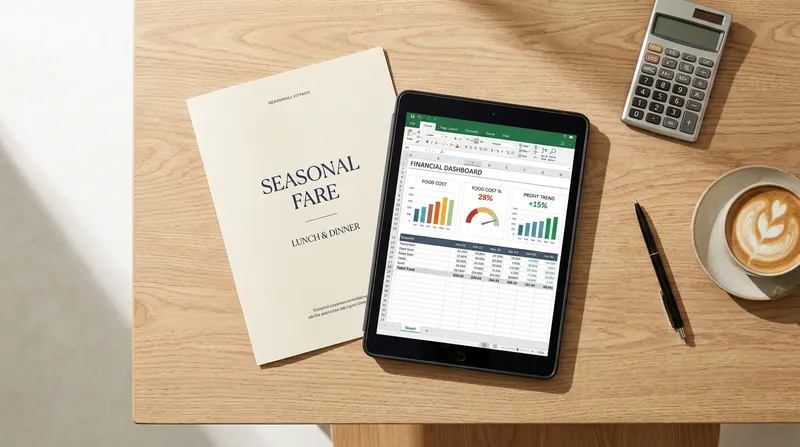
Once you know the exact cost and profit margin of every item on your menu, you can start engineering your offerings for maximum profit.
The menu engineering framework was developed in 1982 by researchers at Michigan State University, classifying items into four distinct categories based on their popularity (sales volume) and contribution margin (profitability). By mapping your menu visually on a simple four-quadrant graph, you can make immediate, data-backed decisions about what to keep, what to change, and what to cut.
| Profitability / Popularity | High Popularity | Low Popularity |
|---|---|---|
| High Profitability | Stars (Flagship items) | Puzzles (Hidden gems) |
| Low Profitability | Plowhorses (Crowd pleasers) | Dogs (Resource drains) |
The Four Categories: Stars, Plowhorses, Puzzles, and Dogs
Every item you sell falls into one of these four categories. Here is how to handle each one:
1. Stars (High Profit, High Popularity) These are your flagship items. They are cheap to make and your customers absolutely love them.
- Action: Keep the quality strictly consistent. Promote these items heavily on your social media, place them in the most visible spots on your physical menu, and ensure your staff recommend them frequently.
2. Plowhorses (Low Profit, High Popularity) These items sell incredibly well, but they are expensive to produce, meaning they drag down your overall profit margin. A classic example is a premium steak dish with a low markup.
- Action: Do not remove them, as they drive foot traffic. Instead, try raising the price very slightly, or carefully reduce the portion size of the expensive ingredients. You can also pair them with high-margin side dishes to balance the ticket value.
3. Puzzles (High Profit, Low Popularity) These items have fantastic profit margins, but for some reason, your customers are not ordering them. Often, this is a marketing or visibility issue.
- Action: Give these items a more descriptive, appealing name on the menu. Instruct your front-of-house staff to actively upsell them.
4. Dogs (Low Profit, Low Popularity) These items are a drain on your resources. They cost a lot to make, they take up valuable inventory space, and nobody buys them.
- Action: Remove them from your menu entirely. If an item has sentimental value, you must completely reinvent the recipe to lower the food cost and increase its appeal before bringing it back.
Note: With Lazygrid's reporting and analytics dashboard, you do not have to map this out on a spreadsheet. The system automatically categorizes your menu items by sales volume and margin, saving you hours of manual calculation.
Applying Menu Engineering to Service Businesses
Menu engineering is not just for restaurants and cafes. If you run a massage shop, beauty salon, or wellness center in New Zealand, you can use the exact same matrix to boost your profits.
Instead of calculating the cost of food ingredients, you calculate the cost of the professional products used during a treatment (such as massage oils, premium lotions, or hair colorants) and add the cost of the staff time required to perform the service.
For example, a 15-minute eyebrow tint might use very little product and require minimal staff time, but you can charge a premium for it. This makes it a "Star" service. Conversely, a highly complex, two-hour spa package might be popular but leaves your staff exhausted and ties up a treatment room for a low hourly return. This makes it a "Plowhorse" that needs a price adjustment. To track this accurately, Lazygrid's booking and appointment system automatically logs staff time costs, making service profitability analysis effortless.
5 Menu Psychology Tactics to Boost Gross Profit Margins
Understanding the math is the first step. The second step is presenting your optimized menu in a way that subconsciously encourages customers to spend more on your high-margin items. Insights from TheFork Manager highlight that monitoring the gross margin rate is a critical KPI that helps restaurants evaluate the effectiveness of their pricing and cost control strategies.
Here are five proven psychological tactics to apply to your menu today:
- Remove the Dollar Sign: Seeing a currency symbol reminds customers that they are spending money, triggering the psychological "pain of paying." Writing a price simply as "24" instead of "$24.00" softens this impact.
- Use the Golden Triangle: On a physical menu, customers typically look at the middle first, then the top right, and finally the top left. Place your "Star" items in these high-visibility zones.
- Utilize Decoy Pricing: Place a very expensive, premium item near a "Puzzle" item you are actively trying to promote. A $45 seafood platter makes a $28 pasta dish (your high-margin Puzzle) look like a fantastic deal, encouraging customers to choose the highly profitable option.
- Write Descriptive Copy: Do not just list ingredients. Use sensory words. "House-baked sourdough with cultured local butter" sells much better than "Bread and butter."
- Optimize Digital Menus & Kiosks: Apply these same tricks to your online ordering platforms. Highlighting high-margin items with great photography on a digital screen is highly effective. Furthermore, using Lazygrid's self-ordering kiosk upselling prompts can automatically suggest high-margin sides, as explained in our post on How Self-Ordering Systems Boost NZ Restaurant Revenue 30%.
Automating Your COGS and Inventory Management
Calculating food costs manually in a spreadsheet is incredibly time-consuming and prone to human error. When you are busy running a business, sitting down for three hours to update ingredient prices is the last thing you want to do.
Modern point-of-sale systems solve this problem by tracking your inventory depletion in real-time. Lazygrid's real-time inventory management automatically deducts the exact ingredients used from your digital stock levels the moment an order is placed.
By utilizing Lazygrid's ingredient-level recipe tracking and COGS reporting, you can set up automated alerts. If the wholesale price of a key ingredient suddenly spikes, the reporting and analytics dashboard will flag that your highly profitable "Star" dish has just turned into a low-profit "Plowhorse." This allows you to adjust your pricing immediately rather than waiting for an end-of-month financial shock. To see what other features help automate this process, read our guide on the Best Restaurant POS in NZ: Core Features vs. Upsells.
Conclusion
Stop guessing which menu items are making you money. By understanding your true food cost percentages and utilizing the menu engineering matrix, you can transform your New Zealand hospitality business from a stressful grind into a highly profitable operation.
Take action this week. Pick just five items from your menu, calculate their exact costs (excluding GST), and plot them on the matrix. You might be surprised to find that your best-selling dish is actually holding your business back.
If you want to read more about optimizing your workflow, check out our guide on the Best Cafe POS NZ: Beat the Morning Rush.
Take the Hassle Out of Menu Costing with Lazygrid
Stop crunching numbers manually. Let Lazygrid POS automate your sales data, track ingredient-level inventory, and generate real-time profitability reports. Start your free Lazygrid trial today and take the guesswork out of your pricing strategy.
Frequently Asked Questions
What is a good food cost percentage for a restaurant in New Zealand?
For most New Zealand restaurants and cafes, a healthy food cost percentage target generally falls between 28% and 35%. However, this varies by venue type. A fine dining restaurant might run closer to 35% due to premium ingredients, while a pizza shop or food truck might aim for 25% or lower.
Should I include GST when calculating my recipe costs?
No. You should always exclude GST from both your ingredient cost calculations and your net sales figures. Including GST will distort your math and give you an inaccurate picture of your actual profit margin.
How do you calculate prime cost in hospitality?
The formula for prime cost is simple: Total Cost of Goods Sold (COGS) plus Total Labor Costs (including wages, KiwiSaver, ACC levies, and benefits). A healthy benchmark for prime costs in the hospitality industry is between 60% and 65% of your total revenue.
What should I do with 'Dog' items on my menu?
Items categorized as "Dogs" (low popularity and low profitability) should generally be removed from your menu entirely to save on inventory waste and prep time. If you absolutely must keep an item, you need to completely reinvent the recipe to lower its production cost and improve its appeal.
Does the menu engineering matrix work for beauty salons and massage shops?
Yes, absolutely. Service businesses can use the exact same matrix. You simply replace food ingredient costs with professional product costs (such as massage oils, premium lotions, or hair dye) and factor in the staff time taken to perform the service to determine your Stars and Dogs.