
The Michelin Effect: How NZ Venues Are Upgrading Tech to Fine-Dining Standards in 2026
What does a Michelin star have to do with your morning coffee rush?
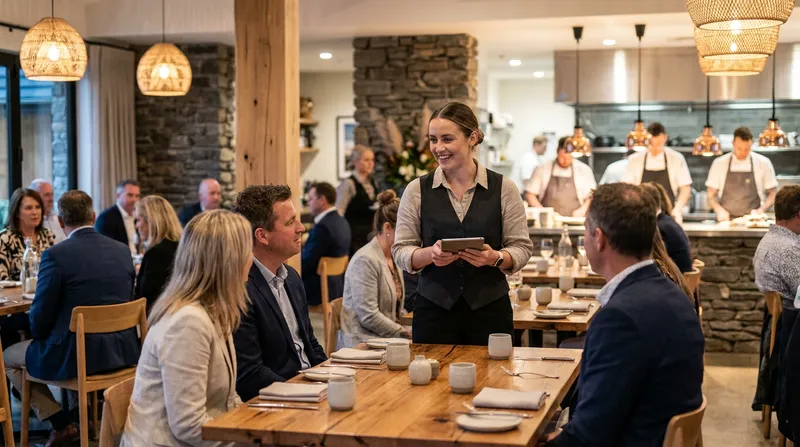
Imagine this scenario: you are running a busy Friday night shift. The kitchen is pumping, a VIP customer arrives, and your staff effortlessly split a complex bill with a few taps on a tablet. Your guests feel recognized and valued, and your team is operating with calm precision. This level of seamless, frictionless service is the gold standard for hospitality, and it is exactly what modern consumers are starting to expect.
With the Michelin Guide officially arriving in New Zealand in 2026, local guest expectations are skyrocketing. Diners and clients are no longer just looking for a good meal or a standard service. They are looking for a flawless, personalized experience from the moment they book to the moment they pay.
Who this applies to: Whether you run a bustling Auckland cafe, a Wellington massage clinic, a local food truck, or a premium restaurant, this shift impacts your business.
Fortunately, you do not need to run a multi-million dollar fine-dining establishment to offer Michelin-level service. By leveraging modern point-of-sale technology, smart customer relationship management (CRM) profiles, and integrated table management, any New Zealand business can deliver the seamless, invisible service that today's high-end consumers expect.
The 2026 Michelin Guide Arrives in Aotearoa
The culinary landscape of New Zealand is changing forever. The highly anticipated arrival of the 2026 Michelin Guide has put Aotearoa on the global map for premium hospitality. According to the official announcement from the MICHELIN Guide, their inaugural 2026 launch is projected to evaluate top local restaurants across Auckland, Wellington, Christchurch, and Queenstown. The inspectors emphasize not just high-quality local produce, but the sincere, world-class hospitality that Kiwis are known for.
This recognition permanently shifts customer expectations across the entire country. When the bar is raised at the very top of the industry, that standard trickles down. Customers who experience flawless service at a recognized fine-dining venue will start expecting that same level of frictionless service at their local cafe, their neighborhood food truck, and even their preferred beauty salon.
If your staff are still writing orders on paper pads or asking regular customers for their name and phone number every single time they book, your business is going to feel outdated very quickly.
Actionable Tip: Audit your current customer journey today. Walk through your own booking, ordering, and payment process as if you were a brand new customer. Identify every single friction point where manual tasks slow down the experience, and write them down. These are the exact areas where technology needs to step in.
What the Michelin Effect Means for Everyday NZ Businesses
You might be thinking that your local massage clinic or neighborhood burger joint has nothing to do with Michelin stars. This is a dangerous misconception. The "Michelin Effect" creates a powerful halo effect for all local hospitality and service businesses.
When a region becomes a recognized culinary destination, it attracts a specific type of high-value tourist. Data from Tourism New Zealand validates this financial incentive, revealing that food-activity participants spend nearly $800 more per trip than average visitors.
These high-spending tourists do not just eat at star-rated restaurants. They buy morning coffees at local cafes, they book afternoon spa treatments, and they visit local food trucks at weekend festivals. When they interact with your business, they bring their high expectations with them. They expect digital receipts, contactless payments, and staff who are attentive rather than stressed out by clunky technology.
Actionable Tip: Train your staff to recognize the signs of high-value tourists and out-of-town guests. Use your POS system to create a custom "Tourist" tag in your customer database. This allows you to track how much revenue is coming from visitors versus locals, helping you tailor your seasonal marketing efforts.
The Secret to Invisible Service: An Integrated Tech Stack
The ultimate goal of fine-dining technology is to achieve "invisible service." This means the technology runs so silently and efficiently in the background that the guest never even notices it is there. The server spends less time staring at a screen and more time making eye contact, reading the guest's body language, and anticipating their needs.
You cannot achieve invisible service if your tech stack is a fragmented mess. If your staff have to check a separate tablet for online orders, use a different app for reservations, and punch numbers manually into a standalone EFTPOS terminal, mistakes are guaranteed to happen. A unified technology ecosystem eliminates operational silos, allowing new staff to acclimate faster and giving operators immediate performance visibility.
Actionable Tip: Calculate exactly how much you are spending each month on separate software subscriptions for reservations, loyalty programs, and POS systems. Consolidate your software into a single cloud-based platform to reduce costs and drastically cut down on staff training time. For a deeper dive into this transition, read our guide on All-in-One vs Modular POS: Why NZ Venues Are Switching - Lazygrid Blog.
Upgrading Table Management and Zero-Commission Ordering
In the fine-dining world, table management is a precise science. Every minute a table sits empty is lost revenue, but rushing a VIP guest out the door ruins the experience.
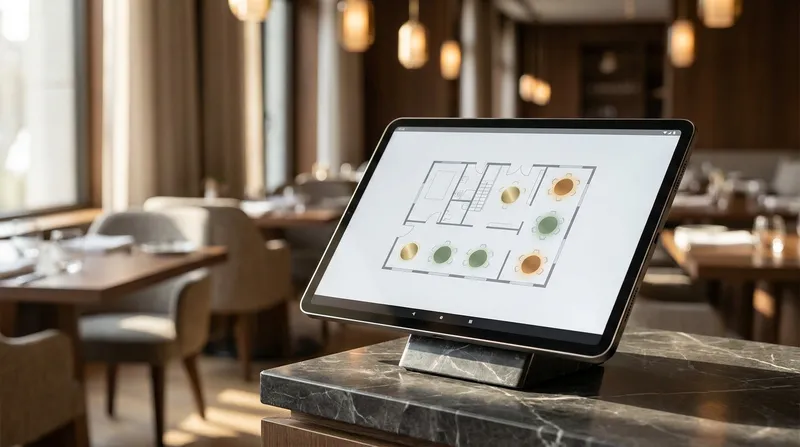
Modern table management software optimizes your floor plan in real time. A visual, drag-and-drop interface on your iPad POS allows your host to see exactly which tables are available, which are waiting for food, and which are ready for the bill.
Beyond the dining room, your digital ordering presence must be just as flawless. High-value customers expect to order ahead without navigating clunky third-party apps. Implementing a zero-commission online ordering system allows you to capture this demand directly, keeping your profit margins intact rather than losing them to delivery app fees.
Actionable Tip: Implement zero-commission direct booking and ordering links on your Google Business profile. This captures high-intent search traffic the exact moment a customer searches for "best restaurant near me" or "massage shop Wellington." Learn exactly how to set this up by reading Reserve with Google: Zero-Commission Bookings for NZ Venues - Lazygrid Blog.
VIP Customer Profiling and Digital Loyalty
How do top-tier restaurants always seem to know exactly what a guest wants before they even ask? The secret is rigorous, disciplined customer data management.
When a VIP guest walks into a premium venue, the staff already know their name, their favorite bottle of wine, and their specific seating preferences. They gather this information using advanced CRM software integrated directly into their POS system.
For New Zealand hospitality, integrated POS and CRM data to personalize guest engagement is a top tech priority for 2026. You can elevate this further by utilizing a built-in digital loyalty programme. Features like digital stamp cards and automated push notifications turn occasional visitors into loyal regulars by rewarding them for their continued business.
Actionable Tip: Make customer data collection a mandatory part of your service standard. Train your front-of-house staff to log at least one personal detail per table (such as a birthday or a strong preference for sparkling water) into your POS customer database.
KDS Course Routing: Eliminating Kitchen Chaos
A beautiful dining room means nothing if the kitchen is descending into chaos. Paper tickets get lost, they get covered in grease, and they provide zero data on preparation times.
Kitchen Display Systems (KDS) have revolutionized back-of-house operations. For a true high-end experience, you need advanced KDS course routing. This digital system ensures that appetizers, mains, and desserts are fired at the exact right moment for flawless pacing, preventing the kitchen from overwhelming the table with too much food at once.
Actionable Tip: Customize your KDS screens to highlight allergy warnings in bright red letters. This ensures the kitchen staff never miss a critical dietary requirement during the middle of a Friday night rush. For a complete walkthrough, check out Allergy-Proof Your NZ Kitchen: POS & KDS Integration Guide - Lazygrid Blog.
Applying Fine Dining Tech to Salons, Spas, and Food Trucks
The principles of fine dining (personalization, efficiency, and invisible service) apply to every single service business in New Zealand.
- Salons and Spas: Use VIP profiling technology to instantly see a client's past treatment history, their preferred massage therapist, and the retail products they usually purchase.
- Food Trucks: Utilize cloud-based POS systems with offline modes to process hundreds of orders an hour at chaotic summer festivals, keeping the line moving even when cell towers go down.
Actionable Tip: If you run a service business, use cloud-based CRM tags to track your clients' specific preferences. If you are looking to upgrade your salon software, explore our Timely & Fresha Alternatives: NZ Salon POS Guide 2026 - Lazygrid Blog.
Contactless Ordering and Payments: The Final Impression
The payment process is the very last interaction a guest has with your business. A clunky, awkward checkout experience can instantly ruin the memory of a fantastic meal or a deeply relaxing spa treatment.
In today's market, modern technology investment is a competitive necessity to enhance the customer experience. When a table of six asks to split the bill three ways, your staff should not break a sweat. An integrated iPad POS system paired with an EFTPOS NZ certified terminal handles complex bill splitting in seconds right at the table.
Actionable Tip: Stop making your customers do the math. Upgrade to an iPad POS with fully integrated EFTPOS to take payments directly at the table. Discover why so many businesses are making this exact move in The POS Trap: Why NZ Venues Are Switching to iPad POS - Lazygrid Blog.
Future-Proof Your NZ Business for 2026 and Beyond
The arrival of the Michelin Guide in 2026 is a massive opportunity for New Zealand's hospitality and service sectors. The businesses that thrive will be the ones that view technology as the ultimate tool for elevating the guest experience.
You do not need a massive budget to achieve this. With platforms like Lazygrid offering plans starting at just $24/month (and full fine-dining features available on the Premium plan for $149/month), world-class tech is accessible to every local business.
By adopting an all-in-one cloud POS, implementing smart KDS course routing, and utilizing CRM data to treat every customer like a VIP, you future-proof your operations against rising consumer expectations.
Want to see how Lazygrid can bring these fine-dining features to your venue? Start with a free walkthrough today and discover how easy it is to upgrade your business.
Frequently Asked Questions
What is a fine dining POS system and how does it differ from a standard POS?
A fine dining POS system goes far beyond basic cash register functions. It includes advanced features like KDS course routing, deep CRM integration for VIP profiling, and seamless visual table management. Standard POS systems often only handle basic transactions, whereas fine-dining systems are designed to manage the entire flow of a guest's experience from booking to payment.
How will the Michelin Guide arriving in New Zealand affect local cafes and food trucks?
The arrival of the guide elevates the overall standard of hospitality nationwide. It brings in high-spending tourists who expect premium, frictionless service. Because these tourists also visit casual dining environments, local cafes and food trucks must upgrade their speed of service, digital payment options, and overall professionalism to meet these new global standards.
What is KDS course routing and why do restaurants need it?
KDS (Kitchen Display System) course routing is a digital workflow that controls the exact timing of when dishes are prepared and served. It ensures guests receive their appetizers, mains, and desserts at the perfect pace. Restaurants need this to prevent overwhelming the kitchen, eliminate lost paper tickets, and ensure food is always served fresh and hot.
Can beauty salons and massage shops benefit from restaurant CRM software?
Absolutely. Service businesses can use the exact same VIP profiling technology to track client preferences, past appointment histories, and retail purchases. This allows a massage clinic or salon to provide a highly personalized experience, such as remembering a client's preferred therapist or specific physical ailments, which dramatically increases client retention.
What are the top hospitality tech trends in New Zealand for 2026?
The most critical trends include the shift toward all-in-one cloud platforms that eliminate the need for multiple software subscriptions. Other major trends include digital loyalty programmes, zero-commission ordering systems integrated directly with Google, and fully integrated mobile EFTPOS solutions that allow for seamless table-side payments.