
How Owned POS Data Boosts Your NZ Hospitality Business Valuation
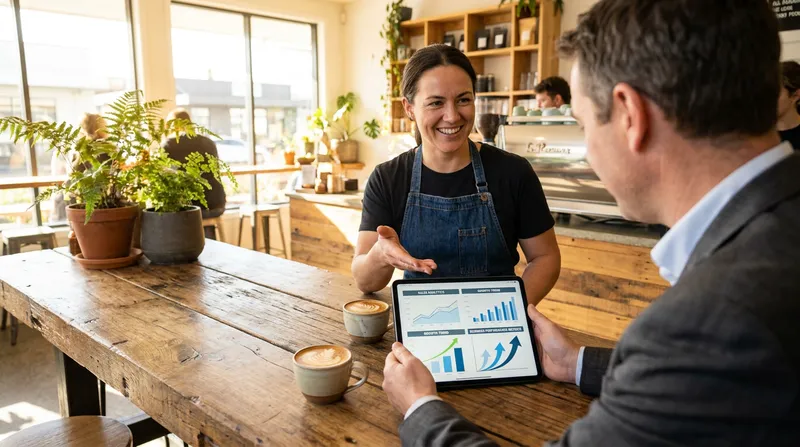
If you own a hospitality business in New Zealand, you already know the grind. You work exhausting 60-hour weeks. You know your regulars by their first names and their exact coffee orders. You have spent years building a loyal community around your cafe, restaurant, food truck, or wellness shop.
But here is the painful reality: when the day comes to sell your business, buyers are not buying your story. They are buying your proof.
Far too many owners are forced to accept lower valuations based purely on second-hand physical assets and recent profit margins. They lose out on the financial value of the community they built because they cannot prove that loyalty on paper.
This is where modern technology changes the game. By leveraging your point of sale system, you can turn abstract customer loyalty into hard data. In this comprehensive guide, we will explore exactly how to value a cafe business NZ buyers will fight over, how to calculate goodwill, and how owning your POS data acts as "digital goodwill" to massively boost your final sale price.
Understanding the Restaurant Valuation Multiplier New Zealand Buyers Use
Before you can increase the value of your business, you need to understand how buyers and brokers calculate that value. There are several cafe appraisal methods NZ experts use, but the most common is the earnings multiplier method.
Most buyers look at your Seller's Discretionary Earnings (SDE) or your EBITDA (Earnings Before Interest, Taxes, Depreciation, and Amortization). SDE is essentially the total cash benefit you, as the owner, get from the business. This includes your net profit, your owner salary, and any personal expenses run through the business.
According to DealStream, for a typical independent New Zealand cafe, buyers usually apply a 1.5x to 3x multiple to the owner's discretionary cash flow. However, scaled or heavily de-risked hospitality businesses can command a highly coveted 3x to 5x multiple.
So, if your SDE is $100,000, your business might be valued at a baseline of $150,000 to $300,000. But if you can prove recurring revenue and low risk, that valuation can jump to $500,000.
What determines if you get the standard 1.5x multiple or the premium 5x multiple? Risk. A buyer paying a high multiple is confident that the revenue will continue after you hand over the keys. If your revenue relies entirely on your personal charm, the buyer takes on massive risk, and your multiplier drops.
How to Calculate Restaurant Goodwill (And Why It Matters)
When selling a small business NZ buyers will dissect your asking price into two categories: tangible assets and intangible assets.
Tangible assets are things you can touch. Your espresso machine, your commercial ovens, your furniture, and your inventory.
Intangible assets are the invisible engines driving your revenue. This includes your brand reputation, your location, your recipes, and your customer base. In the accounting world, the premium a buyer pays above the value of your physical assets is called "goodwill."
If you want to calculate goodwill for cafe sale purposes, the formula is simple: Total Purchase Price - Fair Market Value of Tangible Assets = Goodwill
For decades, calculating goodwill was a guessing game. Owners would say, "We have great regulars!" and buyers would reply, "Prove it." Today, intangible assets restaurant valuation is entirely data-driven, provided you have the right systems in place.
Data as Digital Goodwill: Customer Database Value Business Sale
This is the secret weapon most New Zealand hospitality owners completely miss. Your POS system is not just a digital cash register. It is an asset generator.
Valuation advisers such as Brady Ware & Company note that a well-maintained customer database is considered a highly valuable intangible asset that drives future revenue generation and increases overall business valuation beyond physical assets.
When you use a modern Cloud POS for NZ Restaurants, you capture critical data that proves your goodwill to buyers.
Here is how POS system business valuation works in the real world:
1. The Power of a Digital Loyalty Programme
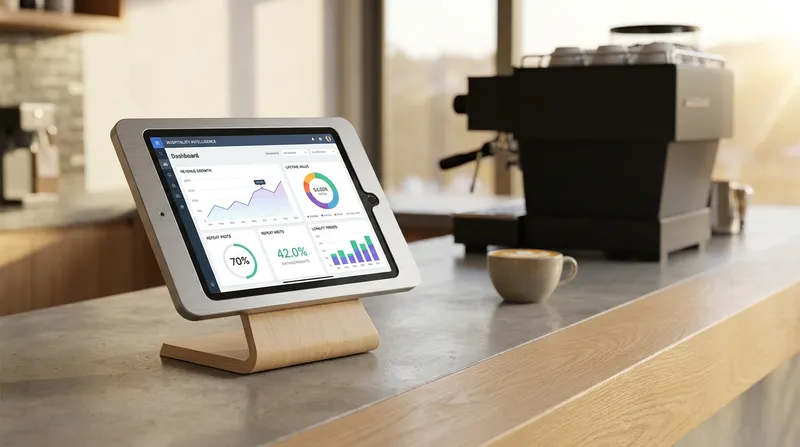
Imagine sitting across from a buyer. Instead of saying, "We have a lot of regulars," you pull up your POS dashboard and say, "We have 2,400 active members in our digital loyalty programme. The data shows that 45 percent of them visit more than twice a week, and their average lifetime value is $850."
Suddenly, the buyer is not just buying a coffee machine. They are buying evidence of future cash flow. This drastically lowers their risk and justifies a higher valuation multiplier.
2. CRM and Customer Preferences
If you run a massage shop, a beauty salon, or a high-end restaurant, transferring customer data business sale protocols are vital. A CRM (Customer Relationship Management) system built into your POS tracks visit history, preferences, and contact information. When a buyer takes over, they are not starting from scratch. They have a roadmap to every VIP customer you have ever served.
3. Vouchers and Gift Cards
Outstanding gift card and voucher balances are a liability the buyer will inherit, so they need to be accounted for accurately in the sale agreement. A POS system that tracks every issued and redeemed voucher makes that adjustment clean and quick, and a steady history of gift card sales is also good evidence of local demand.
4. Self-Service Kiosks
Kiosk-generated data proves higher average order values and peak hour efficiency. Buyers can independently verify this data to see exactly how your technology stack is maximizing revenue per customer.
5. Automated Reporting and Analytics
Buyers love clean numbers. The ability to export 36 months of clean sales data, hourly patterns, and staff performance reports acts as the due diligence package buyers dream of. Clean data speeds up the due diligence process and prevents buyers from negotiating your price down.
Third-Party Delivery vs Owned Ordering: The Valuation Trap
Many restaurants and cafes made a massive pivot to delivery apps like UberEats and DoorDash over the last few years. While these platforms bring in orders, they are actively destroying your business valuation.
Why? Because third-party apps do not share customer data with you.
When a customer orders through a delivery app, they belong to the app, not to your restaurant. If you decide to sell your business, you cannot transfer those customers to the new buyer. You have zero way to contact them, market to them, or prove their loyalty.
This is the third-party delivery vs owned ordering dilemma. Businesses that rely too heavily on third-party apps receive lower valuations because they do not actually own their revenue streams.
To fix this, you need to transition your customers to a commission-free, owned online ordering system. By integrating online ordering directly into your website through a system like Lazygrid, you capture the customer's email, phone number, and order history.
Every time a customer orders directly from you, you are building your database. You are not paying third-party commission on those orders, and you are building a tangible digital asset that you can eventually sell. If you want to dive deeper into how much these apps are costing you, read our guide on Why Global POS Systems Cost NZ Cafes Up to 20% More.
Preparing a Hospitality Business for Sale: Your Actionable Checklist
If you are planning a restaurant exit strategy New Zealand buyers will respond to, you cannot wake up one morning and stick a "For Sale" sign in the window. You need a 12 to 24-month runway.
Here is your ultimate selling a restaurant checklist:
12 to 24 Months Before Selling
- Upgrade Your Technology: If you are still using a clunky legacy till, upgrade to a modern cloud-based system. An iPad POS System looks modern, tracks data accurately, and proves to buyers that the business is not stuck in the dark ages.
- Launch a Loyalty Programme: Start capturing customer data immediately. You want at least a year of data to show a buyer exactly how many repeat customers you have.
- Shift Away from Delivery Apps: Start incentivizing your customers to use your direct online ordering platform. Offer a 10 percent discount for direct orders to build your database.
6 to 12 Months Before Selling
- Standardize Your Recipes and Inventory: A buyer needs to know they can replicate your success without you in the kitchen. Use your POS to track inventory down to the gram. Check out our guide on the Best Cafe POS NZ for tips on tracking stock.
- Presentation and Professionalism: Stop running personal expenses through the business to keep your EBITDA clean. Concurrently, fix minor physical defects, like a squeaky door or torn vinyl, as buyers will use these as excuses to lower their offer.
3 to 6 Months Before Selling
- Document Staff Roles: Ensure your staff management system in your POS tracks individual employee performance and labour cost percentages. Buyers want to see a reliable team in place.
- Consult a Broker: Get a professional valuation based on your newly organized data.
What Hospitality Business Brokers NZ Actually Want to See
The macro environment for hospitality in New Zealand is strong. According to Restaurant Association of New Zealand figures, the industry generates roughly $15 billion in annual sales. Furthermore, the New Zealand Government is developing a Hospitality Action Plan to support business growth and local communities.
Because the industry is growing, hospitality business brokers NZ wide are dealing with eager buyers. But brokers are incredibly strict gatekeepers. They will not list your business for a premium price unless you can prove its worth.
Brokers are looking for "turnkey" operations. A turnkey business is one where the new owner can turn the key in the door on day one and immediately start making money.
When a broker sees a business running on a centralized, cloud-based POS system with integrated online ordering, automated booking systems, and a massive customer CRM, their eyes light up. They know they can market your business not just as a "cafe," but as a "data-rich, recurring-revenue hospitality asset."
Transferring Customer Data in a Business Sale
One of the most critical steps in your restaurant exit strategy New Zealand plan is the actual handover of digital assets. Transferring customer data business sale protocols must be handled carefully to respect New Zealand privacy laws.
When you sell your business as a "going concern" (meaning the business continues to operate under new ownership), the CRM and loyalty database can usually transfer with it, as long as the new owner uses that information for the same purpose it was collected for and your privacy statement told customers this could happen. Check the Office of the Privacy Commissioner's guidance and get legal advice before the sale.
To make this transition seamless:
- Include Digital Assets in the Sale Agreement: Explicitly list your POS database, website domain, social media accounts, and online ordering system as assets in the final contract.
- Transfer the Master Account: With a cloud-based POS, transferring ownership is as simple as updating the master admin email and billing details. The new owner instantly gains access to years of historical sales data and customer preferences.
- Send a Welcome Campaign: Advise the new owner to use the POS marketing tools to send a "Welcome" email or SMS to loyalty members who have opted in to marketing messages, perhaps offering a free coffee or discount to introduce themselves and maintain the community goodwill.
Designing Your Restaurant Exit Strategy in New Zealand
Selling a business is the final, and potentially most profitable, phase of your entrepreneurial journey. Do not let years of hard work go unrewarded because you failed to track your success.
By moving away from outdated cash registers and third-party delivery apps, and embracing a system that captures your customer data, you are actively building wealth. Every customer who joins your loyalty programme, every direct online order, and every tracked inventory metric adds dollars to your final valuation multiplier.
Ready to build an asset buyers will actually pay a premium for? Want to start building your digital goodwill today? See how Lazygrid's Premium plan gives you loyalty, CRM, and online ordering from just $149/month. Upgrade your operations today and take control of your business data.
Frequently Asked Questions
How do you calculate the value of a cafe in NZ?
The most common method is the earnings multiplier method. Buyers calculate your Seller's Discretionary Earnings (SDE) or EBITDA and apply a multiple based on the business's risk profile, location, and proven recurring revenue. A higher multiple is awarded to businesses with strong systems and provable customer loyalty.
What is a good restaurant valuation multiplier in New Zealand?
A standard multiplier for typical independent hospitality businesses in NZ ranges from 1.5x to 3x of your SDE (Seller's Discretionary Earnings). To achieve the premium end of the scale (3x to 5x), you need to demonstrate low risk through modern tangible assets, clean financial records, and strong "digital goodwill" like an active customer database.
How does customer data increase business valuation?
Customer data acts as mathematical proof of loyalty. Instead of asking a buyer to trust that you have "great regulars," a CRM and digital loyalty programme prove exactly how many active customers you have, their visit frequency, and their lifetime value. This hard data significantly lowers the buyer's risk, justifying a higher purchase price.
How do I calculate goodwill for a hospitality business sale?
Goodwill is calculated by taking the total purchase price of the business and subtracting the fair market value of all tangible assets (like equipment, furniture, and inventory). The remaining amount represents the value of intangible assets like your brand reputation, location, and your customer database.
Can I legally transfer my customer database when I sell my business?
Generally yes, if you sell the business as a "going concern", the new owner uses the data for the same purpose it was collected for, and your privacy statement told customers it could be transferred. Under the Unsolicited Electronic Messages Act, the new owner should only send marketing emails or texts to customers who have consented. Get legal advice and check the Office of the Privacy Commissioner's guidance before you hand over the database.