
Restaurant CRM NZ: Turn Walk-Ins into Repeat Diners
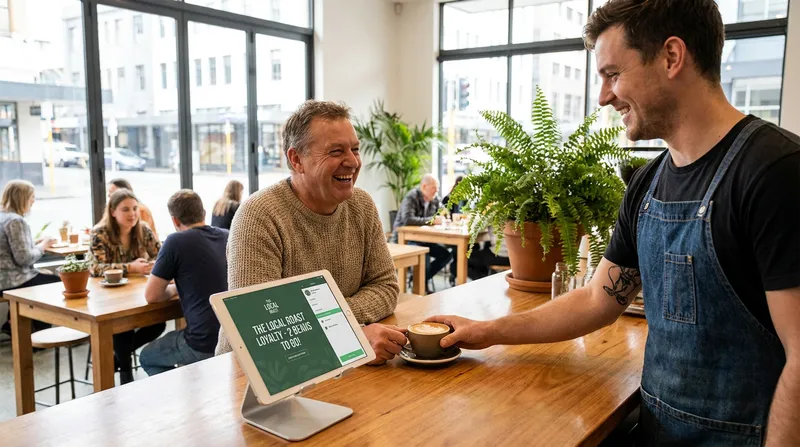
You see hundreds of customers every week, but the moment they walk out the door, they are gone. You have no way to contact them, no idea what they usually order, and no system to bring them back on slow days. You are relying entirely on hope and easily lost paper stamp cards to drive repeat business, leaving massive amounts of revenue on the table.
For many cafe and restaurant owners in New Zealand, this is the daily reality. You might know your regulars by face, but without their contact information and purchase history, you cannot actively market to them. In a highly competitive hospitality landscape, waiting for customers to simply walk back in is no longer a viable business strategy.
Implementing a robust restaurant CRM software NZ solution allows you to capture customer data effortlessly, understand their buying habits, and automate marketing campaigns that drive repeat visits. This guide will show you exactly how to transition from anonymous walk-ins to a highly profitable, data-driven customer database.
Why Customer Retention is the Secret to Hospitality Survival
Many hospitality business owners obsess over acquiring new customers. They spend thousands on social media advertising, local print media, and flashy signage. However, the true secret to long-term profitability lies in keeping the customers you already have.
Customer acquisition is incredibly expensive. You have to convince a stranger to take a risk on your menu, find parking, and break their existing dining habits. Retention, on the other hand, simply requires reminding someone who already likes your food to come back again.
Research highlighted by Forbes shows that increasing customer retention by just 5 percent can increase profits by as much as 95 percent. The cost of acquiring a new customer far exceeds the cost of retaining an existing one. When you have a reliable way to communicate with your past guests, you can generate revenue on demand, filling your tables on notoriously quiet Tuesday nights. For instance, a hypothetical Wellington cafe owner using a CRM win-back automation could recover 23 percent of lapsed customers in their first month, proving the immediate ROI of retention strategies.
Actionable Tip: Calculate your current repeat customer rate. Pick a random day of the week, count how many total transactions you had, and ask your staff to estimate how many of those were familiar faces. If your repeat customer rate is below 40 percent, a CRM strategy will dramatically improve your bottom line.
The Problem with Anonymous Walk-Ins in NZ Hospitality
The New Zealand hospitality industry is massive. According to data from the New Zealand Ministry of Business, Innovation and Employment, the sector saw annual sales hit $15.7 billion for the year ending March 2024, directly employing around 145,000 people. With so many options available to consumers, loyalty is hard to earn and easy to lose.
For decades, the standard tool for cafe loyalty programs in New Zealand has been the paper stamp card. While offering a free tenth coffee seems like a good idea, paper cards are fundamentally flawed for modern businesses.
First, they collect zero actionable data. Second, paper cards are easily lost or damaged. Finally, paper cards do not allow you to be proactive. If a regular customer stops coming in, a paper card cannot send them a text message to win them back.
| Feature | Paper Stamp Cards | Lazygrid Digital Loyalty |
|---|---|---|
| Data Collected | None | Name, Email, Phone, Visit History |
| Lost Card Rate | High | Zero (Stored on phone or Apple Wallet) |
| Win-Back Capability | Impossible | Automated SMS and Email Triggers |
Actionable Tip: Audit your current loyalty program. If you are using paper cards, calculate how many free items you give away each month versus how much customer contact data you actually collect. The imbalance will quickly highlight the need for a digital upgrade.
What is a POS Integrated CRM?
A Customer Relationship Management (CRM) system is software designed to store customer profiles, track their purchase history, and facilitate marketing communications. In the past, CRMs were expensive, standalone software platforms used only by large corporate chains. Today, the best CRM for small business NZ operators is built directly into their Point of Sale (POS) system.
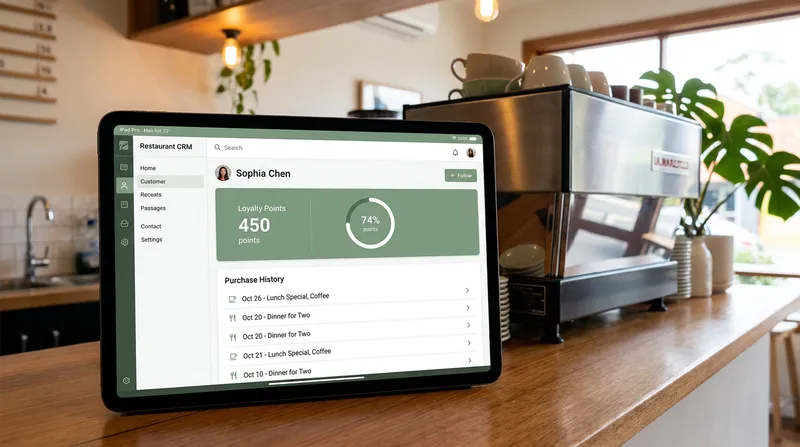
With an all-in-one system like Lazygrid, your CRM and your till operate as a single unit. A POS integrated CRM NZ solution automatically captures customer data during the natural flow of a transaction. When a customer orders online, books a table, or signs up for a digital loyalty program at the counter, their information is instantly synced to your database. There is no manual data entry required from your busy staff.
This integration allows you to see exactly what each customer orders, how much they spend on average, and how many days it has been since their last visit. If you are considering upgrading your technology, reading about All-in-One vs Modular POS: Why NZ Venues Are Switching can help you understand the immense value of a unified system.
Actionable Tip: Review your current tech stack. Are your booking system, online ordering platform, and in-store till completely separate? If so, you are likely creating duplicate customer profiles and missing out on a unified view of your diners.
How to Build a Restaurant Customer Database Legally
Building a restaurant customer database might sound intimidating, but with the right technology, it happens automatically. The key is to offer your customers a compelling reason to hand over their details.
Here are three highly effective methods to build your database quickly:
- Digital Loyalty Programs: Ditch the paper cards. Offer customers a digital stamp card linked to their phone number with Apple Wallet and Google Pay integration. To incentivize the initial sign-up, offer an immediate reward, such as a free coffee or a 10 percent discount on their current order.
- QR Code Ordering: When customers scan a QR code at their table to order and pay, they enter their email address to receive their receipt. This automatically creates a customer profile in your POS system.
- Digital Receipts: Ask customers at the counter if they would like their receipt emailed or texted to them. This is a natural, non-intrusive way to collect contact information.
If you are currently using older, clunky hardware that makes data collection difficult, our guide on The POS Trap: Why NZ Venues Are Switching to iPad POS explains how modern tablets speed up this process.
Navigating the NZ Privacy Act
When collecting customer data, you must comply with local laws. According to guidelines from New Zealand Consumer Protection, under the Privacy Act 2020, organizations must only collect the personal information they need for a lawful business purpose.
You must clearly explain why the data is being collected and ensure the data is stored securely. For example, your digital loyalty sign-up screen should explicitly state, "By entering your number, you agree to receive loyalty rewards and occasional marketing offers." A modern, cloud-based POS system handles this security and encryption for you, keeping you compliant without requiring an IT degree.
Actionable Tip: Create a compliant opt-in script for your staff. Instead of asking for an email out of the blue, train them to say, "Would you like to join our VIP club to earn a free coffee today? Just pop your phone number in here."
VIP Customer Segmentation: Targeting Your Best Diners
Not all customers are created equal. In most hospitality businesses, a small percentage of regular customers generates the vast majority of the revenue. Treating a first-time walk-in the exact same way you treat a customer who spends $200 every Friday night is a missed opportunity.
VIP customer segmentation involves dividing your database into specific groups based on their behavior. Using Lazygrid's Customer Management and Loyalty Programme features, you can easily filter your customers into distinct categories:
- The Daily Ritualists: Customers who visit 4 to 5 times a week for coffee or quick lunches. They value speed and consistency.
- The High Rollers: Diners whose average order value is significantly higher than your restaurant average. They frequently buy expensive wines or multiple courses.
- The Weekend Warriors: Customers who only visit on Saturdays and Sundays for brunch.
Once segmented, you can personalize your hospitality marketing automation NZ strategies. A report by Deloitte Digital proves the effectiveness of this approach, noting that nearly 8 in 10 consumers want personalization that helps them save money, and brands with mature personalization abilities are 48 percent more likely to exceed their revenue goals.
For example, you can send your High Rollers an exclusive early invite to a new wine tasting menu, while using push notifications to send your Daily Ritualists a digital punch card booster. If you want to see how top-tier venues are using this data, read our insights on The Michelin Effect: How NZ Venues Are Upgrading Tech to Fine-Dining Standards in 2026.
Actionable Tip: Go into your POS reporting dashboard today. Identify your top 20 spending customers from the past three months. Next time they book a table, add a note for the staff to offer them a complimentary appetizer or glass of prosecco upon arrival.
Running Restaurant Win-Back Campaigns That Actually Work
Even the most loyal customers sometimes drift away. They might change jobs, alter their commute, or simply forget about your venue. A win-back campaign is a targeted marketing effort designed specifically to re-engage customers who have not visited your business in a specific timeframe (usually 30, 60, or 90 days).
Because these people already know and like your food, the conversion rate on win-back campaigns is incredibly high. Using hospitality email marketing or SMS, you can set up automated triggers in your CRM.
Here is a highly effective 30-day win-back template you can copy and paste:
Target: Customers who haven't visited in 30 days. Message: "Hi [Name], it's been a while since we saw you at [Restaurant Name]! Show this text to your server this week for a free coffee with any lunch order. See you soon!"
To scale this strategy, you can also set up a 60-Day "We've Upgraded" email offering a free dessert to try a new menu, or a 90-Day "VIP Welcome Back" offer giving high-value customers a $20 discount on their next bill. Running these campaigns can provide a massive boost to your revenue, especially during slower seasons.
You can also target corporate clients who haven't placed large orders recently. For more on capturing high-value business clients, check out our guide on Corporate Catering: How NZ Cafes Beat Delivery App Fees.
Actionable Tip: Set up a single, automated SMS campaign in your CRM this week. Target customers who have not visited in 45 days and offer them a small, low-cost incentive to return. Track the redemption rate over the next two weeks to see the immediate ROI.
Adapting CRM Strategies for Salons and Food Trucks
While this guide focuses heavily on cafes and restaurants, the principles of customer retention apply universally across local businesses. For a mobile business, food truck marketing NZ relies heavily on letting loyal customers know where you will be parked via SMS. Furthermore, systems like Lazygrid offer an offline mode that continues processing transactions even during internet outages, which is essential for busy market days where connectivity is unreliable.
Similarly, a salon and spa CRM New Zealand setup is crucial for service-based businesses to automate rebooking reminders. If you are looking to move away from expensive, outdated salon software, explore our Timely & Fresha Alternatives: NZ Salon POS Guide 2026 to see how modern POS systems handle appointments and client profiles seamlessly.
Actionable Tip: Map out your ideal customer journey. If you run a massage shop, determine the ideal frequency for a client to return. Set up your CRM to send an automated reminder exactly three weeks after their last appointment to secure that repeat booking.
Conclusion: Start Building Your Customer Database Today
Transitioning from anonymous walk-ins to a known, engaged customer database is the single most profitable shift a hospitality business can make. By implementing a restaurant CRM software NZ solution, you stop relying on hope and start relying on data.
You can effortlessly collect customer details, segment your VIPs, and run automated win-back campaigns that fill your venue on your quietest days. The days of lost paper stamp cards are over.
Ready to stop relying on paper stamp cards? Discover how Lazygrid's built-in CRM and loyalty features can help you grow your repeat business. Start your free trial here
Frequently Asked Questions
How much does restaurant CRM software cost in New Zealand?
Costs vary widely depending on the provider. However, modern cloud-based POS systems include built-in CRM features. Lazygrid includes CRM and loyalty features starting from $59/month on the Standard plan, which is significantly less than standalone CRM software subscriptions that can cost hundreds of dollars.
Do I need a separate app for my cafe loyalty program?
No, you do not need a separate app. While third-party loyalty apps exist, the most effective method is using a POS-integrated system like Lazygrid. Customers can earn rewards automatically via their phone number, Apple Wallet, or payment card at the till, without the friction of downloading extra apps.
What are the rules for collecting customer data under the NZ Privacy Act?
Under the Privacy Act 2020, businesses must have a lawful purpose for data collection, gain clear consent from the customer, explain exactly how the data will be used (such as for marketing or loyalty rewards), and ensure the information is stored securely against cyber breaches.
How do I increase repeat customers in hospitality without constantly discounting?
Constant discounting eats into your profit margins. Instead, focus on VIP experiences. Use your CRM data to offer personalized service, early access to new seasonal menus, priority booking for busy holidays, or surprise rewards (like a free dessert on their birthday) rather than just slashing prices.
What is the best CRM for small business venues in NZ?
The best CRM is the one your staff will actually use during a busy rush. We highly recommend an all-in-one iPad POS system that automatically captures customer data during the natural transaction and booking process, eliminating the need for manual data entry.