
Improve Table Turnover Rate in NZ (Without Rushing)
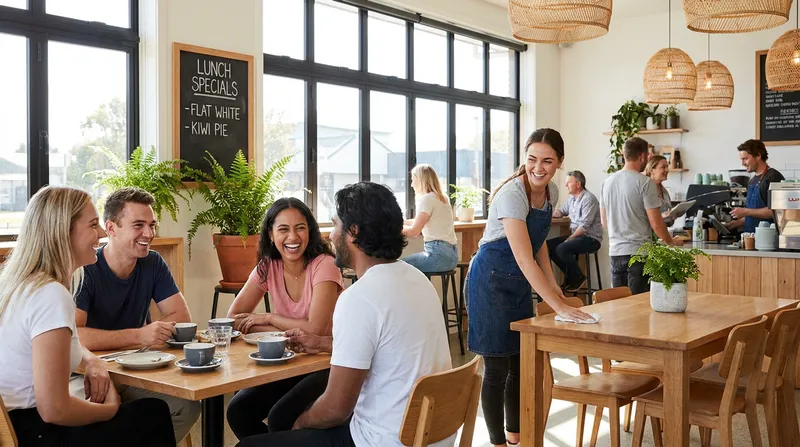
Running a successful hospitality or service business in New Zealand means balancing two competing priorities: maximizing revenue during peak hours and maintaining the relaxed, welcoming atmosphere your guests expect. The laid-back Kiwi dining vibe is sacred, but so is your profit margin.
If you want to improve restaurant operational efficiency, you must master your table turnaround time. However, this concept goes far beyond just restaurants. Whether you run a bustling Wellington cafe, an Auckland beauty clinic, a local massage shop, or a mobile food truck, optimizing how quickly you serve customers is the key to scaling your income.
In this comprehensive guide, we will show you how to calculate table turnover rate, share industry benchmarks, and provide actionable psychological and technological strategies to reduce restaurant wait times without ever making your guests feel undervalued.
What is Table Turnover Rate and Why Does it Matter in NZ?
Table turnover rate is a restaurant profitability metric that measures how many times a specific table (or a service chair, or a massage bed) is occupied by different parties during a set period.
Understanding this metric is no longer just a growth tactic for New Zealand business owners. It is a survival necessity. According to data from the Ministry of Business, Innovation and Employment (MBIE), the New Zealand hospitality industry directly employed around 145,000 people by early 2024, growing by 7.3% from the previous year. With rising wage costs across the sector, every unoccupied seat during peak hours represents a direct hit to an already compressed margin, making table turnover one of the most impactful levers you can pull.
Furthermore, recent updates in the 2024 Hospitality Industry Report show that 76% of surveyed members reported worse profitability driven by inflation and rising operational costs.
When your margins are squeezed by rising food costs and minimum wage increases, you cannot afford to have a table sit empty for 20 minutes after the guests have finished eating. You need to safely increase table turnover to maximize your revenue per square meter.
How to Calculate Table Turnover Rate
Learning how to calculate table turnover rate is straightforward once you have the right data. You need to know two numbers for a specific measurement period, like your Friday dinner service from 5 PM to 9 PM:
- Number of parties served
- Number of available tables
Table Turnover Rate Formula: Number of Parties Served / Number of Available Tables = Table Turnover Rate
Example: If you have 20 tables in your cafe and you serve 60 parties during your four-hour lunch rush, your calculation is 60 / 20 = 3. Your table turnover rate is 3 turns per service.
Seat Turnover Rate vs Table Turnover
While table turnover is helpful, it does not tell the whole story. If a party of two sits at a table designed for six, your table turnover might look good, but your revenue will suffer. This is why you must understand seat turnover rate vs table turnover.
Seat turnover measures how many individual seats were occupied.
Seat Turnover Rate Formula: Number of Individual Guests Served / Total Number of Seats = Seat Turnover Rate
If your 20 tables have 80 total seats, and you served 120 individual guests during that same lunch rush, your seat turnover rate is 120 / 80 = 1.5. This indicates a massive gap between your table efficiency and your seat efficiency, highlighting a need for better restaurant seating capacity optimization.
Maximizing RevPASH
To truly master your restaurant profitability metrics, you need to look at RevPASH (Revenue Per Available Seat Hour). As explained in research highlighted by SevenRooms, RevPASH measures how effectively a venue turns seat capacity into revenue over time. It proves that a full dining room does not automatically equal maximum profitability. You want guests who order well and leave when finished, rather than guests who buy one coffee and use your Wi-Fi for three hours.
RevPASH Formula: Total Revenue / (Available Seats x Operating Hours) = RevPASH
Example: If your 80-seat restaurant generates $4,800 in a 4-hour dinner service, your RevPASH is $15. Tracking this weekly reveals whether your turnover improvements are actually translating to revenue gains.
Average Restaurant Table Turnover Time by Venue Type
What is a "good" turnover rate? The average restaurant table turnover time varies wildly depending on your business model.
| Venue Type | Target Turnover Time |
|---|---|
| Fine Dining | 90 to 120 minutes |
| Casual Dining / Local Pubs | 60 to 90 minutes |
| Cafes | 30 to 45 minutes |
| Fast Casual | 20 to 30 minutes |
In fine dining, guests are paying for the experience, so rushing them is a cardinal sin. In fast casual settings, the goal is pure volume.
Beyond Restaurants: Allied Industries
Turnover principles apply to any capacity-constrained business in New Zealand. For massage shops and beauty salons, your "tables" are your treatment beds or styling chairs. If a 60-minute massage blocks out 90 minutes on your calendar due to slow room changeovers, you are losing 33% of your potential daily revenue. You need precise booking systems to tighten these gaps.
Similarly, for food trucks, your limitation is not seating but queue turnover. How fast can you process an order and hand over the food? If you want to increase your speed, check out our guide on Square POS vs EFTPOS for NZ Food Trucks to ensure your payment processing is not slowing down your line.
The Kiwi Hospitality Balance: How to Increase Table Turnover Politely
New Zealanders value a relaxed, friendly dining experience. You cannot drop a bill on the table while they are still chewing and expect them to return. Here are subtle, psychological cues to turn tables without ruining the vibe.
1. Master the Art of Pre-Bussing
Do not wait until the guests leave to clear the table. Train your staff to remove empty glasses, side plates, and finished dishes continuously. When a table is completely clear of everything except water glasses, it sends a subconscious psychological signal to the guests that the meal has concluded.
2. The Dessert Menu Pivot
When clearing the main courses, immediately offer the dessert or coffee menu. If they decline, this is your natural opening to say, "No problem at all, can I grab you the bill, or would you like to relax for a bit?" This gives them control while still initiating the payment process.
3. Strategic Host Stand Communication
If you have a strict 90-minute limit during peak times, communicate this at the time of booking and again upon seating. A polite, "We have this table reserved for another party at 7:30 PM, so you have plenty of time to enjoy your meal," sets expectations early without feeling aggressive.
Using Technology to Reduce Restaurant Wait Times
Working harder will only get you so far. To truly optimize your table turnaround time, you need the right technology. A study published in the Journal of Foodservice Business Research confirms that effective restaurant table management is a proven operational strategy that can reduce waiting time, improve seat turnover, and increase customer satisfaction without requiring costly capacity expansion.
Here is how modern POS systems help you achieve this.
Restaurant Table Management Software
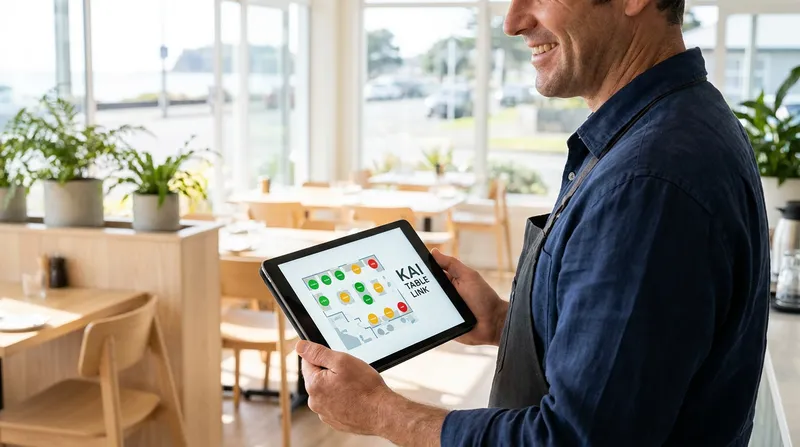
A well-configured table management system, like the visual floor plan built into Lazygrid POS, keeps your entire team aligned in real time. Staff can see exactly which tables are occupied, which are waiting for food, and which are ready to be cleared. This eliminates the confusion of servers wandering the floor looking for available seats. By tightening the communication between the host stand and the floor staff, you can shave 5 to 10 minutes off every table turn.
QR Code Ordering for Restaurants
One of the biggest bottlenecks in hospitality is the ordering process. Waiting for a server to take an order can waste 10 minutes of valuable table time. By implementing QR code ordering for restaurants, guests can scan, browse the menu, and send their orders directly to the kitchen the moment they sit down.
This does not replace your staff. Instead, it frees them up to focus on delivering food, refilling drinks, and providing excellent hospitality. If you run a high-volume venue, consider reading our guide on how to Set Up a Self-Service Kiosk in Your NZ Cafe to further reduce counter queues.
Digital Kitchen Display Systems (KDS)
If your kitchen is drowning in lost or illegible paper tickets, your food delivery times will skyrocket, keeping guests at their tables longer. A Kitchen Display System routes orders instantly to the correct prep station. The screen color-codes orders by urgency, ensuring that table 4 gets their appetizers before table 6 gets their mains. Faster cooking means faster eating. Discover more in our breakdown of KDS vs Paper Tickets.
The 5-Minute Fix: Pay at Table POS Systems NZ
The most frustrating part of dining out for a customer is trying to catch a server's eye to get the bill, and then waiting again for the EFTPOS machine. This "payment limbo" can easily add 10 to 15 minutes to your table turnaround time.
Adopting a pay at table POS system NZ eliminates this awkward end-of-meal waiting period. By using modern tableside ordering systems NZ, your staff can take a mobile terminal directly to the table.
With EFTPOS NZ certified terminals integrated into your POS, you can offer seamless contactless dining payments NZ. The server prints the bill, processes the split payment, and finalizes the transaction in under 60 seconds. The guests leave happy, and you get your table back immediately. Check out the Lazygrid POS Pricing to see how affordable it is to equip your staff with mobile ordering capabilities.
Restaurant Seating Capacity Optimization
Even with lightning-fast service, you will lose money if your restaurant seating capacity optimization is poor.
Match Party Size to Table Size
If you constantly have couples sitting at four-top tables, your seat turnover rate will be abysmal. Analyze your historical data using your POS reporting dashboard. Your Lazygrid POS reporting dashboard breaks down bookings by party size, peak hour, and table utilization, giving you the exact data you need to make these layout decisions confidently. If 60% of your bookings are parties of two, but only 20% of your tables are two-tops, you need to buy smaller tables that can be pushed together for larger groups.
Manage Your Bookings Smartly
Integrated reservation systems help you stagger your seating. If you seat your entire restaurant at 6:30 PM, your kitchen will crash, food will be delayed, and every table will take longer to turn. Stagger your bookings in 15-minute increments to ensure a smooth flow of orders.
For businesses expanding across the country, managing these bookings and floor plans can get complicated. Utilizing Multi-Location POS Systems ensures that your seating optimization strategies are standardized across all your venues.
Diversify Your Revenue Streams
If you simply cannot turn tables any faster without ruining the customer experience, you must look outside your four walls. Boosting your takeaway and delivery options allows you to serve more customers without needing more physical seats. Unlike third-party platforms that charge 15% to 30% per order, Lazygrid's online ordering is commission-free. Learn how to Increase Direct Delivery Orders for NZ Restaurants to build a highly profitable revenue stream that operates simultaneously with your dine-in service. Additionally, offering vouchers and gift cards provides an upfront cash injection and encourages future visits.
Actionable Steps for Non-Food Service Businesses
If you own a massage clinic or beauty salon, the concept of a pay at table POS system might not apply, but the operational efficiency principles remain exactly the same.
- Automate Reminders: Use your booking system to send automated SMS reminders. A no-show leaves your "table" empty for an hour, destroying your turnover rate.
- Streamline Checkouts: Take payment details at the time of booking, or use a Retail POS System NZ with fast barcode scanning for retail products so clients do not bottleneck your reception area after their treatment.
- Buffer Times: Build realistic buffer times into your digital calendar for room changeovers, ensuring your next client is never left waiting in the lobby.
Conclusion
Learning how to increase table turnover is not about rushing your guests out the door. It is about removing the friction from their experience. When you eliminate the wait to order, the wait for food, and the wait to pay, the customer naturally finishes their visit faster and leaves much happier. Furthermore, if your POS includes a loyalty programme, you can increase revenue per visit through targeted repeat-customer rewards, reducing the pressure on raw table volume.
By combining subtle hospitality techniques with powerful restaurant table management software, you can serve more parties, increase your RevPASH, and comfortably navigate the rising costs of doing business in New Zealand.
Ready to speed up your service and optimize your floor plan? A modern, cloud-based POS is your best tool for the job. Whether you need an integrated booking system, QR code ordering, or a lightning-fast Kitchen Display System, having the right technology makes all the difference. Explore our Best QSR POS System NZ guide to see how upgrading your tech stack can transform your daily operations.
Frequently Asked Questions
What is a good table turnover rate for a cafe in NZ?
For a busy New Zealand cafe, a good table turnover rate is typically between 30 to 45 minutes per table. This allows enough time for guests to enjoy their coffee and cabinet food without feeling rushed, while keeping the queue moving during peak morning and lunch periods.
How do you politely ask a customer to leave a table?
You should never directly ask a guest to leave. Instead, use psychological cues like clearing all empty plates and glasses (pre-bussing), offering the final bill promptly, or politely mentioning at the host stand upon arrival that the table is booked for another reservation at a specific time.
How do you calculate seat turnover rate vs table turnover?
Table turnover divides your total parties served by your total available tables. Seat turnover divides total individual guests served by total available seats. Seat turnover is often a more accurate metric for profitability because it highlights if you are seating parties of two at tables built for six.
Do QR code menus actually improve table turnaround time?
Yes, significantly. QR code ordering allows guests to browse the menu and send orders directly to the kitchen the moment they sit down. This eliminates the 5 to 10 minutes usually spent waiting for a server to take the order, speeding up the entire dining process seamlessly.
What is the average restaurant table turnover time for fast casual venues?
Fast casual venues usually see an average table turnover time of 20 to 30 minutes. Since the focus is on volume and quick service, guests typically order at the counter or via a kiosk, eat quickly, and leave, making it the fastest turnover category outside of pure takeaway businesses.