
MOBI, Bopple & Order Meal vs All-in-One POS Costs NZ (2026)
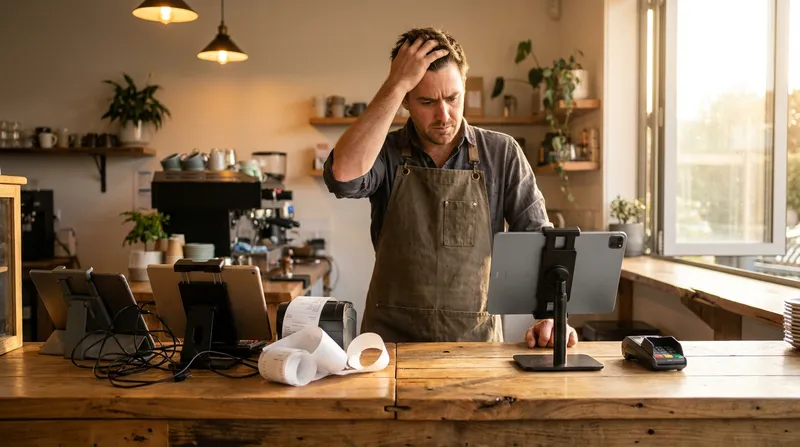
It is 6:45 PM on a Friday in your busy New Zealand takeaway or cafe. A regular customer walks up to the counter to collect the $55 family order they placed online twenty minutes ago. Your staff search the pass, check the spike, and stare at the kitchen printer. Nothing is there.
When you open your third-party ordering dashboard on the back-office computer, you see the painful truth: the order was paid for, but failed to push to your point-of-sale (POS) terminal because of a mismatched PLU stock code after you updated your menu earlier that afternoon. You now have an angry regular standing in front of a queue, a stressed kitchen forced to rush an order on the fly, and the bitter realisation that you are still paying software fees on that botched transaction.
Across Aotearoa, hospitality, mobile food, and service business owners are losing thousands of dollars every year to a quiet financial drain: death-by-a-thousand-cuts software fees from "bolted-on" online ordering. Between POS eCommerce connector licences, platform commissions, per-order transaction clips, and compulsory guest service fees, bolting an external ordering app onto your till eats directly into your bottom line while creating double the administrative work.
If you are currently exploring Mobi2Go alternatives in NZ, comparing Bopple against an integrated POS, or calculating Order Meal commission rates, this guide breaks down the 2026 numbers and shows how moving to an all-in-one hospitality POS can protect your margins.
What is bolted-on online ordering vs an integrated POS?

Before looking at the invoices, it helps to understand why so many New Zealand venues ended up with two or three different software systems taped together.
A bolted-on online ordering setup happens when your in-store till (such as a traditional Windows terminal or a basic cloud register) cannot natively handle web orders, scheduled pickups, or QR table ordering. To bridge the gap, you sign up for a separate third-party ordering platform like MOBI (formerly Mobi2Go), Bopple, Order Meal, or TuckerFox. You then rely on an API "bridge" or middleware connector to pass orders from their website into your POS.
An all-in-one cloud POS, by contrast, has built-in online ordering engineered into the exact same database. Your in-store iPad till, your branded online ordering website, your QR table codes, your Kitchen Display System (KDS), and your customer loyalty programme all run inside one single software subscription (QR table codes and loyalty on the Premium plan).
Customers prefer dealing directly with your brand rather than an intermediary, especially when ordering from their local regular spot.
Actionable Step: Open your bank statement from last month and highlight every software subscription, POS licence fee, payment gateway deduction, and ordering platform invoice. If you are paying more than one software company just to ring up food or retail items, you are paying the bolted-on tax.
Breaking down the true costs: commissions, platform clips, and middleware fees
Why does bolted-on ordering hurt so much in 2026? Because New Zealand's hospitality operating model has fundamentally shifted.
While hospitality historically relied on the common industry rule of thumb known as the 30-30-30 rule (30% fixed costs, 30% cost of goods sold, 30% labour, leaving 10% net profit), that buffer has vanished. Although takeaway food services have continued to grow, average hospitality labour costs have climbed to a record 40% of revenue.
When labour and ingredients eat up 70% to 75% of every dollar, your realistic net margin sits between 3% and 7%. Bolted-on ordering systems reduce that fragile margin through the Triple-Dip Fee Trap:
- Dip 1: The POS Middleware / Connector Fee. Legacy POS resellers frequently charge you a monthly "eCommerce interface" or API licence fee just to allow an outside app to talk to your till.
- Dip 2: The Ordering Platform Subscription or Commission. You pay the ordering provider a monthly fee, a percentage of your gross order value, or both.
- Dip 3: Payment Gateway Processing + Guest Surcharges. On top of standard Stripe or card processing rates, several third-party platforms tack on a compulsory "guest service fee" (up to $3.00 per order) at checkout.
New Zealand's proposed ban on in-store card surcharges (the Retail Payment System (Ban on Merchant Surcharges) Amendment Bill) has stalled in Parliament, and it never covered online payments, so platform service fees at online checkout remain legal. That does not mean customers like them. In a 2022 Reserve Bank of Australia survey, around 45% of Australian consumers said they would switch to a non-surcharged payment method when faced with a surcharge, and 20% said they would avoid shopping at a merchant that surcharges (and Australia subsequently moved to ban eftpos, Visa, and Mastercard surcharges from 1 October 2026).
Actionable Step: Place a test order on your own website right now using your phone. Check the final checkout screen to see if your platform is adding a $1.50 to $3.00 "service fee" to your customers' bills.
MOBI (Mobi2Go) and Bopple: The hidden cost of third-party POS add-ons
Many New Zealand cafes and multi-site eateries use cloud POS systems like Lightspeed or Square, or legacy terminals like Idealpos, and pair them with specialist hospitality ordering add-ons like MOBI (formerly Mobi2Go) or Bopple.
While both platforms offer capable interfaces, independent operators need to look closely at MOBI online ordering pricing and how Bopple compares to an integrated POS.
The MOBI (Mobi2Go) enterprise shift
Founded in New Zealand, Mobi2Go rebranded to MOBI and shifted its focus heavily toward multi-site enterprise chains and QSR franchises.
- Modular & Quoted Pricing: MOBI publishes a starting plan from US$59 per feature per month plus onboarding fees, with larger deployments quoted individually.
- Guest Service Fees: MOBI introduced models that can apply a guest fee of up to $3.00 per order on digital checkouts. On a $15 coffee and scone pre-order, a $2 or $3 platform fee represents a noticeable markup that can discourage regulars from ordering online.
- Separate Ecosystem: Because MOBI is not your POS, you still have to pay full price for your main POS subscription alongside your MOBI contract.
The Bopple "bolted-on" reality
Bopple is widely used across Australasia, but it remains a separate third-party platform bolted onto your POS.
- Stacked Monthly and Per-Order Fees: Bopple's online ordering plan costs $49/month per location, plus a per-order commission (around 0.5% to 1.64% ex GST, according to published pricing), before Stripe processing fees.
- Support Finger-Pointing: When an order fails to sync between Bopple and your POS during Sunday brunch, your POS provider may blame the ordering integration while the ordering platform blames the POS API.
If you are already evaluating how add-on tools compare to unified systems, read our breakdown of posBoss (Bustle) Alternatives NZ: Add-On vs All-in-One POS.
Actionable Step: Calculate your "effective take rate" on Bopple or MOBI by adding your monthly platform fee + per-order platform percentage + POS integration fee, then dividing that total by your monthly online sales.
Order Meal and TuckerFox: How local commission apps impact takeaway margins
For independent fish and chip shops, Indian and Thai restaurants, pizza takeaways, and kebab shops, platforms like Order Meal and TuckerFox often position themselves as the local, affordable alternative to UberEats.
Furthermore, with the global GloriaFood shutdown confirmed for 30 April 2027, hundreds of New Zealand takeaways are currently looking for the best online ordering system for their venue.
Let us look at the real numbers behind TuckerFox and Order Meal compared to direct POS ordering:
- Order Meal Commission Rates NZ: Order Meal has published a 7% commission rate (confirm your current rate in your own agreement).
- TuckerFox Commission Rates NZ: TuckerFox generally charges 10% + GST commission on pickup and delivery orders, plus Stripe card processing fees.
Paying 7% to 10% + GST sounds reasonable compared to a 30% delivery marketplace, until you consider who is actually placing those orders. Unlike UberEats, most people ordering pickup from your website via Order Meal or TuckerFox are already your local regulars. They typed your restaurant's name into Google, clicked your website link, and ordered their Friday night curry.
If your takeaway processes $5,000 a month in online pickup orders from loyal locals:
- At a 7% + GST commission rate (8.05% incl. GST), you are handing over about $402.50 every month ($4,830 per year) just for a digital shopping cart.
- In many setups, these orders print out on a separate standalone thermal printer sitting next to your main till. Your staff have to manually re-punch every $45 takeaway order into your main POS at the end of the night just to balance your cash drawer and inventory.
There is also a critical legal compliance angle in 2026: when third-party aggregators collect your customers' names, phone numbers, and emails, you lose control of data governance. Learn how to protect your venue in our guide to NZ Privacy Act IPP 3A (2026): Ditch 3rd-Party Data for POS.
Actionable Step: Count how many standalone order tablets and secondary receipt printers are sitting on your front counter today. Every extra device represents manual double-entry that slows down your kitchen and muddies your end-of-day sales reports.
The operational challenges of legacy POS integrations (Idealpos and SwiftPOS)
If you run an older Windows-based terminal system like Idealpos or SwiftPOS (often sold by traditional hardware dealers like PosPro or ACR), trying to connect modern online ordering can be both expensive and technically complex.
When investigating Idealpos or SwiftPOS online ordering integration costs, hospitality owners encounter two major roadblocks:
1. The legacy middleware fee
Traditional on-premise POS systems lock their database behind paid modules. To connect MOBI, Bopple, or a web store to Idealpos, you must purchase an annual or monthly Idealpos Online eCommerce connector subscription through your reseller before you pay the online ordering company.
2. Static IPs, port forwarding, and PLU sync failures
Because legacy POS databases live on a local back-office PC in your venue rather than in the cloud, connecting them to the internet requires complex local network configuration:
- You often have to pay your ISP for a Static IP address and pay an IT technician to configure router port forwarding (such as opening TCP Port 1433) and Windows Firewall rules.
- If your internet router restarts or gets swapped out by Spark or One NZ, your port forwarding can break and online orders silently stop printing in the kitchen.
- Menu Sync Chaos: In a bolted-on setup, you have to manually match numerical PLU codes across two different dashboards. If you run out of snapper at 7:15 PM on a Friday, marking it out of stock on your till often fails to update your third-party website immediately, forcing you to call customers to issue partial refunds.
By switching to a cloud POS with automatic menu sync, your in-store till and your online menu share the exact same database. When you update a price, add a modifier, or mark an item out of stock on your Lazygrid iPad POS, your live online ordering website updates automatically in real time. That is also critical when managing food safety rules; see our NZ Allergen Compliance 2026: POS & KDS Setup Guide and NZ Food Control Plan Verification: Complete Audit Checklist for how unified menus prevent dangerous kitchen errors.
Actionable Step: Time how long it takes you to add one seasonal special (with milk or dietary modifiers) to both your in-store POS and your online ordering website. If it takes more than 90 seconds or requires logging into two websites, your tech stack is costing you labour hours.
Comparing monthly software costs on $5,000 in online orders
Let us put New Zealand ordering setups side by side. Assume your cafe, takeaway, or food truck processes $5,000 per month in online pickup orders (roughly 125 orders at an average $40 ticket size), plus normal in-store EFTPOS sales.
Here is how the cost components compare across bolted-on setups (using illustrative estimates for third-party fees) and Lazygrid:
| Cost Component | Legacy POS + MOBI (Bolted-On, Illustrative Estimate) | Cloud POS + Bopple (Bolted-On, Illustrative Estimate) | Basic Till + Order Meal / TuckerFox (Illustrative Estimate) | Lazygrid All-in-One POS (Standard Plan) |
|---|---|---|---|---|
| Base POS Software | Illustrative estimate: separate licence + support fee | Illustrative estimate: separate monthly cloud POS fee | Illustrative estimate: separate basic register fee | $59/mo (Includes POS, Online Ordering, Bookings, Vouchers) |
| POS eCommerce Connector Fee | Illustrative estimate: monthly middleware fee | Illustrative estimate: $0 to monthly add-on fee | Not integrated (Manual re-entry) | $0 (Built-in natively) |
| Online Ordering Monthly Fee | From US$59/mo per feature + onboarding (larger setups quoted) | $49/mo | Separate agreement terms | $0 extra (Included in $59/mo Standard) |
| Platform Commission / Order Clip (on $5k sales) | Guest fee up to $3/order paid by customer | ~$25 - $82/mo ex GST (at 0.5% to 1.64% platform clip) | ~$350 - $500/mo ex GST (7% Order Meal published rate to 10% TuckerFox rate) | Small per-order commission (Can be passed on to customer) |
| Menu & Stock Sync | Manual PLU mapping | Two separate dashboards | Zero sync (Double entry) | Instant automatic sync |
| Est. Monthly Software Cost to Merchant | Base POS + middleware + US$59+/mo | Base POS + $49/mo + order clips | Base POS + $350 - $500+/mo ex GST | $59 / mo (when small online fee is passed on) |
| Annual Software Cost to Merchant | Varies by quote + POS fees | Varies by POS tier + order volume | ~$4,200 - $6,000+/yr ex GST in commission + POS fees | $708 / yr (when small online fee is passed on) |
(Note: Standard Stripe online card processing fees apply across all digital platforms. All competitor lines are illustrative estimates based on published pricing models.)
Based on these illustrative estimates, and if you pass Lazygrid's small per-order online commission on to customers, the software saving could be in the low thousands of dollars per year. Check your own invoices to calculate your actual figure.
Because Lazygrid charges only a small per-order commission on online orders, which you can choose to pass on to the customer - far below the heavy commissions of third-party platforms - your business can keep its full menu price while running your shop on one $59/month subscription.
Actionable Step: Plug your own monthly online sales volume and current software invoices into the table above. Multiply your monthly difference by 12 to see how much cash flow you can unlock for ingredients, staff wages, or marketing.
Why NZ cafes, takeaways, food trucks, and service studios are switching to all-in-one cloud POS
Modern New Zealand businesses rarely fit into a single rigid box. A cafe sells retail coffee beans and pre-ordered catering; a food truck trades at a weekday business park and a weekend festival; a massage or beauty studio takes appointment bookings while selling skincare products and digital gift cards at the reception desk.
Here is how an all-in-one system like Lazygrid POS replaces fragmented software across every venue type:
1. Cafes and quick-service takeaways
When the 8:30 AM coffee rush or 6:30 PM Friday takeaway wave hits, speed is everything. With Lazygrid's direct online ordering system, pre-orders flow straight from your custom-branded website to your EPSON or Xprinter thermal kitchen printers or digital Kitchen Display System (KDS).
- Crush the Peak Rush: Let customers schedule pickups for a future time so orders are spread across the rush rather than all arriving as ASAP orders. Read our guide on Order Pacing & Scheduled Pickup POS: Crush the NZ Rush to set this up properly.
- Public Holiday Surcharges Without the Headache: In bolted-on setups, owners often remember to add a 15% public holiday surcharge on their EFTPOS terminal, but forget to update their third-party online ordering app - losing 15% on every online order all day. Lazygrid lets you manage your pricing and surcharges in one place; see Public Holiday Surcharge Rules NZ (2026/2027): Sync Your POS.
- Built-In Loyalty & QR Table Ordering: On the Premium plan ($149/month), you get QR code table ordering and a digital loyalty programme that integrates with Apple Wallet and Google Pay - no paper coffee cards needed.
2. Food trucks and mobile operators
If you are searching for a compact cafe and food truck POS system in NZ, you do not have space on a cramped trailer counter for a bulky Windows terminal, a separate Order Meal printer, and three power bricks. Lazygrid runs on an iPad or iPhone you already own, paired with EFTPOS NZ certified terminals.
- Smart Connectivity in the Field: Because Lazygrid is a live cloud system, it requires an active internet connection to take orders and process payments (cached data remains viewable during an outage, but orders and transactions cannot be processed offline). For food trucks trading at regular spots with mobile coverage, a dedicated 4G/5G wireless broadband router is the most reliable, cost-effective setup (never rely on a phone hotspot for daily trade, as incoming calls or battery drain will drop your connection). If you trade at rural A&P shows or festival grounds with poor cell reception, Starlink Business (from NZ$92/month for 50GB, which is plenty for POS data, plus NZ$449 one-off hardware) keeps your POS and online pre-orders running smoothly. Check out our full connectivity guide: Offline POS in 2026? NZ Food Trucks & Rural Venues Can Go Online.
3. Massage, beauty, and wellness studios
Hospitality venues are not the only ones affected by bolted-on software. Many New Zealand massage clinics, day spas, and beauty salons use a booking tool that takes a cut of new client sales, plus a separate retail POS for selling oils or cosmetics, plus a third plugin for selling gift vouchers.
- One Unified Front Desk: Lazygrid's Standard ($59/mo) and Premium ($149/mo) plans include an integrated Booking/Reservation System, Customer Management (CRM), Vouchers & Gift Cards (with Apple Wallet and Google Pay support), and full retail POS.
- Transparent Booking Costs: Instead of paying steep percentage commissions on treatments, Lazygrid charges a predictable, flat small fee of just NZ$0.50 or NZ$1.00 per booking depending on your industry - and that includes bookings made directly through Reserve with Google on the Premium plan. Compare the exact numbers in our breakdown of Fresha vs Kitomba vs Lazygrid: NZ Salon POS Costs in 2026 and learn how to capture local search traffic in Reserve with Google in NZ: Direct Bookings (Low Flat Fees).
Actionable Step: List every customer touchpoint your business offers - counter sales, online pickup, table QR codes, appointments, gift vouchers, and loyalty rewards. Check how many of those can be consolidated into a single $59/month Lazygrid Standard or $149/month Premium plan.
Frequently asked questions about online ordering and POS in NZ
What is the difference between bolted-on online ordering and an all-in-one cloud POS?
Bolted-on online ordering means using a separate third-party platform (such as MOBI, Bopple, Order Meal, or TuckerFox) and connecting it to your point-of-sale terminal via a software bridge or standalone printer. This forces you to pay multiple monthly bills, manage two separate menu dashboards, and troubleshoot sync errors. An all-in-one cloud POS like Lazygrid has online ordering, QR table ordering, bookings, loyalty, and in-store EFTPOS built into one single database and one monthly subscription (with QR table ordering and loyalty on the Premium plan).
How much commission do Order Meal and TuckerFox charge NZ restaurants?
Order Meal has published a 7% commission rate (confirm your current rate in your own agreement), while TuckerFox generally charges 10% + GST commission (plus standard Stripe card processing fees). While lower than third-party delivery apps, paying 7% to 10% + GST on repeat pickup orders from your own local regulars can easily cost a busy takeaway $4,000 to $6,000+ per year.
How much does MOBI (formerly Mobi2Go) and Bopple cost in New Zealand?
Bopple charges $49/month per venue plus a per-order commission of roughly 0.5% to 1.64% ex GST (before Stripe fees). MOBI publishes a starting plan from US$59 per feature per month plus onboarding fees (with larger deployments quoted individually) and has introduced models that apply a guest service fee of up to $3.00 per order at checkout. Because both are bolted-on add-ons, you must pay for a separate POS subscription on top of their fees.
Why do online orders fail to print on legacy POS systems like Idealpos or SwiftPOS?
Legacy Windows-based POS systems store their menu database on a local computer inside your shop rather than in the cloud. They rely on paid eCommerce middleware, manual PLU number matching, static IP addresses, and router port forwarding to receive web orders. If a PLU code is mistyped in one dashboard or your internet router resets its port settings, online orders fail to reach the kitchen printer.
Can I run low-commission online ordering, QR table ordering, and in-store EFTPOS from one system in NZ?
Yes. With Lazygrid POS, your in-store iPad till (certified with EFTPOS NZ terminals), your branded online ordering website, QR table ordering, bookings, digital gift cards, and loyalty programme all run inside one cloud platform. Lazygrid's Standard plan ($59/month) includes POS, online ordering, bookings and gift cards, with a small per-order commission on online orders that you can pass on to the customer. QR table ordering and the loyalty programme are included on the Premium plan ($149/month).
What is the best alternative for NZ takeaways before GloriaFood shuts down in 2027?
With GloriaFood scheduled to retire its platform on 30 April 2027, New Zealand takeaways should avoid jumping into 7% to 10% commission contracts with local aggregators. Upgrading to an all-in-one cloud POS like Lazygrid gives you a modern iPad till and a built-in online ordering website in one step, eliminating manual order re-entry.
Do I need to buy expensive proprietary hardware to switch to an all-in-one POS in NZ?
No. Unlike traditional proprietary POS hardware that can cost $5,000+, Lazygrid runs on Apple hardware you likely already own, including iPad (5th generation and later, iPad Air, iPad Pro, or iPad mini running iPadOS 15+) and iPhone (iPhone 8 and later running iOS 15+). You can connect standard network thermal printers from EPSON or Xprinter and pair directly with EFTPOS NZ certified payment terminals, or start with a complete hardware bundle from $999 + GST.
How does menu and stock syncing work when an item sells out during a Friday night rush?
In a bolted-on ordering setup, marking a dish as sold out on your till often fails to update your third-party ordering app immediately, leading to awkward phone calls and refunds. With an all-in-one cloud POS, your counter iPad and your online ordering website read from the exact same real-time inventory. The moment you mark an item out of stock or change a price on your POS, your live website and table QR menus update automatically within seconds.
Can food trucks and mobile coffee carts use online pre-ordering with Lazygrid POS?
Yes. Food trucks use Lazygrid's online ordering so customers can pre-order and pay ahead of time to skip the queue. Because Lazygrid is a live cloud system, it requires an active internet connection to take orders and process payments (cached data stays viewable during an outage, but transactions cannot be made offline). For regular spots with good cell coverage, a dedicated 4G/5G wireless broadband router is the best choice. For rural events or poor-signal sites, Starlink Business (from NZ$92/month for 50GB) keeps both your iPad till and online pre-orders running reliably.
How do booking and reservation fees compare to online ordering fees on an all-in-one POS?
Many third-party restaurant reservation and salon booking platforms charge hefty monthly fees plus percentage commissions or per-cover charges. Lazygrid includes its Booking/Reservation System on the Standard ($59/month) and Premium ($149/month) plans, charging only a small flat fee of NZ$0.50 or NZ$1.00 per booking depending on your business type. On the Premium plan, this also includes direct bookings through Reserve with Google.
Who owns my customer database when diners order online?
When customers order through third-party marketplaces or aggregator apps, the platform typically controls the customer relationship and uses your diners' purchase history to market other venues. When customers order through your Lazygrid online ordering website, you retain 100% ownership of your customer data, allowing you to track visit history in your built-in CRM, send targeted promotions, and reward repeat visits through your digital loyalty programme.
Conclusion: Stop paying three companies to ring up one order
In 2026, running a profitable New Zealand restaurant, cafe, food truck, or wellness studio means protecting every percentage point of your margin. Bolting third-party platforms like MOBI, Bopple, Order Meal, or TuckerFox onto a separate POS terminal forces you to pay multiple software subscriptions, absorb middleware fees or 7% to 10% commissions, and waste hours updating two different menus.
When you switch to an all-in-one hospitality POS built for New Zealand operators, your counter iPad, EFTPOS NZ terminal, kitchen printers, online ordering website, bookings, and loyalty programme work together from day one. You own 100% of your customer data, your menu syncs automatically in seconds, and a Xero integration is also on the way to further streamline your back office.
Want to see how much you could save by replacing your bolted-on ordering apps? Explore more practical guides on the Lazygrid Blog or get in touch with our Wellington-based team today to test Lazygrid POS on an iPad you already own.