
The 7 Best Restaurant Booking & Reservation Systems in NZ (2026 Review)
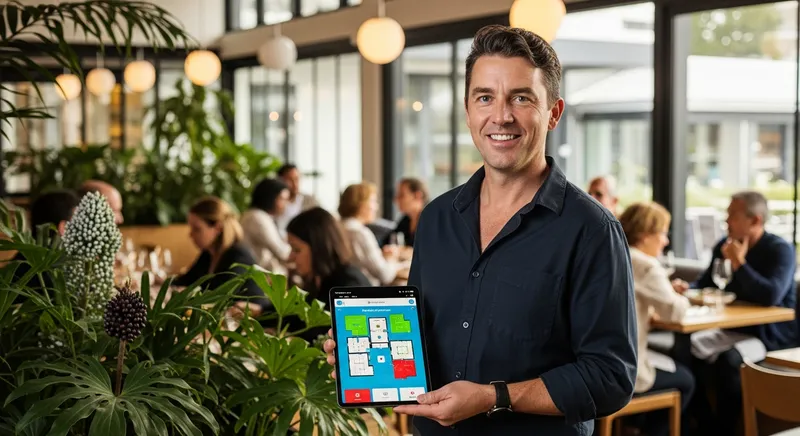
As a New Zealand restaurant, cafe, or service business owner, you're likely overwhelmed by the sheer number of booking systems available. Many are designed for a global audience, with US-centric features, confusing pricing, and support teams in completely different time zones. You need a solution that understands the local market, helps you tackle uniquely Kiwi challenges, and doesn't eat into your hard-earned profits with hidden fees.
The pressure is on. While the NZ hospitality industry saw sales grow to $15.7 billion, a report from the Restaurant Association of New Zealand highlights that this growth is being outpaced by rising food and labour costs. An efficient booking system isn't just a nice-to-have; it's a critical tool for maximising revenue, improving efficiency, and ensuring your business thrives.
This guide cuts through the noise. We've reviewed the top booking and reservation systems available in New Zealand for 2026, focusing on what matters most to local businesses: NZD pricing, local support, powerful features to reduce no-shows, and seamless integrations.
Why Your NZ Business Needs a Booking System in 2026
Adopting the right technology is essential for capturing your share of the market. Monthly hospitality spending regularly sees significant increases, as noted in electronic card transaction data from Stats NZ, and a modern booking system ensures you're ready to accept those customers.
But it's about more than just taking bookings. A great system helps you run a leaner, more profitable operation—a crucial advantage when facing the workforce challenges and economic pressures detailed in research from the Ministry of Business, Innovation & Employment (MBIE).
Most importantly, customer expectations have changed. Technology is increasingly important to diners, with many showing a strong preference for booking and ordering directly with an establishment. A professional, easy-to-use booking system meets this demand, builds customer trust, and helps you own the relationship. It's a key step in boosting your NZ restaurant's profit margins.
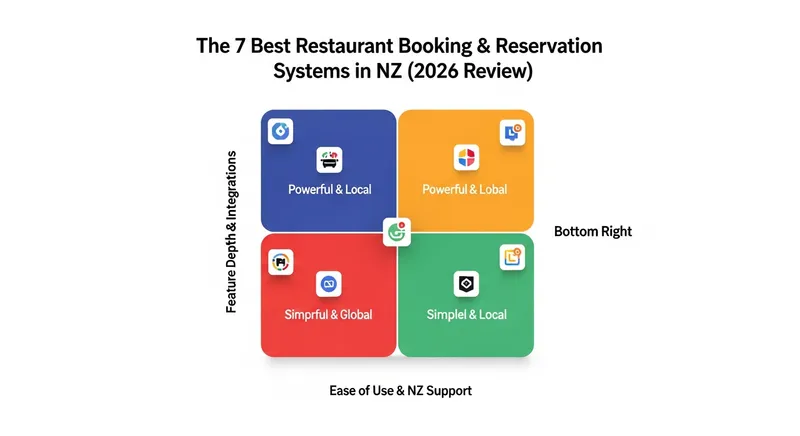
As the chart illustrates, booking systems can be mapped by their power versus their local focus. This guide will help you find the right balance for your specific needs, whether that's an all-in-one local powerhouse or a simpler global tool.
What to Look for in a Reservation System: A New Zealand Perspective
Choosing a system isn't just about features; it's about finding the right partner for your business. Before you commit, evaluate every option against these NZ-specific criteria:
- Transparent NZD Pricing: Are you paying a flat monthly fee or a 'per-diner' commission that penalises you for being busy? Look for clear, all-inclusive pricing in New Zealand Dollars to avoid surprises.
- Local Support: When your system has an issue during Friday night service, you need help now. Prioritise providers with a team in New Zealand or Australia to avoid the frustration of time-zone lag from a support desk in Dublin or San Francisco that opens when you're closing.
- Powerful Integrations: The best systems work seamlessly with the tools you already use. Key integrations for NZ businesses include your POS, local payment gateways like Stripe or EFTPOS NZ, and accounting software like Xero. A critical feature to look for is Reserve with Google, which lets customers book directly from Google Search and Maps.
- No-Show Reduction Tools: No-shows are a major revenue killer. Your system must have tools like automated SMS/email reminders, credit card holds, or deposit-taking capabilities. Research shows that even lenient policies, when communicated clearly, can significantly improve attendance.
- Ease of Use: The system should be intuitive for your staff to learn quickly and for customers to book without friction. A complicated system creates more problems than it solves.
- Data Ownership: You must own your customer data. This allows you to build relationships and market directly to your clients, a core principle of turning them into repeat customers and growth drivers.
- All-in-One vs. Standalone: Do you want a booking system that's part of a fully integrated POS platform, or a standalone app that you need to manage separately? An all-in-one system can significantly reduce cost and complexity.
Quick Comparison: Top 7 NZ Booking Systems
| System | Pricing Model | Best For | NZ/AU Support | Reserve with Google |
|---|---|---|---|---|
| Lazygrid | Flat Monthly Fee | All-in-one POS & Bookings | ✅ Yes | ✅ Yes |
| ResDiary | Flat Monthly Fee | High-volume restaurants | ✅ Yes | ✅ Yes |
| OpenTable | Per-Diner Fee + Subscription | Global tourist exposure | ✅ Yes | ✅ Yes |
| Quandoo | Per-Diner Fee | Customer acquisition channel | ✅ Yes | ✅ Yes |
| Lightspeed | Add-on to POS Subscription | Existing Lightspeed users | ✅ Yes | ✅ Yes |
| Restaurant Hub | Flat Monthly Fee | Restaurant Association members | ✅ Yes | ✅ Yes |
| TableAgent | Free (Ad-Supported) | Startups on a zero budget | ❌ No | ❌ No |
The 7 Best Restaurant & Service Booking Systems in NZ for 2026
We've analysed the market to bring you the top options for New Zealand businesses, from full-service restaurants to local beauty shops.
1. Lazygrid Bookings
- Best for: Restaurants, cafes, and service businesses wanting a powerful, commission-free booking system fully integrated into their POS.
- Key Features: Part of an all-in-one iPad-based POS. Includes integrated table management, automated SMS/email reminders, waitlists, customer database with booking history, loyalty program, and reporting. The premium plan adds Reserve with Google and multi-location management.
- Pricing Model: Included in the Standard ($59/month) and Premium ($149/month) plans. It's a flat fee with zero commission on bookings.
- The Verdict: The top choice for NZ businesses seeking an affordable, all-in-one solution. The deep integration between POS, bookings, loyalty, and customer data provides unmatched value and efficiency. Local support ensures help is there when you need it.
- Considerations: As an all-in-one system, it's best suited for businesses looking for a complete POS and booking solution, rather than just a standalone booking app to add to an existing, different POS.
2. ResDiary
- Best for: Established, high-volume restaurants that need granular control and extensive features.
- Key Features: Advanced table management, detailed reporting, integrations with third-party apps, and a consumer-facing booking app. Known for its robust, standalone feature set.
- Pricing Model: A flat monthly subscription fee (typically starting from ~$150-$250 NZD), commission-free. Pricing is quoted based on venue size.
- The Verdict: A powerful and respected player in the NZ market. It's a strong standalone option for large restaurants that can justify the higher monthly cost and don't require deep, out-of-the-box integration with their POS.
- Considerations: Can be more expensive than all-in-one solutions and may require separate management from your POS, potentially creating workflow friction.
3. OpenTable (formerly Eveve in NZ)
- Best for: Restaurants in tourist-heavy areas wanting to maximise exposure to a global network of diners.
- Key Features: Access to OpenTable's massive diner network, yield management tools to fill tables during off-peak times, and reviews integration.
- Pricing Model: A hybrid model. A per-diner fee (around $1.50 - $2.50 NZD) for bookings from their network, plus a monthly subscription fee for the management software.
- The Verdict: While Eveve was a popular NZ-based system, its acquisition by OpenTable shifted the model. It's excellent for discoverability but can be costly. Businesses should weigh the marketing benefit against the commission fees and potential loss of direct customer data ownership.
- Considerations: The per-diner fee model means you're penalised for being popular. It can quickly become one of your most significant software expenses.
4. Quandoo
- Best for: Venues looking for another channel to attract new customers through a discovery platform.
- Key Features: A large, international booking platform, loyalty program for diners, and basic reservation management tools.
- Pricing Model: Operates on a per-seated-diner fee (typically $3 NZD per person). This means you pay for every customer that books and dines through their platform.
- The Verdict: Similar to OpenTable, Quandoo is more of a marketing channel than a pure management system. It can help fill empty tables but comes at a high cost per customer, making it unsustainable as a primary system for all your bookings.
- Considerations: The highest per-diner cost in the market. Best used strategically for off-peak times rather than as your main booking engine.
5. Lightspeed Reservations
- Best for: Businesses already deeply invested in the Lightspeed Restaurant POS ecosystem.
- Key Features: Integrated directly with Lightspeed Restaurant POS, online booking widget, and basic table management.
- Pricing Model: An add-on module to a Lightspeed Restaurant subscription, which adds to its own monthly fee (typically an extra $50-$100 NZD/month).
- The Verdict: A convenient option for existing Lightspeed users. However, it's a POS-first product, and the reservation features are less comprehensive than dedicated or more integrated systems. Always compare the total cost of POS + Reservations against all-in-one platforms like Lazygrid or other competitors.
- Considerations: The features can be basic for the price, and you are locked into the Lightspeed ecosystem.
6. Restaurant Hub
- Best for: Members of the Restaurant Association of New Zealand looking for an industry-endorsed solution.
- Key Features: This is a platform offered by the Restaurant Association that is powered by ResDiary. It offers the core features of ResDiary, often with preferred pricing or packages for association members.
- Pricing Model: Subscription-based, commission-free. Check with the Restaurant Association for member-specific deals.
- The Verdict: A great way to get a premium system like ResDiary with potential industry backing and support. It's a strong contender for restaurants that want a dedicated, powerful booking platform and are members of the association.
- Considerations: Essentially a ResDiary reseller, so it carries the same pros and cons as ResDiary itself. Value depends on the member discount.
7. TableAgent
- Best for: New businesses, small cafes, or any venue needing a completely free, basic booking system.
- Key Features: Free online reservations, table management, and a booking widget for your website.
- Pricing Model: 100% free. The platform is supported by advertising shown to your customers.
- The Verdict: You can't beat the price for getting started. However, the lack of advanced features, integrations, and professional polish is a significant trade-off. Most critically, it offers virtually no support, which is a major risk for any business that relies on bookings.
- Considerations: The free model comes at the cost of a less professional customer experience and zero support when things go wrong.
Deep Dive: How to Drastically Reduce No-Shows in Your NZ Business
A full dining room is key to profitability, and no-shows are a direct hit to your bottom line. Here are actionable strategies, powered by modern booking systems, to combat them:
- Automated Reminders: This is the single most effective tool. Set your system to automatically send an SMS and/or email reminder 24-48 hours before the booking, requiring customers to confirm with a single click.
- Booking Deposits: For large groups (e.g., 8+ people) or during peak times like Saturday nights and holidays, require a small, per-person deposit to secure the table. This is easily managed through integrated payment systems.
- Credit Card Holds: A less intrusive option than a deposit. The system securely captures card details and you can choose to charge a set fee only if the party fails to show up or cancel within your policy window.
- Clear & Fair Cancellation Policies: As academic studies suggest, being transparent about your policy and the impact of no-shows can foster respect and encourage diners to cancel in advance. Use your booking confirmation emails to clearly state your policy (e.g., "Please let us know at least 12 hours in advance if your plans change").
- Smart Waitlists: When a table cancels, an automated waitlist feature can instantly notify the next person in line via SMS, allowing them to claim the spot and turning a potential loss into a win.
Beyond Restaurants: Booking Systems for Cafes, Beauty, and Services
The need for efficient scheduling extends across the hospitality and service sectors.
- Cafes: Manage weekend brunch rushes, book tables for high tea, and even take pre-orders for groups. A system integrated with a top cafe POS system ensures smooth service from booking to payment.
- Beauty & Massage Shops: A booking system is essential for managing appointments, allocating specific staff members, blocking out personal time, and preventing double-bookings for rooms or equipment.
- Food Trucks: Use a booking system to manage pre-orders for specific event locations or lunch rushes, ensuring you have the stock and staff ready. It's a key piece of tech for the ultimate food truck POS setup.
The Final Word
Choosing the right booking system is a strategic decision that directly impacts your efficiency, customer experience, and profitability.
For most small to medium-sized NZ businesses, the ideal solution is one that combines powerful, commission-free booking with a fully integrated POS and management platform. If you're looking for an affordable, all-in-one system with local support, Lazygrid is built from the ground up to solve these core challenges. If you're a large, high-volume venue needing the most granular control available, a standalone system like ResDiary is a powerful choice. For those focused purely on marketing to tourists, OpenTable offers the widest reach, but at a significant cost.
By focusing on providers with transparent NZD pricing, local support, and the tools you need to reduce no-shows, you can turn your booking system into one of your most valuable assets.
Ready to see how an all-in-one system can transform your operations? Book a demo of Lazygrid today.
Frequently Asked Questions
How much does a restaurant reservation system cost in NZ?
Costs in New Zealand vary significantly. You'll generally encounter three types: 1) Free Systems like TableAgent, which are basic. 2) Flat-Fee Subscriptions like Lazygrid or ResDiary, which charge a set monthly fee (from ~$60 to $250+ NZD) for unlimited bookings. 3) Per-Diner Fees from platforms like OpenTable or Quandoo, which charge $1.50-$3 NZD per person booked through their network, which can become very expensive.
Do I need a POS system that integrates with my booking software?
While you can use standalone systems, an integrated POS and booking system is highly recommended. Integration means booking details appear at the till, table statuses are synced automatically, and sales data is linked to customer profiles. This creates a seamless workflow, reduces errors, and saves significant time and money.
How can I take bookings directly from Google Maps in NZ?
To enable the blue 'Reserve a table' button on your Google Business Profile, you need a booking system that is an official Google partner with 'Reserve with Google' integration. When you activate this feature in a compatible system (like Lazygrid, ResDiary, or OpenTable), it automatically connects to your Google profile, allowing customers to book instantly from Search and Maps.
What is the best booking system for a small cafe in NZ?
For a small cafe, the best system is affordable, easy to use, and handles both walk-ins and reservations efficiently. An all-in-one system like Lazygrid is often ideal because its monthly plan includes not just bookings, but also the core POS, online ordering, and loyalty features a cafe needs to grow, avoiding the complexity of managing multiple apps.
How hard is it to switch booking systems?
Switching systems is easier than many owners fear. Modern, cloud-based providers are designed for rapid setup. The process typically involves exporting your customer list from your old system and importing it into the new one. A provider with good local support can often have you fully operational within a day or two, including staff training.
How can I reduce no-shows in my restaurant?
Reducing no-shows requires a multi-faceted approach: 1) Automated SMS/Email Reminders sent 24-48 hours prior. 2) Booking Deposits or Credit Card Holds for large parties or peak times. 3) A Clear Cancellation Policy in all communications. 4) One-Click Confirmations in reminder messages. 5) An active waitlist to quickly fill any last-minute cancellations.